
When to Call 911, What to Log: AFib Symptoms and Next Steps
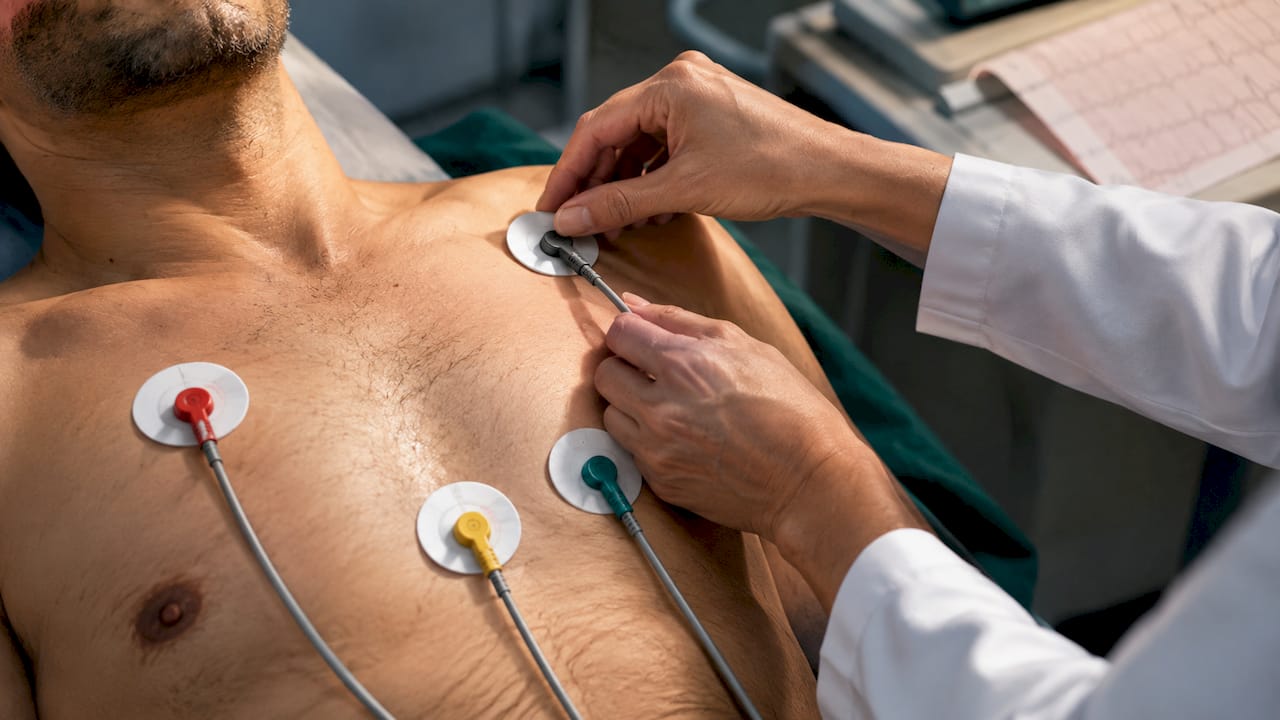
AFib usually shows up as a fluttering or pounding heartbeat, along with fatigue, shortness of breath, dizziness, or mild chest discomfort, though some people feel nothing at all. If you have chest pain, sudden weakness, slurred speech, or fainting, call 911 immediately. For other symptoms, contact your clinician to arrange an evaluation, since AFib often comes and goes on its own.
TL;DR:
- The most common symptoms of AFib include an irregular heartbeat, fatigue, shortness of breath, dizziness, and chest discomfort, but some people have no symptoms at all.
- Paroxysmal AFib episodes are often brief and self-resolving, making them difficult to detect during routine exams, and may be mistaken for stress or exhaustion.
- Emergency symptoms like chest pain, stroke signs, fainting, or severe breathlessness require immediate 911 calls, while mild or intermittent symptoms warrant a prompt medical evaluation.
- Triggers such as alcohol, caffeine, dehydration, illness, recent surgery, stress, and poor sleep can precipitate AFib episodes and should be carefully monitored.
- Continuous heart rhythm monitoring with devices like Holter or implantable monitors is essential; a single normal EKG does not rule out intermittent AFib.
Table of Contents
- Recognizing Afib Symptoms: A Plain-Language Checklist
- Why Afib Is So Easy to Miss
- When to Get Emergency Help for Afib Warning Signs
- What Triggers an Afib Episode
- How Doctors Diagnose Afib: Ekg, Holter Monitors, and More
- A Simple Way to Log Afib Symptoms Before Your Appointment
- Why Untreated Afib Raises Stroke and Heart Failure Risk
- What to Do Right After Noticing Symptoms
- Afib Vs. Anxiety and Other Arrhythmias: How to Tell the Difference
- How Afib Symptoms Differ by Age, Sex, and Health Status
- A Clinic’s View on Evaluating Suspected Afib
- Getting Evaluated for Afib Symptoms Near You
- Sources
- FAQ
Recognizing Afib Symptoms: A Plain-Language Checklist
Palpitations are the symptom most people notice first. You might feel your heart flutter, skip, race, or pound, sometimes for a few seconds, sometimes for hours. Anxiety-related palpitations tend to build gradually alongside racing thoughts or a sense of dread; AFib palpitations often start abruptly, out of nowhere, and stop just as suddenly.
Fatigue is actually the most commonly reported symptom, even ahead of palpitations for many patients. It shows up as an unusual drop in exercise tolerance, feeling winded climbing stairs you normally handle fine, or a heaviness that lingers for days.
Shortness of breath deserves attention too, especially if it worsens when you lie flat (a pattern doctors call orthopnea) or forces you to prop yourself up with extra pillows at night.
Dizziness, lightheadedness, and fainting happen because AFib disrupts the heart’s normal pumping rhythm, temporarily reducing blood flow to the brain. Chest discomfort is common with AFib, but any new chest pain or pressure should be treated as a possible heart attack until proven otherwise. Less common signs include unexplained sweating, sudden weakness, or brief confusion, symptoms people often dismiss as stress or fatigue.
The Mayo Clinic lists these as the core symptom cluster:
- Fluttering, pounding, or racing heartbeat
- Fatigue and reduced stamina
- Shortness of breath, especially with exertion
- Dizziness or lightheadedness
- Chest discomfort or pressure
- Fainting or near-fainting episodes
A significant portion of people with AFib have no noticeable symptoms at all, which is part of why routine checkups and pulse checks catch cases that would otherwise go undetected.
Why Afib Is So Easy to Miss
AFib doesn’t behave the same way in every patient, and that inconsistency is exactly what makes it hard to catch. Clinicians classify it into a few patterns: paroxysmal AFib comes and goes, often stopping on its own within a week; persistent AFib lasts longer than seven days and usually needs treatment to return to normal rhythm; long-standing persistent AFib has continued for over a year; and permanent AFib is a rhythm both patient and doctor have agreed to manage rather than correct.
Paroxysmal episodes are the trickiest to diagnose. They can last minutes or hours, resolve without any intervention, and leave no trace by the time you sit down in an exam room. Harvard Health points out that short, self-resolving episodes often mimic more familiar sensations, like stress or overexertion, which makes patients less likely to report them right away.
A significant number of AFib cases are found incidentally, during a physical exam, a pre-surgical workup, or a routine EKG unrelated to any complaint. If you have underlying heart disease, you’re more likely to notice symptoms and more likely to notice them worsening as your condition progresses.
Two things matter here:
- Absence of symptoms doesn’t mean absence of AFib.
- Intermittent symptoms are still worth reporting, even if they’ve already stopped by your appointment.
When to Get Emergency Help for Afib Warning Signs
Some AFib symptoms need a call to 911, not a wait-and-see approach. Here’s how to prioritize:
- Chest pain or pressure. Treat this as a possible heart attack. Call 911 immediately rather than driving yourself to the hospital.
- Sudden weakness, numbness, slurred speech, blurred vision, or confusion. These are stroke warning signs, and AFib significantly raises stroke risk. Every minute counts, so call 911 the moment you notice them.
- Severe shortness of breath, fainting, or collapse. These suggest your heart isn’t pumping enough blood to meet your body’s needs, which is a medical emergency.
- Very low blood pressure with dizziness or gray, clammy skin. Combined with an irregular pulse, this warrants immediate evaluation.
When you call for help, tell the dispatcher or triage nurse exactly what you’re feeling, when it started, whether you have a known history of AFib, and any medications you take, especially blood thinners. That information shapes how quickly the team responses and what treatment they prepare for.
What Triggers an Afib Episode
Certain habits and situations are known to precipitate AFib in people who are already prone to it. Recognizing your own pattern can help you avoid repeat episodes and gives your clinician useful context.
- Alcohol, particularly binge drinking, is one of the most common triggers. Some people develop what’s informally called “holiday heart,” an AFib episode following a night of heavy drinking.
- Caffeine, stimulants, and recreational drugs can push heart rate and rhythm out of balance.
- Acute illness, fever, dehydration, and electrolyte imbalances all stress the heart’s electrical system.
- Recent major surgery, especially involving the heart, lungs, or esophagus, raises AFib risk during the early recovery window, when the body is inflamed and under strain.
- Stress, poor sleep, and uncontrolled thyroid disease are frequent, often overlooked contributors.
Pro Tip: Keep a short note in your phone every time you notice a racing or fluttering heartbeat. Jot down what you had eaten or drunk in the hours before. Patterns tend to surface faster than you’d expect.
How Doctors Diagnose Afib: Ekg, Holter Monitors, and More
A resting 12-lead EKG only captures what’s happening in your heart at that exact moment. If your AFib is intermittent and you happen to be in normal rhythm during the test, the EKG can come back completely normal, even though you clearly have the condition. That’s why a single clean EKG doesn’t rule anything out if your symptoms are real and recurring.
To catch intermittent episodes, clinicians turn to:
- Holter monitors, worn continuously for 24 to 48 hours, recording every heartbeat during that window.
- Patch or event monitors, worn for one to two weeks or longer, useful when episodes are less frequent.
- Implantable loop recorders, reserved for rare or hard-to-catch events, monitoring heart rhythm continuously for years.
- Echocardiograms, which use sound waves to visualize the heart’s chambers, valves, and pumping function, helping identify structural causes or complications.
Your own EKG results combined with an echocardiogram give your care team a fuller picture than either test alone. If you’re curious about how clinicians read these tracings, this breakdown of typical EKG patterns explains what abnormal rhythms actually look like on paper. Data from consumer wearables, when clearly time-stamped, can also support a diagnosis, though it typically supplements rather than replaces clinical monitoring.
A Simple Way to Log Afib Symptoms Before Your Appointment
A vague description like “my heart felt weird” gives your doctor very little to work with. A dated, detailed log gives them something they can actually act on.
For each episode, note:
- Date and time the symptom started and stopped
- How long it lasted, even if it’s a rough estimate
- What you were doing right before (resting, exercising, eating, lying down)
- Exactly what you felt (fluttering, pounding, dizziness, breathlessness)
- Anything else happening at the same time (sweating, chest pressure, anxiety)
- Recent alcohol or caffeine intake, and any medication changes
Try to capture several episodes if you can, then bring a printout or a screenshot to your visit rather than trying to recall details from memory. Context like your body position, sleep quality, and recent alcohol use is often more useful to a specialist than a general “it felt off” description.
Pro Tip: Create a simple note titled “Heart Log” in your phone with these six fields pre-typed. Duplicate the entry every time something happens. It takes fifteen seconds and saves you from reconstructing details weeks later.
Why Untreated Afib Raises Stroke and Heart Failure Risk
When the upper chambers of your heart quiver instead of contracting normally, blood can pool and stagnate in small pockets, particularly in a structure called the left atrial appendage. Pooled blood is prone to clotting, and if a clot breaks loose, it can travel to the brain and cause a stroke. This is the core reason AFib is treated as more than a nuisance rhythm, even when episodes feel mild.
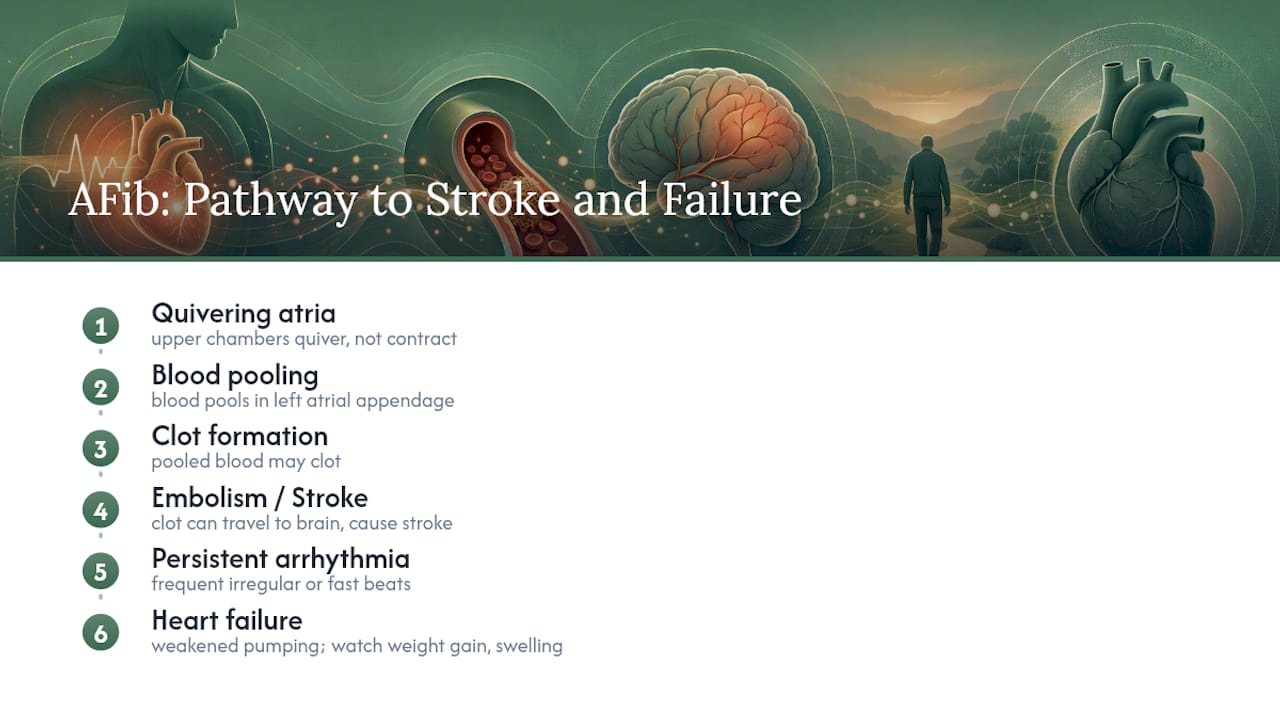
Left unmanaged, AFib can also weaken the heart over time. A heart beating irregularly and often too fast loses efficiency, which can eventually lead to heart failure, a state where the heart can’t pump enough blood to meet the body’s demands. Watch for warning signs of heart failure like sudden weight gain or worsening swelling, which sometimes develop alongside long-term AFib.
Clinicians estimate stroke risk using a scoring tool called CHA2DS2-VASc, which weighs factors like age, blood pressure, diabetes, and prior stroke history. It sounds technical, but the takeaway is simple: your individual risk depends on more than just having AFib, it depends on your broader health profile. That’s exactly why a clinician needs to evaluate you directly rather than you self-assessing risk from a symptom list.
Depending on that assessment, treatment might include blood thinners to lower clot risk, along with medications or procedures to control heart rate or rhythm. None of this is something to figure out on your own; it’s a conversation for your doctor’s office, not a search engine.
What to Do Right After Noticing Symptoms
If your symptoms are mild, rest, avoid known triggers like alcohol or caffeine, and stay hydrated while you monitor how you feel. But mild doesn’t mean ignorable, and you shouldn’t wait days to mention a recurring flutter or unusual fatigue to your doctor.
Here’s how to triage your next move:
- Call 911 for chest pain, stroke signs, fainting, or severe breathlessness.
- Call urgent care for new but non-emergency symptoms, like a persistent racing heartbeat without chest pain.
- Call your primary care office to schedule an evaluation if symptoms are intermittent, mild, or you’ve noticed a pattern over recent weeks.
Bring your symptom log, a list of current medications, any recent blood pressure or heart rate readings, and wearable data if you have it. Expect your visit to start with a physical exam and an EKG, possibly followed by ambulatory monitoring or a referral to cardiology if your primary care doctor suspects something intermittent.
Afib Vs. Anxiety and Other Arrhythmias: How to Tell the Difference
Palpitations show up in a lot of conditions, not just AFib, and telling them apart matters for how quickly you seek care. Anxiety-driven palpitations usually build gradually, often paired with racing thoughts, sweating, or a sense of impending doom, and they tend to ease as the anxious moment passes. AFib palpitations are more likely to start and stop abruptly, without an obvious emotional trigger, and often come with fatigue or breathlessness that lingers after the fluttering stops.
Other arrhythmias complicate the picture further. Premature ventricular contractions (PVCs) feel like a single hard “thump” or a skipped beat, isolated rather than sustained. Supraventricular tachycardia (SVT) causes a very fast, regular heartbeat that starts and stops suddenly, unlike the irregular, chaotic rhythm typical of AFib. Atrial flutter, AFib’s close cousin, produces a fast but often more regular pattern and shares many of the same symptoms, including palpitations, fatigue, and shortness of breath, which is why it’s frequently mistaken for AFib without an EKG to confirm.
None of these distinctions are meant for self-diagnosis. An EKG captured during an episode is the only reliable way to tell these rhythms apart, since they can feel remarkably similar from the inside. If your palpitations are new, recurring, or paired with dizziness or chest discomfort, that’s a reason to get an EKG, not a reason to guess which condition you have based on symptoms alone.
How Afib Symptoms Differ by Age, Sex, and Health Status
AFib doesn’t present identically across every patient, and understanding those differences can help you take your own symptoms seriously instead of dismissing them.
Older adults are statistically more likely to develop AFib, but they sometimes report fewer dramatic palpitations and more subtle fatigue, general weakness, or a vague sense of “slowing down,” symptoms that get written off as normal aging. Younger patients, by contrast, often notice pronounced palpitations and are more likely to seek care quickly because the sensation feels so abnormal against their baseline.
Women with AFib sometimes report more pronounced symptoms, including fatigue and anxiety-like sensations, even when episodes are objectively similar in duration to those in men. That can lead to underdiagnosis, since more diffuse symptoms are more easily attributed to stress or hormonal changes rather than a cardiac cause.
People with existing conditions like heart failure, coronary artery disease, or diabetes are more likely to notice symptoms and tend to have them intensify as the underlying condition progresses. If you fall into one of these categories, don’t assume new fatigue or breathlessness is just your existing condition acting up. It’s worth a direct conversation with your clinician rather than an assumption.
A Clinic’s View on Evaluating Suspected Afib
Coordinated care matters more than most patients realize. When primary care, cardiopulmonary specialists, and on-site diagnostics work from the same chart, suspected AFib gets narrowed down faster instead of bouncing between referrals and repeat scheduling.
Patients most often report vague fatigue or “occasional flutters” they assumed weren’t worth mentioning. Those offhand comments are frequently the detail that prompts an EKG and, eventually, a diagnosis.
— Garden State Medical Group
Getting Evaluated for Afib Symptoms Near You
If you’ve noticed palpitations, unexplained fatigue, or breathlessness that doesn’t match your usual activity level, the fastest path to an answer is a direct evaluation, not another week of watching and waiting. Garden State Medical Group offers on-site EKG, Holter monitoring, and echocardiogram testing alongside primary care, so you’re not stuck waiting weeks for a separate referral just to get a baseline reading.
Start with your Primary Care provider if your symptoms are new or mild, or go straight to Cardiopulmonary Care if you’ve already noticed a pattern worth investigating. Telemedicine visits are available for an initial conversation about your symptoms, though in-person testing is necessary for an EKG or echocardiogram. If you’ve been keeping a symptom log, bring it, whether it’s a notes app entry or a printed page. It gives your provider a real timeline to work from instead of a single office-visit snapshot. Reach out to schedule an evaluation and get a clear answer instead of continuing to guess.
Sources
- Atrial fibrillation - Symptoms and causes | Mayo Clinic
- What are the symptoms of atrial fibrillation? | American Heart Association
- Atrial Fibrillation Symptoms | NHLBI, NIH
- Atrial fibrillation | MedlinePlus
This article is general information, not a substitute for advice from a qualified doctor. Consult a qualified healthcare professional about your own circumstances before acting on anything here.
FAQ
What are early warning signs of AFib?
Early signs often include an irregular, fluttering, or racing heartbeat, unusual fatigue, and mild shortness of breath during everyday activity. Many people also notice these symptoms come and go rather than staying constant.
What triggers AFib episodes?
Common triggers include heavy alcohol use, caffeine or stimulants, dehydration, acute illness, and recent major surgery, along with stress and poor sleep. Identifying your own pattern is one reason a symptom log is so useful for your clinician.
What is the life expectancy with AFib?
Life expectancy with AFib depends heavily on how well stroke risk and heart function are managed, along with other health conditions you may have. Early diagnosis and consistent treatment, guided by your clinician’s risk assessment, meaningfully improve long-term outcomes.
Can AFib go away on its own?
Paroxysmal AFib episodes can stop on their own within minutes or hours, but that doesn’t mean the underlying condition has resolved. Even self-limiting episodes should be reported to a clinician, since AFib tends to recur and can progress without treatment.