
Diabetes Management: Your Step-by-Step 2026 Guide

TL;DR:
- Diabetes management involves daily control of blood glucose through diet, exercise, medication, and monitoring to prevent complications.
- A consistent routine of lifestyle changes, medication adherence, and regular testing helps maintain long-term health.
Diabetes management is defined as the daily practice of controlling blood glucose levels through diet, physical activity, medication, and regular monitoring to prevent serious complications. Clinically, this process is also called diabetes self-care or chronic disease management, and it covers everything from what you eat at breakfast to how often you check your A1C. Blood glucose monitors, prescription medications like metformin and insulin, and structured healthcare support are all standard tools in this process. Getting a clear picture of what diabetes management involves is the first step toward doing something about it.
What is diabetes management and why does it matter?
Diabetes management is the coordinated set of actions you take every day to keep your blood sugar within a safe range. Without it, chronically high glucose damages blood vessels, nerves, kidneys, and eyes over time. The goal is not perfection. The goal is consistency, because small, repeated actions compound into meaningful health outcomes over months and years.
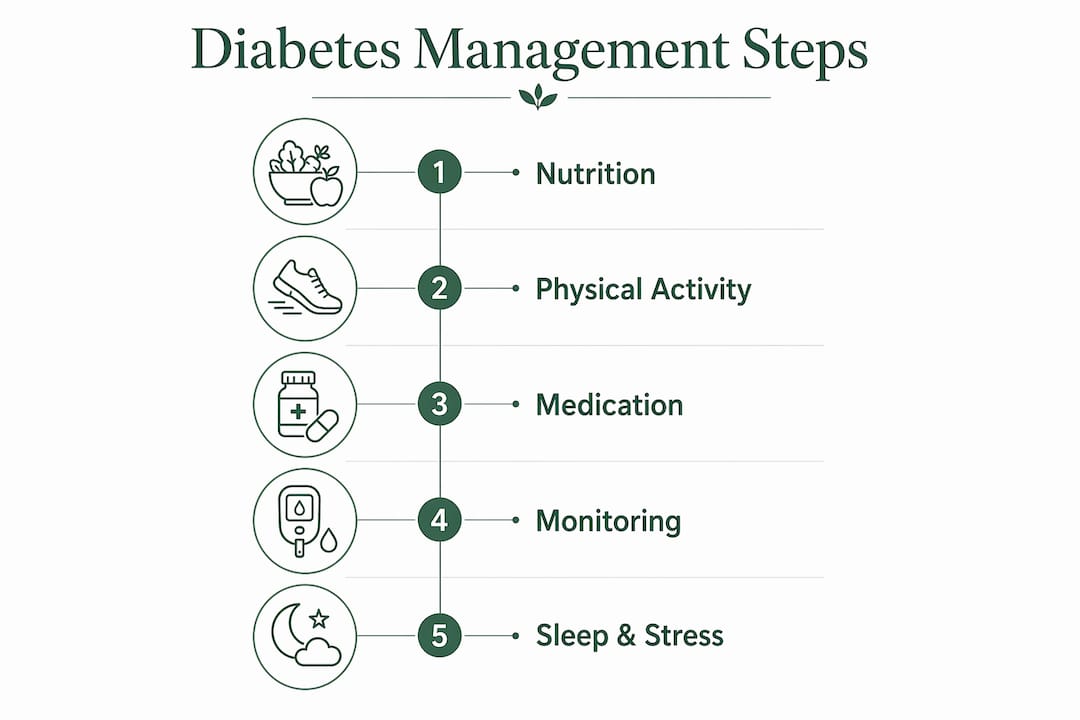
Effective diabetes control relies on four pillars: nutrition, physical activity, medication, and monitoring. Each pillar supports the others. Poor sleep, for example, raises cortisol and disrupts insulin sensitivity, which means lifestyle factors you might not associate with blood sugar directly affect your glucose readings. Understanding how these pieces connect gives you real control over your condition.
What are the key lifestyle changes for diabetes management?
Lifestyle changes are the foundation of any guide to managing diabetes. No medication works as well without them, and for many people with Type 2 diabetes, lifestyle adjustments alone can significantly reduce the need for higher medication doses.
Eating patterns that support blood sugar control
There is no single diabetes diet. What works is a sustainable eating pattern you can maintain long term, built around better carbohydrate choices like whole grains, legumes, and non-starchy vegetables. That finding matters because it shifts the focus away from rigid restriction toward finding foods you actually enjoy and can stick with. Swapping white rice for brown rice or adding lentils to soups are small changes that lower the glycemic load of a meal without making eating feel like a chore.

Protein and healthy fats slow glucose absorption, which smooths out blood sugar spikes after meals. Portion awareness matters more than calorie counting for most people. Eating at consistent times each day also helps your body regulate insulin response more predictably.
Physical activity guidelines
The standard exercise guideline for diabetes management is 150 minutes of moderate aerobic activity per week plus muscle-strengthening exercise at least two days per week. That translates to roughly 30 minutes of brisk walking five days a week, combined with resistance training like bodyweight exercises or light weights twice weekly. Muscle tissue uses glucose for fuel, so building and maintaining muscle mass directly improves blood sugar control.
Strength training is often overlooked in diabetes care, but it is one of the most effective tools for improving insulin sensitivity. Even a 15-minute resistance session twice a week produces measurable benefits over time.
Sleep and stress reduction
Poor sleep raises blood glucose by increasing stress hormones like cortisol and adrenaline. Aiming for 7–9 hours of quality sleep per night is a legitimate part of your diabetes care plan, not a bonus. Stress management techniques like deep breathing, walking, or structured relaxation reduce cortisol spikes that push glucose higher.
Pro Tip: Habit stacking is one of the most practical tools for building sustainable diabetes routines. Start with one manageable change, like a 10-minute walk after dinner, and attach it to something you already do. Once that habit is automatic, add the next one.
How do medications fit into diabetes management?
Medications do not replace lifestyle changes. They work alongside them to maintain blood glucose within target ranges when diet and exercise alone are not enough. Understanding your medications gives you more confidence in your daily routine.
Common medication classes used in diabetes management include:
- Metformin: The most widely prescribed first-line medication for Type 2 diabetes. It reduces glucose production in the liver and improves insulin sensitivity.
- Insulin: Used in Type 1 diabetes and in advanced Type 2 cases. It comes in short-acting, long-acting, and combination forms.
- GLP-1 receptor agonists: Medications like semaglutide (Ozempic, Wegovy) that stimulate insulin release, slow digestion, and support weight loss.
- Sulfonylureas: Older medications that stimulate the pancreas to produce more insulin. They are effective but carry a higher risk of low blood sugar.
Long-acting sulfonylureas and insulin carry the highest risk of serious hypoglycemia, particularly in frail or hospitalized individuals. That risk is why medication decisions must always involve your healthcare provider, especially if you are older or managing multiple conditions. Reviewing your medication list for drug interaction risks is especially relevant if you take weight loss medications alongside diabetes drugs.
Missing medication doses makes it impossible to accurately assess whether your treatment plan is working. Consistency is not just about safety. It is the only way your provider can tell if your current regimen needs adjustment. Set phone reminders, use a pill organizer, or tie your medication to a daily anchor like brushing your teeth.
What is the role of blood sugar monitoring in diabetes management?
Monitoring is how you measure whether everything else is working. Without data, you are guessing. With it, you can make informed decisions about food, activity, and medication in real time.
Here is a practical step-by-step approach to blood sugar monitoring:
- Use a glucometer daily. Self-monitoring with a home glucometer gives you immediate feedback on how specific meals, activities, or stress events affect your glucose levels.
- Get your A1C tested every 3–6 months. A1C testing reflects your average blood glucose over the past two to three months. It is the clinical gold standard for assessing long-term control.
- Log context alongside your numbers. Recording what you ate and what activity you did alongside each glucose reading transforms raw numbers into useful patterns your provider can act on.
- Look for patterns, not single readings. One high reading after a birthday dinner is not a crisis. A consistently elevated fasting glucose every morning signals something that needs attention.
- Share your log with your care team. Your provider uses this data to decide whether your medication dose, meal plan, or activity level needs adjustment.
Pro Tip: Consider a continuous glucose monitor (CGM) like the Dexterity or Libre systems if you find fingerstick testing inconsistent. CGMs provide real-time glucose trends throughout the day, which gives you far more context than isolated readings.
Blood sugar management must balance glucose control with minimizing hypoglycemia risk, particularly in older adults. Chasing perfect numbers at the cost of frequent low blood sugar episodes is not the goal. Your provider can help you set realistic, individualized targets.
How do you build a diabetes management plan that fits your life?
A diabetes management plan is a personalized, repeatable system that combines nutrition, movement, medication, monitoring, and healthcare follow-up into a daily routine. The word “plan” matters here. A repeatable daily protocol removes the need to make new decisions every day, which reduces the chance of skipping steps when life gets busy.
Diabetes self-management education and support (DSMES) is one of the most underused resources available to people with diabetes. DSMES programs, offered through hospitals, community health centers, and providers like Gardenstatemedicalgroup, give you practical skills, emotional support, and structured guidance from certified diabetes educators. The CDC recognizes DSMES as a critical resource at any stage of the diabetes journey, not just at diagnosis.
Here is a comparison of the core components in a well-structured diabetes management plan:
| Component | What it involves | Why it matters |
|---|---|---|
| Nutrition | Consistent, balanced meals with better carb choices | Reduces post-meal glucose spikes |
| Physical activity | 150 min/week aerobic plus 2x strength training | Improves insulin sensitivity and muscle glucose use |
| Medication | Daily adherence with scheduled provider reviews | Maintains stable blood glucose and enables dose adjustments |
| Monitoring | Daily glucometer readings plus A1C every 3–6 months | Tracks progress and identifies patterns needing attention |
| Education and support | DSMES programs and regular provider check-ins | Builds skills, confidence, and long-term adherence |
Adjusting your plan over time is normal and expected. Your needs at diagnosis are different from your needs five years later. Work with your care team to review your plan at least twice a year, and more often if your glucose control is not meeting your targets.
The 8 essential steps for good diabetes care outlined by Gardenstatemedicalgroup provide a practical framework for structuring this kind of ongoing review.
Key Takeaways
Effective diabetes management requires combining consistent lifestyle habits, medication adherence, regular blood sugar monitoring, and structured healthcare support into a personalized daily routine.
| Point | Details |
|---|---|
| Lifestyle is the foundation | Diet, exercise, sleep, and stress management directly affect blood glucose control. |
| Medication requires consistency | Missing doses prevents accurate assessment of treatment effectiveness and disrupts control. |
| Monitoring needs context | Log meals and activity alongside glucose readings to turn data into useful patterns. |
| A1C is the long-term measure | Testing every 3–6 months gives a reliable picture of average blood glucose over time. |
| DSMES improves outcomes | Diabetes self-management education builds practical skills and confidence at any stage. |
What I have learned about managing diabetes well
By Krunal
After working closely with patients managing diabetes across different life stages, the pattern I see most often is this: people start strong and then quietly drift away from their routines when life gets complicated. The problem is rarely motivation. It is that the plan was too ambitious from the start.
The patients who do best are not the ones with the most disciplined diets or the most sophisticated monitoring setups. They are the ones who built a small, manageable system and protected it. A 10-minute walk after dinner. A pill organizer on the kitchen counter. A monthly check-in with their care team. These are not impressive habits individually, but they compound.
I also want to push back on the idea that glucose numbers alone tell the whole story. I have seen patients with technically controlled A1C levels who were experiencing frequent low blood sugar episodes that disrupted their sleep, their work, and their quality of life. The balance between glucose targets and hypoglycemia risk is a real clinical conversation, especially for older adults. Do not let anyone tell you that tighter is always better without discussing what tighter costs you.
Finally, do not wait until you feel overwhelmed to ask for help. DSMES programs exist precisely because managing diabetes alone is harder than it needs to be. Use them early and use them often.
— Krunal
How Gardenstatemedicalgroup supports your diabetes care
Managing diabetes is easier with the right team behind you. Gardenstatemedicalgroup offers structured programs designed specifically for people living with chronic conditions like diabetes, including coordinated care plans, provider follow-up, and patient education resources.
The Chronic Care Management program at Gardenstatemedicalgroup connects you with a care team that monitors your progress, coordinates your medications, and helps you stay on track between appointments. The Diabetes Prevention and Education Program provides the kind of structured DSMES support that research consistently links to better outcomes. For comprehensive, ongoing diabetes care, the primary care team at Gardenstatemedicalgroup in North Bergen and Secaucus, New Jersey is ready to build a plan that fits your life. Schedule a visit today.
FAQ
What is diabetes management in simple terms?
Diabetes management is the daily practice of keeping blood glucose levels within a safe range through diet, exercise, medication, and monitoring. The goal is to prevent complications like nerve damage, kidney disease, and vision loss.
How often should I check my blood sugar?
Daily self-monitoring with a glucometer is standard practice, and A1C testing every 3–6 months measures your long-term average. Your provider will recommend a specific schedule based on your medication and glucose stability.
What is the best diet for diabetes management?
There is no single best diet for diabetes. The most effective eating pattern is one you can sustain long term, built around whole grains, legumes, vegetables, and consistent meal timing.
Can lifestyle changes replace diabetes medication?
For some people with early Type 2 diabetes, significant lifestyle changes can reduce or delay the need for medication. However, this depends on individual factors and must be evaluated and supervised by a healthcare provider.
What is DSMES and do I need it?
DSMES stands for Diabetes Self-Management Education and Support. It is a structured program that teaches practical skills, provides emotional support, and improves long-term outcomes. The CDC recommends DSMES at any stage of the diabetes journey, not just at diagnosis.