
3 Moves That Cut Fall Risk at Home: Checklist and Clinician Steps
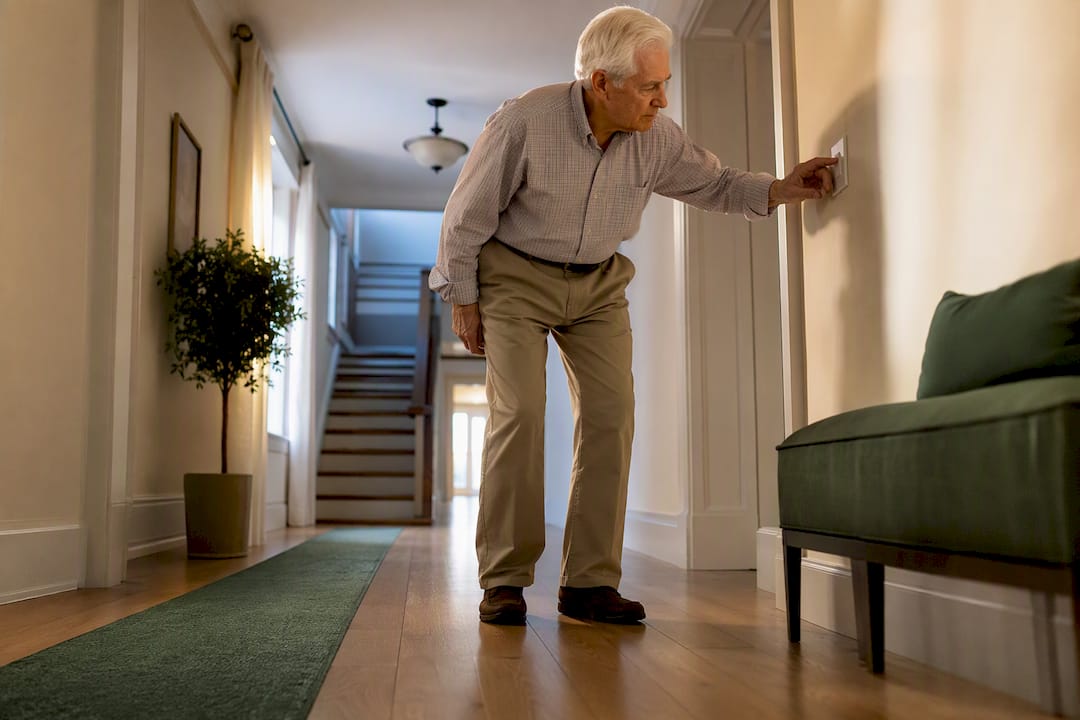
The three moves that cut your fall risk the most are fixing hazards room by room, reviewing medications and vision with your doctor, and building balance and leg strength through regular exercise. Together they address the environment, the body, and the habits that lead to falls. If you’ve fallen recently or feel unsteady, start with a call to your primary care provider or a referral to physical therapy.
TL;DR:
- Fixing hazards in each room can cut fall risk by up to 50 percent, especially in bathrooms, stairs, and outdoor entryways.
- Regularly reviewing medications, especially sedatives and antihistamines, can significantly reduce dizziness and reaction time issues that lead to falls.
- Building daily balance and strength through simple exercises like sit-to-stand and heel raises effectively lowers fall risk over time.
- Professional home safety assessments are recommended after recent falls or mobility decline to tailor specific interventions and device installations.
- Fall prevention requires a combination of environmental fixes, medication and vision reviews, and consistent exercise to maintain stability and safety.
Table of Contents
- Home Safety Checklist: Room-by-Room Fixes That Prevent Falls
- What Balance Exercises Actually Lower Fall Risk?
- Could Your Medications or Vision Be Increasing Your Fall Risk?
- Grab Bars, Ramps, and Other Devices Worth Installing
- When Should You Request a Professional Home Safety Assessment?
- Do Medical Alert Systems Actually Help After a Fall?
- Garden State Medical Group’s Perspective on Clinical Screening
- How to Schedule a Fall-Risk Screening
- Sources
- FAQ
Home Safety Checklist: Room-by-Room Fixes That Prevent Falls
About 1 in 4 adults over age 65 reports falling each year, and most of those falls happen at home, in rooms you walk through every day without a second thought. The good news: fixing the hazards is usually inexpensive. Improving lighting and clearing walkways alone can cut fall risk by as much as 50%.
Work through your houseroom by room using this breakdown.
Hallways and stairs
- Install handrails on both sides of every staircase, not just one.
- Add non-slip treads or high-contrast tape to stair edges.
- Clear pathways of cords, boxes, and anything that sits below eye level.
Bathroom (the highest-risk room in most homes)
- Mount grab bars near the toilet and inside the shower or tub, anchored into wall studs.
- Add a shower seat and non-slip strips or a rubber mat on wet surfaces.
- Consider a raised toilet seat if standing up feels unsteady.
Bedroom
- Keep a night-light on the path between the bed and bathroom.
- Store a phone or medical alert device within arm’s reach of the bed.
- Move rugs, shoes, and cords out of that nighttime path entirely.
Kitchen
- Keep everyday dishes, food, and cleaning supplies at waist height so you’re not reaching or climbing.
- Use a sturdy step stool with a handrail, never a chair, for anything higher.
Outdoors and entryways
- Repair uneven steps and add secure railings at every entry point.
- Add motion-sensor lighting at porches, driveways, and walkways.
- Use non-slip mats at doorways, especially in wet weather.
Removing loose rugs, taping down cords, and adding grab bars are the kind of low-cost, high-impact fixes that take a weekend, not a renovation budget. Bigger jobs, like widening a doorway for a walker or installing a permanent ramp, are worth planning for separately once the quick wins are done.
What Balance Exercises Actually Lower Fall Risk?
Muscle weakness and poor balance are two of the most fixable causes behind that 1-in-4 annual fall statistic among adults over 65. Balance and strength work should be treated like brushing your teeth: a routine habit, not something you do only after a scare, since consistent practice builds lasting stability rather than a quick fix.
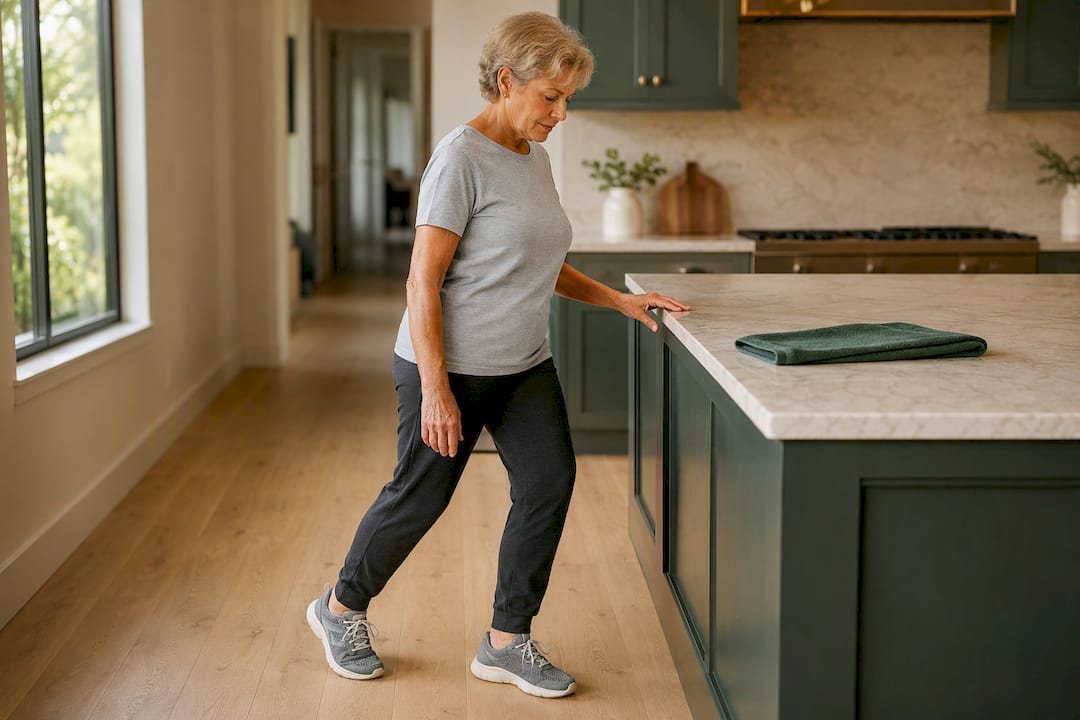
A simple starter routine, done daily near a counter or sturdy chair:
- Sit-to-stand: Rise from a chair without using your hands, 10 times, twice a day.
- Heel raises: Hold a counter, rise onto your toes, hold 5 seconds, repeat 10 times.
- Single-leg stance: Hold onto a counter, lift one foot, hold as long as comfortable, switch sides.
- Tandem stance: Stand heel-to-toe like on a balance beam, hold near a support.
- Tai chi: A slow, low-impact practice with strong evidence for improving balance over time.
Progressive balance programs work best when you start with short holds, around 10 seconds, and build toward 30 seconds over several weeks, alongside two daily sets of five repetitions.
Pro Tip: Always start these exercises standing in a corner or right next to a solid counter, so you have an immediate point of contact if you feel wobbly.
If you feel dizzy, have had a recent fall, or simply feel unsafe practicing alone, ask your doctor for a physical therapy referral before starting. A safe starter guide from a rehabilitation specialist can also help you build a routine with proper form.
Could Your Medications or Vision Be Increasing Your Fall Risk?
Hazard fixes and exercise address half the equation. The other half lives in your medicine cabinet and your eye exam results. Clinicians routinely recommend reviewing your entire medication list, including over-the-counter drugs and supplements, since many common medicines cause drowsiness or slow reaction time in ways that raise fall risk.
Bring this to your next visit:
- A complete list of prescriptions, OTC drugs, and supplements you take.
- Any recent falls or near-falls, including when and how they happened.
- Notes on dizziness when standing up quickly, which can signal orthostatic hypotension.
- Your current glasses prescription and the date of your last eye exam.
Sedatives, certain antihistamines, and some antidepressants are common culprits worth flagging specifically. On footwear: choose supportive, low-heeled shoes with good traction, and skip socks-only walking or smooth-soled slippers, which are far more likely to slide out from under you.
Grab Bars, Ramps, and Other Devices Worth Installing
Assistive devices bridge the gap between a hazard checklist and the way you actually move through your home. Grab bars, shower chairs, raised toilet seats, non-slip strips, and entry ramps all reduce risk when installed correctly.
- Grab bars must anchor into wall studs, not just drywall, to hold body weight safely.
- Stair rails work best on both sides, mounted at a consistent height you can grip without bending.
- Ramps need a gentle slope and a non-slip surface, especially near entry doors.
Pro Tip: A grab bar that pulls loose under pressure is worse than no grab bar at all. If you’re unsure a wall has proper stud backing, hire a professional rather than guessing.
Funding help exists beyond your own wallet. Check your local Area Agency on Aging for home-modification assistance programs, and ask about VA benefits if you’re an eligible veteran. Some devices qualify as durable medical equipment under a doctor’s prescription, which can open up insurance coverage you didn’t know you had.
When Should You Request a Professional Home Safety Assessment?
A recent fall, repeated near-falls, or a noticeable drop in mobility are the clearest signs it’s time to bring in an occupational or physical therapist. A professional visit goes well beyond a checklist: occupational therapists observe how you actually transfer, bathe, and move through stairs, then tailor recommendations to your specific patterns rather than generic advice.
Expect the assessment to cover:
- Transfers in and out of bed, chairs, and the shower.
- Bathing, dressing, and other daily activities that involve balance or reaching.
- Stairs, doorways, and tight turns throughout the home.
Follow-up usually includes referrals, prescriptions for specific devices, and a supervised exercise plan. Ask your primary care provider for an OT or PT referral. Medicare and most insurance plans cover these visits when medically necessary.
Do Medical Alert Systems Actually Help After a Fall?
Medical alert systems and fall-detecting wearables can shorten the time between a fall and help arriving, which matters when someone can’t reach a phone. They have real limits, though: fall detection isn’t perfect, false alarms happen, and many families assume these services are insurance-covered when they’re typically an out-of-pocket monthly expense worth budgeting for ahead of time.
Lower-tech steps matter just as much:
- Keep a phone charged and within reach in every room you spend time in.
- Program emergency contacts so they’re one tap away.
- Keep a flashlight on the nightstand for power outages or nighttime falls.
Voice-activated smart speakers can call for help hands-free, though they carry their own privacy and false-activation quirks. Whatever system you choose, do a trial run with family so everyone knows who responds and how.
Garden State Medical Group’s Perspective on Clinical Screening
We see fall risk as a moving target, not a one-time checklist. A patient’s medications change, vision shifts, and strength fluctuates with illness or inactivity, which is why we build fall screening into routine visits rather than treating it as a separate errand. Coordinating physical therapy and occupational therapy referrals alongside chronic care management catches problems a home checklist alone would miss. If you’re already managing a chronic condition with us, ask your provider to fold a fall-risk conversation into your next visit rather than waiting for a scare to prompt it.
— Garden State Medical Group
How to Schedule a Fall-Risk Screening
Garden State Medical Group’s primary care team can run a fall-risk screening as part of a standard visit, reviewing your medications, checking for orthostatic blood pressure changes, and coordinating a physical therapy or occupational therapy referral when needed. Appointments are available in-person at our North Bergen and Secaucus locations or through telemedicine if getting to an office is part of the problem.
A screening visit typically covers a medication review, a quick balance and gait check, and a conversation about home hazards specific to your living situation. If you already manage a chronic condition with us, this fits naturally into chronic care management rather than requiring a separate appointment. Ready to get a fall-risk review on the calendar? Schedule a primary care visit and bring your medication list with you.
Sources
- Preventing Falls at Home: Room by Room | National Institute on Aging
- Home Safety Checklist | OrthoInfo (AAOS)
- Fall prevention exercises | Johns Hopkins Medicine
This article is general information, not a substitute for advice from a qualified doctor. Consult a qualified healthcare professional about your own circumstances before acting on anything here.
FAQ
What are five ways to prevent falls in the home?
Remove loose rugs and cords, add grab bars in the bathroom, improve lighting in hallways and stairs, use non-slip mats in wet areas, and keep a clear nighttime path from bed to bathroom.
Does Medicare cover fall prevention?
Medicare typically covers medically necessary services like physical therapy referrals, durable medical equipment with a prescription, and annual wellness visits that can include a fall-risk discussion, though medical alert systems are usually an out-of-pocket expense.
What are the five P’s of fall prevention?
Definitions of this framework vary across clinical settings, so there’s no single agreed-upon version. Focus instead on the proven pillars covered above: hazard removal, medication review, vision checks, footwear, and balance training.
How do you fall-proof a home for an elderly person?
Work through each room methodically: secure rugs and cords, add grab bars and non-slip strips in the bathroom, install handrails on both sides of stairs, improve lighting throughout, and arrange furniture to keep pathways clear.