
How to Prepare for Your Primary Care Visit

TL;DR:
- Preparing for a primary care visit involves organizing your documents, writing a prioritized symptom list, and drafting specific questions to maximize efficiency.
- Bringing essential items like ID, insurance, medication details, and medical records ensures smoother check-in and better-informed care, while advanced symptom and question preparation promotes clear communication.
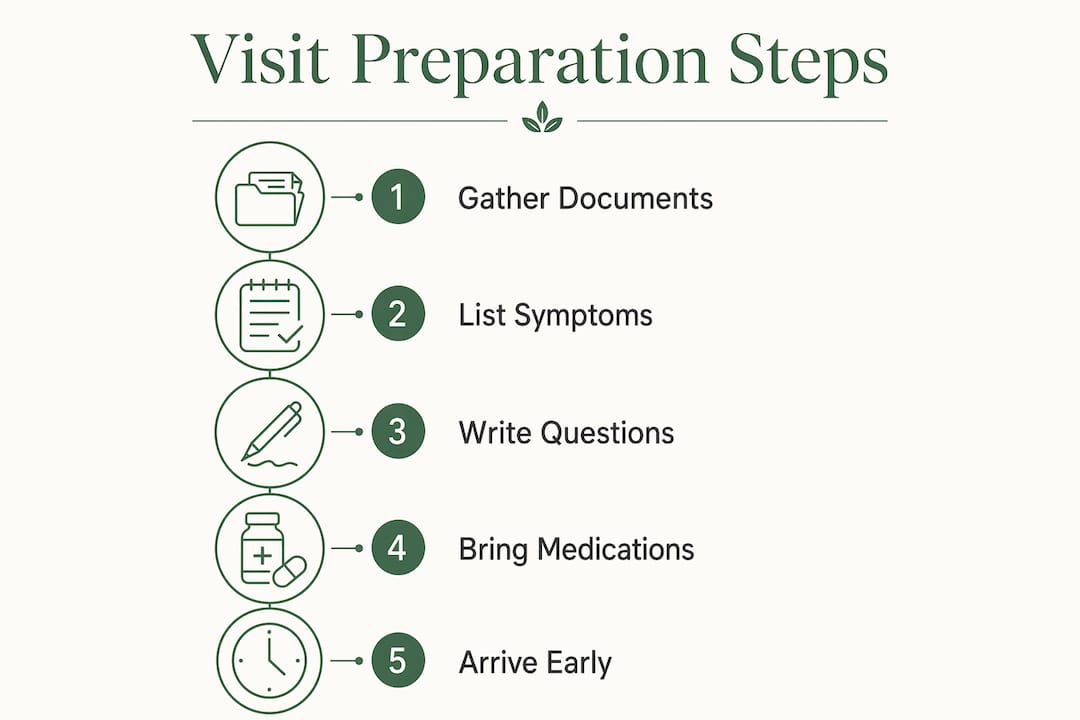
Preparing for a primary care visit means organizing your health information, writing down your concerns, and bringing the right documents so your appointment is productive from the first minute. Most patients walk in with good intentions but leave realizing they forgot to mention a symptom or ask a critical question. The good news is that a small amount of preparation before your visit changes that outcome completely. This guide covers your primary care visit checklist, what to bring to the doctor, how to frame your questions, and what to do before, during, and after the appointment to get the most from your time.
How to prepare for your primary care visit: the essentials
The foundation of a well-prepared medical visit is having the right documents and information ready before you walk through the door. Carrying your government-issued ID and a current insurance card prevents check-in delays and billing problems that eat into your appointment time. This matters more than most patients realize because front-desk verification takes time, and any missing information pushes that burden into the clinical portion of your visit.

Your medication list is equally critical. Bring all medications including prescriptions, over-the-counter drugs, vitamins, and supplements, along with the exact doses and how often you take them. Providers cannot safely adjust treatments or order tests without knowing what is already in your system. The full picture, including what you actually take rather than what you are supposed to take, is what your doctor needs.
If you are visiting a new provider or switching from another practice, bring past medical records, your immunization history, allergy list, and any recent lab results or imaging reports. These documents give your new provider context that would otherwise take multiple visits to reconstruct. Also bring any forms you received in advance, along with a payment method for copays or fees.
Pro Tip: If you take multiple medications, photograph your pill bottles and keep that image on your phone. It captures the drug name, dose, and prescribing physician in one place without requiring you to carry every bottle.
Here is a quick reference for what to bring:
| Category | What to include |
|---|---|
| Identification | Government-issued photo ID, insurance card |
| Medications | All prescriptions, OTCs, supplements with doses and frequency |
| Medical history | Past records, immunization history, allergy list, recent labs |
| Paperwork | Pre-visit forms, referral letters if applicable |
| Payment | Copay, HSA card, or other payment method |
How do you organize your symptoms and health history before the visit?
A prioritized, written list of your symptoms is the single most useful thing you can bring to a primary care appointment. A prioritized symptom list with frequency, duration, and triggers helps your provider narrow down diagnoses faster and use your appointment time more efficiently. Without this, patients often describe symptoms in a scattered way that makes it harder for the clinician to connect the dots.
When writing your symptom notes, think in terms of what the Merck Manual calls “responder-ready” information: a clear timeline of when the symptom started, a pattern of when it occurs, and what makes it better or worse. For example, instead of saying “my knee hurts,” write “left knee pain started six weeks ago, worse after sitting for more than an hour, no swelling, no injury.” That level of detail gives your provider a clinical picture before the exam even begins.
Here is a simple process to organize your concerns before the visit:
- Write down every symptom or concern you want to discuss, without filtering.
- Rank them by urgency or how much they affect your daily life.
- Add a timeline to each: when it started, how often it occurs, and what triggers or relieves it.
- Note any changes since your last visit, including new symptoms or worsening conditions.
- Limit your list to your top three to five concerns so you can cover them thoroughly in the time available.
Honesty matters as much as organization. Upfront communication, even about sensitive topics like alcohol use, mental health, or medication non-compliance, helps your provider make better decisions. Written lists make that transparency easier because you have already committed the information to paper before the conversation starts.
Pro Tip: Bring your symptom notes on paper rather than relying on your phone. Screens can be distracting during a conversation, and a handwritten list signals to your provider that you came prepared.
What questions should you ask your primary care doctor?
Writing questions down in advance is the most reliable way to leave an appointment without unanswered concerns. Patients who prepare questions before the visit are significantly more likely to understand their diagnosis and follow through on treatment plans. The act of writing forces you to clarify what you actually need to know.
Strong questions fall into a few clear categories. For symptoms and diagnosis, ask: “What do you think is causing this?” and “What else could it be?” For treatment, ask: “What are my options and what are the risks of each?” For lifestyle, ask: “What changes would have the biggest impact on this condition?” These are not generic questions. They are designed to open a real clinical conversation rather than a one-way information transfer. You can find a detailed list of questions to ask your doctor on the Garden State Medical Group blog.
Process questions are just as important as clinical ones. Ask how test results are communicated and what the best way to reach the care team is between visits. Knowing whether results come through a patient portal, a phone call, or a follow-up appointment prevents you from waiting anxiously with no idea what to expect.
Bring a notepad or device to capture instructions during the visit. If you want to record the conversation, ask your provider’s permission first. Before you leave, read back the key instructions to confirm you understood them correctly. This simple step catches misunderstandings that would otherwise only surface when you are home trying to follow advice you half-remember.
Pro Tip: Ask your most important question first, not last. Appointments can run short, and leading with your top concern guarantees it gets addressed even if time runs out.
Here are the core question categories to prepare:
- Diagnosis: What is causing my symptoms, and how certain are you?
- Treatment: What are my options, and what happens if I do nothing?
- Lifestyle: What specific changes would most improve my condition?
- Follow-up: When should I come back, and what should I watch for?
- Process: How will I receive test results, and how do I reach you with questions?
What to do before, during, and after your appointment
Preparation does not stop the night before. Arriving 10 to 15 minutes early gives the office time to verify your insurance, update your records, and complete any required forms before the clinical portion of your visit begins. Arriving on time or late compresses that process into your appointment window, which means less time with your provider.
Follow this sequence to maximize your visit from start to finish:
- The day before: Confirm your appointment time, gather all documents, finalize your symptom list, and write your questions in priority order.
- The morning of: Eat and take medications as usual unless instructed otherwise. Bring your ID, insurance card, medication list, and notes.
- On arrival: Check in early, complete any outstanding paperwork, and let the front desk know if you have a specific concern that may require extra time.
- During the visit: Lead with your most important concern. Take notes or ask permission to record. Be direct and honest, including about habits or symptoms you feel uncertain about sharing.
- Before you leave: Review your question list and confirm you have covered everything. Ask about next steps, including any tests, referrals, or prescriptions. Confirm how and when you will receive results.
- After the visit: Fill prescriptions promptly, schedule any recommended tests, and log into your patient portal to review visit notes if your provider uses one.
The final minutes of a visit are often the most overlooked. Rechecking your questions and confirming follow-up steps before you leave closes the gaps that lead to missed diagnoses or incomplete care. A quick “Is there anything else I should know?” at the end of the appointment often surfaces important information your provider assumed you already had.
Pro Tip: Use your provider’s patient portal after the visit to review the visit summary and any orders placed. Errors in documentation do happen, and catching them early is far easier than correcting them weeks later.
| Visit phase | Key action |
|---|---|
| Day before | Gather documents, finalize symptom list and questions |
| Morning of | Confirm medications, pack your checklist items |
| On arrival | Check in early, complete paperwork |
| During the visit | Lead with top concern, take notes, be honest |
| Before leaving | Review questions, confirm next steps and result delivery |
| After the visit | Fill prescriptions, schedule tests, check patient portal |
Key takeaways
Preparing for a primary care visit requires organized documents, a prioritized symptom list, and written questions to communicate clearly and use your appointment time well.
| Point | Details |
|---|---|
| Bring the right documents | Carry your photo ID, insurance card, medication list, and relevant medical records to every visit. |
| Organize symptoms in advance | Write a prioritized list with timelines, patterns, and triggers before the appointment. |
| Prepare specific questions | Write questions by category: diagnosis, treatment, lifestyle, follow-up, and process. |
| Arrive early | Plan to arrive 10 to 15 minutes before your appointment to complete check-in without losing clinical time. |
| Follow up after the visit | Schedule tests, fill prescriptions, and review your visit summary through the patient portal. |
Why preparation is the most underrated part of patient care
From what I have seen working alongside primary care teams, the patients who get the most from their appointments are rarely the ones with the most complex conditions. They are the ones who came prepared. A handwritten list of three prioritized concerns tells a clinician more in thirty seconds than a ten-minute unstructured conversation.
The most common pitfall I observe is patients saving their most important concern for the end of the visit, almost as an afterthought. By that point, the provider is wrapping up documentation and the appointment clock has run out. That concern then gets triaged to a follow-up visit, which means another wait, another copay, and another opportunity for the issue to worsen.
Clear communication is also a form of patient advocacy. Asking questions and speaking up about your concerns, even when you feel uncertain about the right words, strengthens the care you receive. Providers work better with patients who engage actively. You do not need medical training to be a good communicator. You need a list, a pen, and the willingness to ask.
The habits that make visits productive are simple to build: keep a running notes document on your phone for symptoms as they occur, update your medication list after any change, and review your question list the night before every appointment. These small habits compound into significantly better care over time. For a deeper look at effective doctor communication, the Garden State Medical Group blog covers this in practical detail.
— Krunal
How Garden State Medical Group helps you get the most from every visit
Garden State Medical Group, serving patients in North Bergen and Secaucus, New Jersey, offers primary care services designed to support patients at every stage of their health journey. The practice’s multidisciplinary team coordinates care across primary care, cardiopulmonary services, and diagnostic radiology, so your provider has the full picture when you walk in.
The clinical staff at Garden State Medical Group are experienced in helping patients communicate their concerns clearly, whether you are managing a chronic condition like diabetes or coming in for a routine wellness check. If you are preparing for a health appointment and want to know what to expect, the team is ready to guide you through the process from scheduling to follow-up. Contact Garden State Medical Group today to book your appointment and start your visit on the right foot.
FAQ
What should I bring to a primary care visit?
Bring a government-issued photo ID, your current insurance card, a complete medication list with doses, and any relevant medical records or recent lab results. If you are a new patient, also include your immunization history and allergy list.
How do I prepare a symptom list for my doctor?
Write down each symptom with a timeline of when it started, how often it occurs, and what makes it better or worse. Prioritize your top three to five concerns so you can cover the most important ones within your appointment time.
What questions should I ask at a primary care appointment?
Ask about your diagnosis, treatment options, lifestyle changes, and follow-up timing. Also ask process questions, such as how test results are delivered and the best way to contact the care team between visits.
How early should I arrive for a primary care appointment?
Arrive 10 to 15 minutes before your scheduled time. This allows the office to verify your insurance and complete any required forms before your clinical time begins, so none of your appointment is spent on administrative tasks.
What should I do after a primary care visit?
Fill any prescriptions, schedule recommended tests or referrals, and log into your patient portal to review your visit summary. Checking your notes promptly helps you catch any errors and confirms you understand your next steps clearly.