Lung Health Programs Explained: What You Need to Know
TL;DR:
- Lung health programs integrate education, screening, and rehabilitation to prevent and manage respiratory diseases. Starting rehabilitation promptly after hospitalization significantly improves outcomes, especially through nurse-led models that enhance accessibility and adherence. Early detection, prevention efforts, and personalized care are key to optimizing long-term respiratory wellness.
Lung health programs are structured healthcare initiatives that combine education, screening, and rehabilitation to prevent respiratory disease and support adults already managing chronic lung conditions. These programs, backed by organizations like the American Lung Association and the National Heart, Lung, and Blood Institute (NHLBI), go well beyond a single doctor’s visit. They create a repeatable framework for monitoring, treating, and improving your respiratory function over time. If you want to understand what a lung health program actually involves and whether one is right for you, this guide covers everything clearly and directly.
What are the main components of lung health programs?
Lung health programs are built on three core pillars: pulmonary rehabilitation, pulmonary function testing, and lung cancer screening. Each component serves a distinct purpose, and together they address both prevention and disease management.
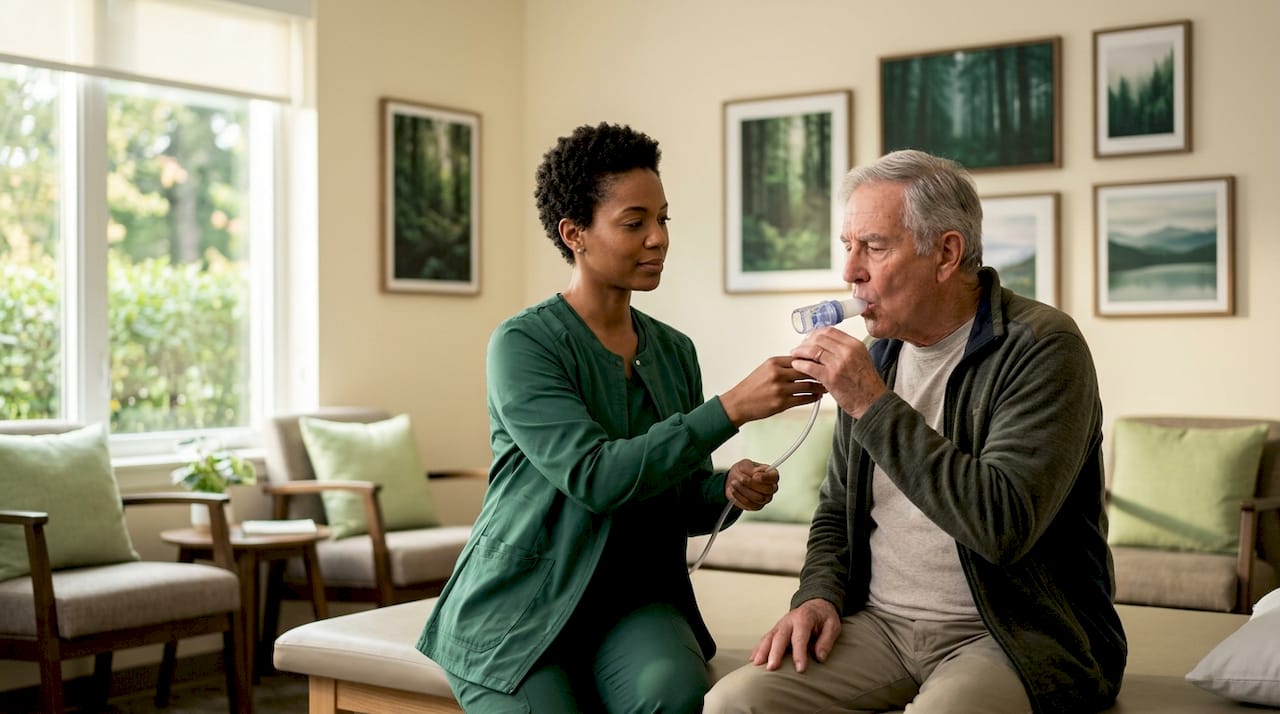
Pulmonary rehabilitation is a supervised program that combines exercise training, breathing techniques, and education to help people with chronic lung conditions like COPD or pulmonary fibrosis breathe more easily. The goal is not just to improve lung capacity but to reduce hospitalizations, improve daily functioning, and support mental health. Pulmonary rehabilitation programs bundle education, exercise, and psychosocial support measured by lung function and quality-of-life metrics to translate goals into trackable progress.
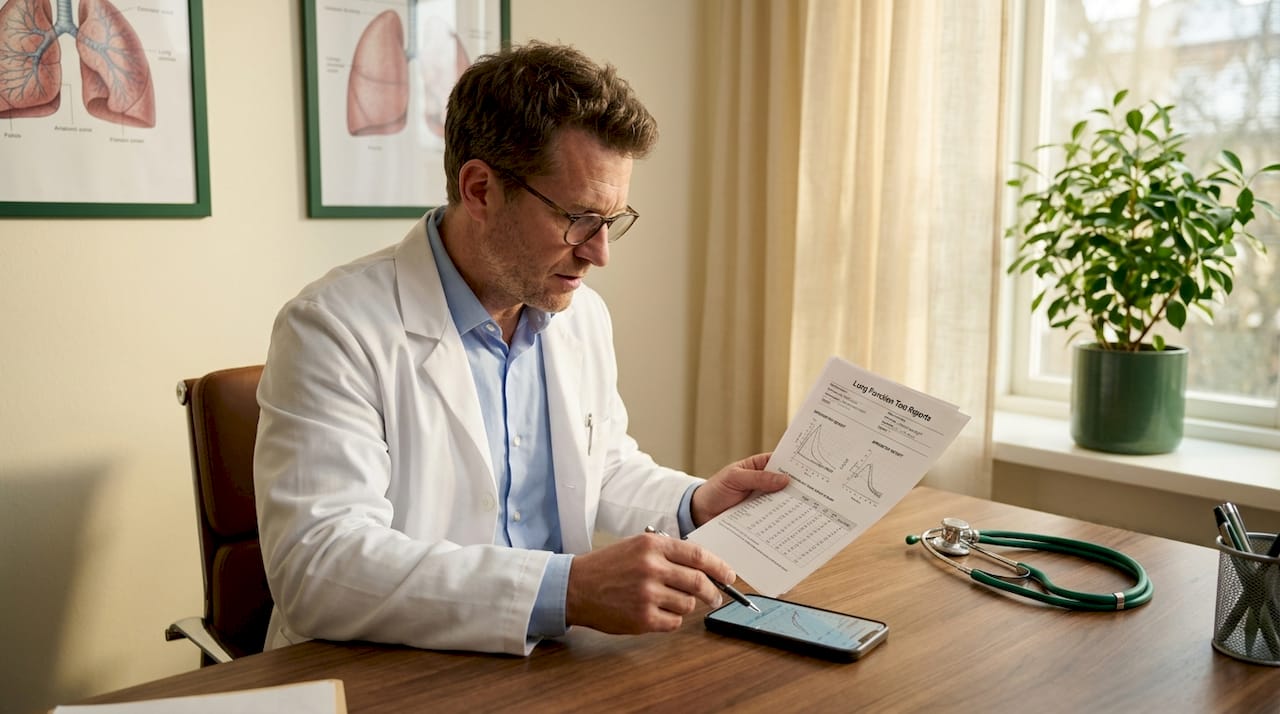
Pulmonary function tests (PFTs) are non-invasive assessments that measure how well your lungs move air in and out. PFTs objectively measure lung function, compare results to predicted values based on your age, sex, and height, and help clinicians monitor disease progression. The tests require your maximum effort and are performed by trained technicians. Results directly guide treatment decisions, making them one of the most useful tools in any lung health program.
Lung cancer screening targets adults at elevated risk before symptoms appear. The National Lung Cancer Screening Program covers adults aged 50 to 70 with a 30 pack-year smoking history who are currently asymptomatic. Screening involves four steps: eligibility assessment, a low-dose CT (LDCT) scan request, a 10 to 15 minute scan, and coordinated follow-up through a cancer screening register. Early detection at this stage dramatically improves treatment outcomes.
| Component | Purpose | Patient benefit |
|---|---|---|
| Pulmonary rehabilitation | Improve exercise capacity and breathing | Fewer hospitalizations, better quality of life |
| Pulmonary function tests | Measure and monitor lung capacity | Guides personalized treatment decisions |
| Lung cancer screening (LDCT) | Detect cancer before symptoms appear | Earlier treatment, improved survival rates |
| Education and support services | Build self-management skills | Greater adherence and confidence |
Pro Tip: Ask your doctor for a baseline PFT even if you have no symptoms. It gives you a reference point that makes future comparisons far more meaningful.
The American Lung Association’s education programs also include free live expert helpline services and training resources for tobacco cessation and lung disease management. Thousands of adults use these resources annually, making them one of the most accessible entry points into a structured lung health program.
How does timing affect lung health program outcomes?
The timing of when you start a lung health program, particularly pulmonary rehabilitation, has a measurable impact on your results. Research published in BMC Medicine shows that starting rehabilitation within two weeks after a COPD-related hospital discharge reduces readmissions, eases breathlessness, and improves quality of life. Starting within 48 hours of hospitalization specifically improves exercise capacity. These are not marginal differences. They represent a meaningful shift in how quickly patients recover and whether they return to the hospital.
Traditional center-based pulmonary rehabilitation programs face real barriers. Transportation, scheduling conflicts, and physical limitations prevent many patients from attending consistently. This is where nurse-led pulmonary rehabilitation (NLPR) offers a practical solution. NLPR is an evidence-based model that addresses multiple dimensions of chronic respiratory disease care, improving accessibility and sustaining patient adherence. It integrates physiological care, psychological support, social participation, and advance care planning into a single framework.
The nurse-led model supports patient self-efficacy by managing multimorbidity, encouraging social engagement, and bridging care transitions between hospital and home. For adults who struggle to attend clinic-based programs, this model removes a significant obstacle. Institutions exploring this model, including those affiliated with the Institute for Functional Nurses, highlight how nurse-led approaches improve patient retention and long-term adherence in pulmonary care settings.
| Timing of rehabilitation | Key outcome |
|---|---|
| Within 48 hours of hospitalization | Improved exercise capacity |
| Within 2 weeks post-discharge | Reduced readmissions and dyspnea |
| Delayed or no rehabilitation | Higher readmission risk, slower recovery |
| Nurse-led home-based model | Improved adherence and accessibility |
Pro Tip: If you or a family member is discharged after a COPD flare-up, ask the care team about starting pulmonary rehabilitation before leaving the hospital. The earlier the start, the better the outcome.
How lung health programs support prevention and chronic disease management
The most significant shift in lung health thinking over the past decade is the move from reactive treatment to proactive prevention. The NHLBI now promotes metrics for optimal lung development and aging rather than waiting for symptoms to appear before intervening. This means lung health programs are increasingly designed to identify problems before they become diagnoses.
Prevention-focused programs use PFTs to establish a healthy baseline and track changes over time. This approach catches early decline in lung function that would otherwise go unnoticed until a patient experiences shortness of breath or a serious episode. Catching that decline early gives clinicians and patients time to act.
Tobacco cessation support is another core function of these programs. Smoking remains the leading cause of preventable lung disease, and structured programs that combine behavioral counseling with pharmacological support produce significantly better quit rates than willpower alone. The American Lung Association’s helpline and cessation resources are specifically designed to support adults through this process with expert guidance.
For adults already managing conditions like COPD, asthma, or pulmonary fibrosis, lung health programs reduce the frequency and severity of flare-ups. They do this through:
- Regular monitoring of lung function with PFTs and six-minute walk tests (6MWT)
- Education on recognizing early warning signs of exacerbation
- Breathing exercises that improve daily functional capacity
- Psychosocial support that addresses anxiety and depression, which are common in chronic lung disease
- Coordination with primary care and specialist teams to adjust treatment as needed
You can find practical guidance on managing COPD symptoms and building daily habits that protect your lung function through resources offered by Gardenstatemedicalgroup.
What should you expect when joining a lung health program?
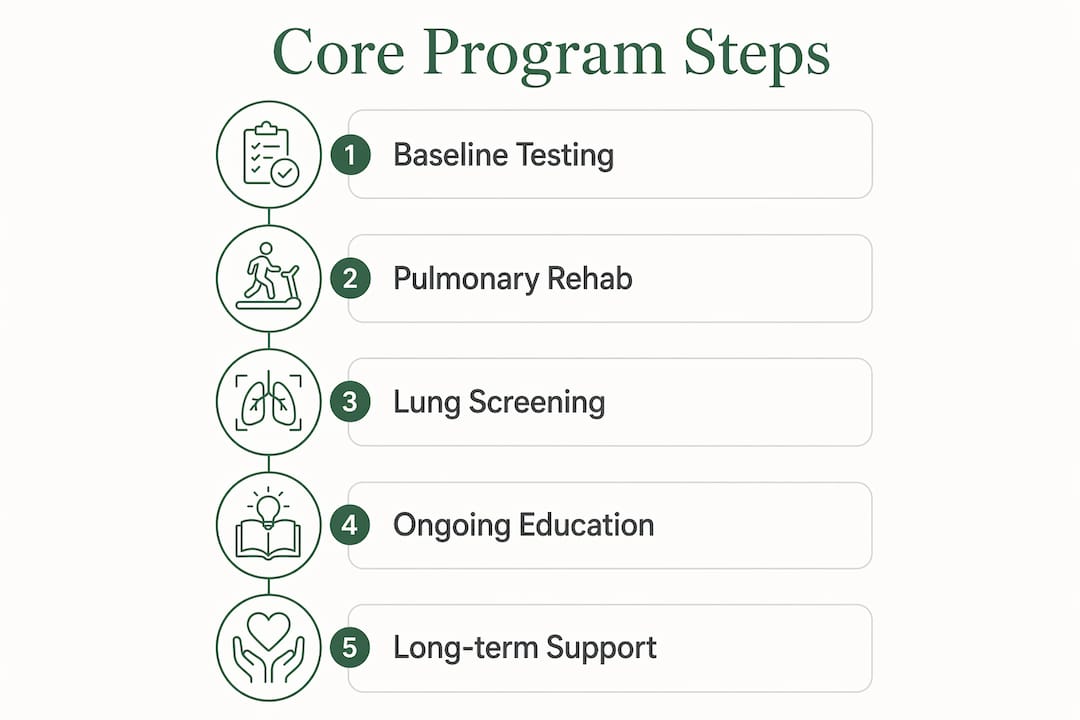
Entering a lung health program follows a clear sequence. Knowing what to expect removes uncertainty and helps you prepare for each step.
-
Eligibility screening. Your provider reviews your medical history, smoking history, age, and current symptoms to determine which program components apply to you. For lung cancer screening, this includes confirming you meet the 30 pack-year threshold and are within the eligible age range.
-
Baseline testing. You complete a pulmonary function test and possibly a six-minute walk test. These results establish your starting point and help your care team design a program suited to your current lung capacity. Learn more about what to expect from a pulmonary function test before your appointment.
-
LDCT scan (if applicable). For those in a lung cancer screening program, the scan itself takes 10 to 15 minutes and is painless. Results are communicated through your provider and, in structured programs, through a national or regional cancer screening register that sends reminders for follow-up scans.
-
Education and support sessions. You receive structured education on your condition, breathing techniques, medication use, and lifestyle modifications. Programs like those offered by the American Lung Association include access to expert helplines and peer support groups.
-
Ongoing follow-up. Progress is tracked through repeat PFTs, functional assessments, and regular check-ins with your care team. Results inform adjustments to your exercise plan, medications, or education focus. The lung health program at Gardenstatemedicalgroup follows this structured approach to keep patients on track.
Your responsibility as a participant is to attend sessions consistently, communicate changes in symptoms promptly, and follow through on lifestyle recommendations. Programs work best when patients are active participants, not passive recipients.
Key takeaways
Lung health programs are most effective when they combine early screening, timely rehabilitation, and ongoing education within a structured, patient-centered framework.
| Point | Details |
|---|---|
| Programs cover three core areas | Education, pulmonary rehabilitation, and lung cancer screening work together for full respiratory care. |
| Timing of rehabilitation matters | Starting pulmonary rehab within two weeks of discharge reduces COPD readmissions and improves outcomes. |
| Prevention is now a program goal | NHLBI promotes lung health metrics before symptoms appear, shifting programs toward early intervention. |
| Nurse-led models improve access | NLPR addresses barriers like transportation and scheduling while sustaining long-term patient adherence. |
| PFTs are the measurement backbone | Pulmonary function tests provide the objective data that guides every treatment and program adjustment. |
Why lung health programs deserve more attention than they get
From my perspective, the most underappreciated aspect of lung health programs is how much they accomplish outside the clinic. Most people think of these programs as something you do after a serious diagnosis. The reality is that the strongest programs are built around catching problems before they become diagnoses.
The shift toward nurse-led pulmonary rehabilitation is one of the most promising developments I have seen in respiratory care. It solves a problem that has frustrated clinicians for years: patients who need rehabilitation most are often the least able to travel to a center for it. A nurse-led model that meets patients where they are, addresses their psychological health alongside their physical health, and supports them through care transitions is not just convenient. It is clinically superior for a large segment of the population.
What concerns me is the gap between what the research supports and what most adults actually access. Early intervention works. Structured education works. Timely rehabilitation after hospitalization works. Yet many adults either do not know these programs exist or wait until a crisis forces them into care. Resources like tips for better lung health are a starting point, but the real opportunity is in connecting people to formal programs before their condition deteriorates.
The future of lung health programs lies in individualized, data-driven care that starts earlier and reaches more people through flexible delivery models. That future is already here in the research. The challenge is making it the standard in everyday clinical practice.
— Krunal
How Gardenstatemedicalgroup supports your respiratory health
Gardenstatemedicalgroup offers a multidisciplinary approach to lung health that covers the full spectrum from early detection to chronic disease management. Whether you need a pulmonary function test, a lung cancer screening referral, or ongoing support for a condition like COPD, the team at Gardenstatemedicalgroup in North Bergen and Secaucus, New Jersey is equipped to guide you through every step.
The practice’s cardiopulmonary care specialty integrates diagnostic testing, rehabilitation support, and patient education into a coordinated plan tailored to your needs. You do not have to manage your respiratory health alone or wait until symptoms become severe. Contact Gardenstatemedicalgroup to schedule an assessment and find out which lung health services are right for you.
FAQ
What is a lung health program?
A lung health program is a structured healthcare initiative that combines pulmonary rehabilitation, lung function testing, education, and screening to prevent respiratory disease and manage chronic lung conditions. These programs are designed to improve breathing, reduce hospitalizations, and support long-term respiratory wellness.
Why is lung health screening important?
Lung health screening, particularly low-dose CT scanning for high-risk adults, detects lung cancer and other conditions before symptoms appear. Early detection significantly improves treatment outcomes and survival rates for conditions like lung cancer and COPD.
How do pulmonary function tests work?
Pulmonary function tests measure how much air your lungs can hold and how quickly you can move air in and out. The tests are non-invasive, require your maximum effort, and produce results that clinicians use to diagnose conditions and track treatment progress over time.
Who qualifies for lung cancer screening?
Adults aged 50 to 70 with a 30 pack-year smoking history who are currently asymptomatic qualify for structured lung cancer screening programs. Eligibility is confirmed through a provider assessment before a low-dose CT scan is ordered.
How can you improve lung health through a program?
You can improve lung health by participating in a program that includes regular pulmonary function testing, supervised exercise through pulmonary rehabilitation, tobacco cessation support, and structured education on breathing techniques and symptom management.
Recommended
- Lung Health Program | Programs | Garden State Medical Group
- 4 Tips for Achieving Better Lung Health | Garden State Medical Group | Garden State Medical Group
- The Essential Things You Need to Know about Lung Diseases | Garden State Medical Group | Garden State Medical Group
- 6 Tips to Keep Your Lungs Healthy | Garden State Medical Group | Garden State Medical Group