
Heart Palpitations: When to Worry and When to Wait
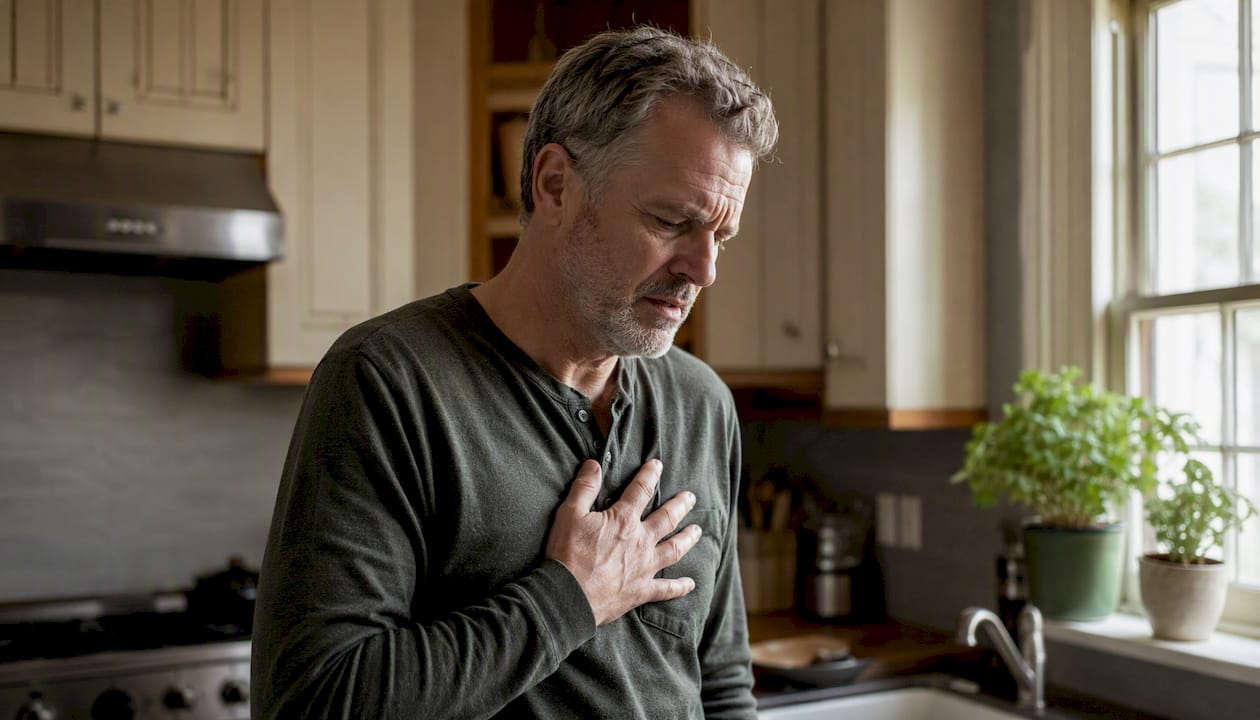
Most palpitations are not life-threatening, but some require immediate emergency care. Call 911 if you experience palpitations with chest pain, fainting, severe shortness of breath, or a continuous racing heartbeat lasting minutes to hours. Contact your doctor the same day for new, frequent, or prolonged palpitations accompanied by dizziness or a pulse consistently above 120 beats per minute. Brief, isolated palpitations without other symptoms and no history of heart disease can usually be managed with self-care and a scheduled routine visit.
Use this simple decision rule as your starting point:
- Call 911: Chest pain or pressure, fainting or near-fainting, severe shortness of breath, sudden weakness, or palpitations lasting more than a few minutes with no sign of slowing.
- Call your doctor same day: New or recurring palpitations with dizziness, moderate shortness of breath, or a rapid pulse you can feel but are not in crisis.
- Schedule a routine visit: Occasional, brief palpitations with no other symptoms and no known cardiac history.
Key Takeaways
Palpitations: when to worry comes down to one rule: emergency symptoms require 911, concerning but stable symptoms require same-day evaluation, and brief isolated episodes without other symptoms can be scheduled for routine follow-up.
| Point | Details |
|---|---|
| Emergency red flags | Call 911 for palpitations with chest pain, fainting, severe shortness of breath, or a sustained rapid pulse. |
| Same-day evaluation | Contact your doctor the same day for new, frequent, or prolonged palpitations with dizziness or a pulse above 120 beats per minute. |
| Self-care basics | Sit down, try a Valsalva maneuver or cold water on the face, and avoid stimulants; stop and seek care if symptoms worsen. |
| Diagnostics to expect | An ECG, basic blood work, and possibly a Holter or event monitor are standard first steps in any palpitation evaluation. |
| Garden State Medical Group | Offers on-site ECG, echocardiogram, Holter monitoring, and cardiopulmonary specialty care in North Bergen and Secaucus, NJ. |
Table of Contents
- What palpitations actually feel like
- Common causes and triggers worth knowing
- Red-flag symptoms that require emergency care
- When to see a doctor: same-day vs. routine visit
- What clinicians do to evaluate palpitations
- Treatment options and when each is used
- Safe steps to take during a palpitation episode
- How Garden State Medical Group evaluates palpitations
- Why evaluation matters more than most people expect
- Concerned about palpitations? Garden State Medical Group can help
- Sources
- FAQ
What palpitations actually feel like
Palpitations are an unusual awareness of your own heartbeat. The heart may feel like it is racing, pounding, fluttering, or skipping a beat. Some people feel this in the chest; others notice it in the throat or neck. The sensation itself is not a disease; it is a symptom that can point to many different causes, ranging from a harmless premature beat to a sustained arrhythmia like atrial fibrillation.
Duration matters as much as the sensation itself. An episode that lasts a few seconds and resolves on its own is very different from one that runs for several minutes or longer. Cardiac electrophysiologists note that a “skipped beat” sensation is often a premature atrial or ventricular contraction, which is frequently benign but still worth evaluating if it happens often.
Palpitations at night are also common. When you lie down and the room is quiet, you become more aware of your heartbeat, which can make a normal or mildly irregular rhythm feel alarming. Nighttime palpitations are often not serious, but palpitations accompanied by chest pain, fainting, or severe shortness of breath require prompt evaluation regardless of the time of day.
Common sensations people report:
- Racing or rapid heartbeat
- Pounding or thumping in the chest
- Fluttering or quivering sensation
- Skipped or extra beats
- A brief pause followed by a strong thump
Common causes and triggers worth knowing
Most palpitations are harmless and tied to lifestyle factors that you can often modify. Caffeine is one of the most frequent culprits; even moderate intake can trigger extra beats in sensitive individuals. Alcohol, nicotine, intense exercise, dehydration, and high stress or anxiety are also well-established triggers. Certain foods and beverages that stimulate the heart can set off episodes that feel alarming but resolve quickly once the trigger clears.

Medications and supplements deserve attention too. Decongestants, stimulant-based weight-loss products, thyroid medications, and some asthma inhalers can all affect heart rhythm. Supplements may also interact with heart rhythm or interfere with cardiac medications, so always bring a full list of what you take to any evaluation.
Medical causes are more likely when palpitations are frequent, prolonged, or getting worse over time. The most common include:
- Arrhythmias: Premature atrial contractions (PACs), premature ventricular contractions (PVCs), supraventricular tachycardia (SVT), or atrial fibrillation.
- Thyroid dysfunction: An overactive thyroid raises heart rate and can cause persistent palpitations.
- Anemia: Low red blood cell count forces the heart to work harder, producing a pounding sensation.
- Electrolyte imbalances: Low potassium or magnesium disrupts the electrical signals that regulate your heartbeat.
- Anxiety and panic: The stress response releases adrenaline, which directly speeds the heart.
Stress and anxiety deserve particular mention. The relationship between stress and heart rhythm is well documented, and anxiety-driven palpitations can feel identical to cardiac ones, which is exactly why evaluation matters.
Pro Tip: Keep a structured symptom diary: note the time, what you were doing, what you ate or drank, how long the episode lasted, and any other symptoms. The American Heart Association highlights this log as one of the most useful tools a clinician can receive, often shortening the diagnostic process significantly.
Red-flag symptoms that require emergency care
Some palpitations signal a potentially life-threatening problem. Call 911 immediately if your palpitations occur alongside any of the following:
- Chest pain or pressure
- Fainting or loss of consciousness
- Near-fainting (sudden severe lightheadedness, vision going dark)
- Severe shortness of breath at rest
- Sudden, significant weakness or inability to stand
- A sustained rapid heartbeat above 120 beats per minute that does not slow on its own
- A pulse consistently below 45 beats per minute
The MSD Manual identifies lightheadedness, fainting, chest pain, severe shortness of breath, and very high or very low pulse rates as the warning signs that should prompt emergency evaluation. These symptoms suggest the heart may not be pumping enough blood to the brain and vital organs, which can indicate a heart attack, an unstable arrhythmia, or hemodynamic instability.
Prior cardiac history raises the stakes. If you have known heart disease, a prior arrhythmia diagnosis, or a family history of sudden cardiac death, your threshold for calling 911 should be lower, not higher.
When to see a doctor: same-day vs. routine visit
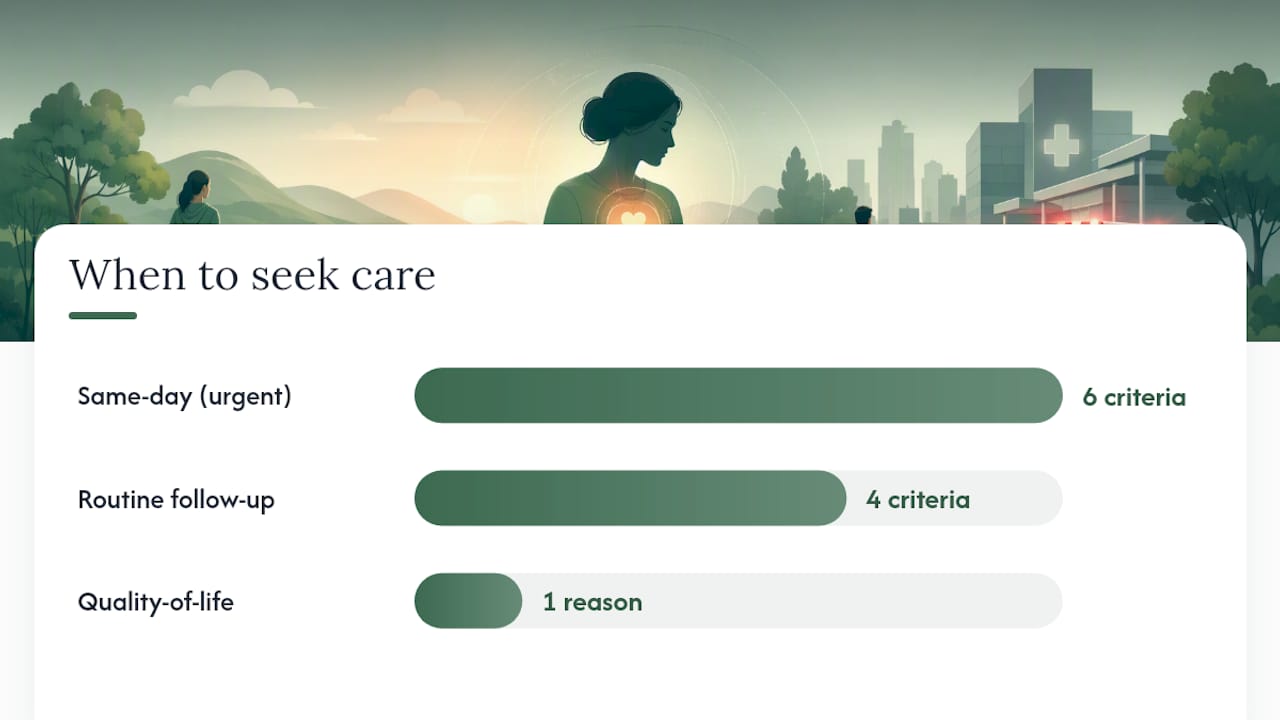
Not every palpitation warrants a 911 call, but many do need a clinician’s attention sooner than your next annual checkup. Use this framework:
Same-day or urgent contact:
- Palpitations that are new and have not happened before.
- Episodes lasting longer than a few minutes, even without severe symptoms.
- Palpitations with dizziness, moderate shortness of breath, or repeated near-fainting.
- A resting pulse you can measure above 120 beats per minute.
- You take antiarrhythmic medications or stimulant-based drugs and notice a change in your rhythm.
- You have known heart disease and any new palpitation pattern.
Routine follow-up is reasonable when:
- Episodes are brief (seconds), infrequent, and resolve completely on their own.
- No other symptoms accompany the palpitations.
- You have no history of heart disease or arrhythmia.
- The pattern has been stable and unchanged for months.
Quality of life is also a legitimate reason to seek evaluation. If palpitations are disrupting your sleep, limiting your activity, or causing significant anxiety, that alone justifies a visit, even when the rhythm is not dangerous. Clinicians treat symptomatic patients whose daily life is affected, not just those with life-threatening rhythms.
For same-day concerns, call your primary care office first. Many practices can fit you in or direct you to urgent care. The emergency room is appropriate when symptoms are severe or escalating rapidly.
What clinicians do to evaluate palpitations
Evaluation begins with a focused history and physical exam. Your clinician will ask about the character of the palpitations, when they occur, how long they last, and what makes them better or worse. From there, testing is tailored to the suspected cause.
| Test | What it shows | When it is typically ordered |
|---|---|---|
| ECG/EKG | Baseline heart rhythm, rate, conduction abnormalities, signs of prior heart attack | First-line for nearly all palpitation evaluations |
| Holter monitor | Continuous 24-hour rhythm recording | When symptoms occur daily or near-daily |
| Event monitor | Patient-activated rhythm recording over weeks | When symptoms are infrequent and unpredictable |
| Echocardiogram | Heart structure, valve function, pumping strength | When structural heart disease is suspected |
| Stress test | Rhythm and blood flow changes during exertion | When palpitations occur with exercise |
| Blood tests (thyroid, CBC, electrolytes) | Thyroid dysfunction, anemia, electrolyte imbalances | Routine first-line alongside ECG |
When initial testing is normal but symptoms persist or recur, clinicians escalate to ambulatory monitoring and imaging as needed to identify rhythm problems and structural heart disease.
What to bring to your appointment:
- Your symptom diary (time, activity, duration, accompanying symptoms)
- A complete list of all medications and supplements, including doses
- Any prior ECG reports or cardiology records
- Recent resting heart rate readings from a wearable or home monitor
- Your insurance information and preferred contact method for results
For intermittent symptoms, a short-term Holter monitor may not capture an event. In those cases, a longer-term event monitor worn for several weeks gives a much better chance of recording the rhythm during an actual episode.
Treatment options and when each is used
Many palpitations are managed with lifestyle changes and reassurance alone, once serious causes are ruled out. Identifying and removing modifiable triggers, such as caffeine, alcohol, or a stimulant supplement, often resolves symptoms without any medication. Heart health prevention strategies that address diet, sleep, and stress management are frequently the most effective first step.
When lifestyle changes are not enough, or when a specific arrhythmia is confirmed, clinicians have several options:
- Beta blockers: Slow the heart rate and reduce the force of contractions; commonly used for symptomatic premature beats, SVT, and rate control in atrial fibrillation.
- Antiarrhythmic drugs: Restore or maintain normal rhythm in more complex arrhythmias; require careful monitoring for side effects.
- Anticoagulation: Prescribed for atrial fibrillation to reduce stroke risk; the decision is based on individual risk factors, not rhythm alone.
- Electrical cardioversion: A controlled electric shock used to restore normal rhythm in atrial fibrillation or flutter when medications have not worked.
- Catheter ablation: A procedure that targets and eliminates the abnormal electrical pathway causing the arrhythmia; typically considered for recurrent symptomatic SVT or atrial fibrillation when medical therapy fails or is not tolerated.
Shared decision-making guides these choices. Quality of life is a genuine treatment trigger: a rhythm that is not immediately life-threatening may still warrant ablation if it is significantly disrupting a patient’s daily function and medications have not provided adequate relief.
Safe steps to take during a palpitation episode
When palpitations start, the first priority is to sit or lie down and stay calm. Anxiety amplifies the sensation and can make a benign episode feel much worse. The Cleveland Clinic provides practical guidance on safe maneuvers and clear indications for when to stop self-management and seek care.
Two vagal maneuvers are generally safe to try at home:
- Valsalva maneuver: Bear down as if you are straining during a bowel movement and hold for 10–15 seconds. This increases pressure in the chest and can slow certain rapid rhythms.
- Cold water on the face: Splashing cold water on your face or briefly submerging your face in cold water activates the diving reflex, which can slow the heart rate.
Carotid sinus massage, another vagal technique, should only be performed by a clinician. Attempting it at home carries a risk of stroke, particularly in older adults.
What to avoid during an episode:
- Do not ignore chest pain or fainting, even briefly.
- Avoid caffeine, alcohol, or stimulants while symptoms are active.
- Do not attempt to drive if you feel lightheaded or faint.
- Do not try to “push through” a prolonged episode hoping it resolves.
Wearable devices and home pulse oximeters can record your heart rate during an episode. That data, shared with your clinician, can be as useful as a formal monitor in some cases.
How Garden State Medical Group evaluates palpitations
At Garden State Medical Group, a palpitation evaluation starts with a thorough history and focused physical exam, followed by on-site diagnostics that may include an ECG, echocardiogram, Holter monitoring, and laboratory testing, all coordinated with our cardiopulmonary team when needed. Patients in North Bergen and Secaucus, New Jersey, have access to this full diagnostic pathway without needing multiple referrals to separate facilities.
What to bring to your Garden State Medical Group appointment:
- A written symptom diary covering at least the last two to four weeks
- Your complete medication and supplement list, including over-the-counter products
- Prior ECG reports, cardiology notes, or any relevant imaging
- Insurance card and a list of any allergies
- Heart rate data from a wearable device or home monitor, if available
During your visit, you can expect a focused conversation about your symptoms, a physical exam, and same-day testing where clinically appropriate. Telemedicine follow-up is available for results review and ongoing management, which is particularly useful for patients managing chronic cardiac conditions over time. Our multidisciplinary approach means that if your palpitations point toward a structural or rhythm problem requiring specialist input, that coordination happens within the same practice.
Why evaluation matters more than most people expect
Palpitations are usually benign. That is genuinely reassuring. But “usually” is not “always,” and the only way to know which category you fall into is a proper evaluation. What surprises many patients is how often a simple ECG or basic blood panel identifies a correctable cause, such as a low potassium level or an underactive thyroid, that resolves the palpitations entirely once treated.
The other thing worth saying plainly: anxiety about palpitations is itself a reason to seek care. Patients who know their heart has been checked and cleared tend to experience fewer symptoms over time, not because the rhythm changed, but because the fear driving their awareness of it diminished. Evaluation is not just diagnostic; it is therapeutic in its own right.
Quality of life matters in cardiology as much as it does anywhere else in medicine. A rhythm that is not immediately dangerous but is waking you up at night, stopping you from exercising, or making you afraid to be alone is a rhythm worth treating. The goal is not just a normal ECG; it is a life you can live without constant worry.
Concerned about palpitations? Garden State Medical Group can help
Garden State Medical Group offers a direct path from symptom to answer. Rather than navigating separate cardiology offices and imaging centers, you can access primary care evaluation, on-site ECG and echocardiography, Holter monitoring, and cardiopulmonary specialty care under one roof in North Bergen and Secaucus, New Jersey.
If your palpitations are new, frequent, or accompanied by any concerning symptoms, request a same-day appointment with our primary care team. For patients who have already had an initial evaluation and need specialized rhythm testing or cardiopulmonary input, our specialty team is available for direct scheduling. Telemedicine visits are also available for initial triage when coming in person is not immediately possible. To book your appointment or learn more about our diagnostic services, visit Gardenstatemedicalgroup.
Sources
The following sources informed this article and are suitable for further reading:
- How serious are heart palpitations? Causes, symptoms and when to worry | American Heart Association
- Palpitations - Heart and Blood Vessel Disorders - MSD Manual Consumer Version
- Heart palpitations: Identifying possible causes and managing triggers - Harvard Health
- Heart Palpitations at Night: Causes, Treatment, and Prevention - Healthline
This article is general information, not a substitute for advice from a qualified doctor. Consult a qualified healthcare professional about your own circumstances before acting on anything here.
FAQ
When should I go to the hospital for a rapid heart rate?
Go to the emergency room if your rapid heart rate is accompanied by chest pain, fainting, severe shortness of breath, or does not slow on its own within a few minutes. A sustained pulse above 120 beats per minute with any of those symptoms warrants immediate evaluation.
What are the most common causes of heart palpitations?
The most common causes include caffeine, alcohol, stress, anxiety, dehydration, and lack of sleep. Medical causes such as thyroid dysfunction, anemia, electrolyte imbalances, and arrhythmias like atrial fibrillation or premature contractions are identified through ECG and blood testing.
Does walking help heart palpitations?
Light walking can help if palpitations are driven by anxiety or stress, since gentle movement can reduce adrenaline levels. However, if palpitations worsen with exertion or are accompanied by chest pain or dizziness, stop activity immediately and seek evaluation.
How do I stop severe heart palpitations at home?
Try sitting or lying down, bearing down with a Valsalva maneuver, or splashing cold water on your face. If these steps do not resolve the episode within a minute or two, or if any severe symptoms develop, call 911 or seek same-day care rather than continuing to wait.
Recommended
- 5 Common Heart Conditions You Need to Be Wary of and Prevent 100% | Garden State Medical Group | Garden State Medical Group
- Heart Health Discussions and Why It’s Never Too Early | Garden State Medical Group | Garden State Medical Group
- Managing Your Heart’s Health: The Value of Cardiac Care | Garden State Medical Group | Garden State Medical Group
- Understanding Heart Murmurs: 4 Important FAQs Answered | Garden State Medical Group | Garden State Medical Group