
Pneumonia Vaccine for Adults: What You Need to Know
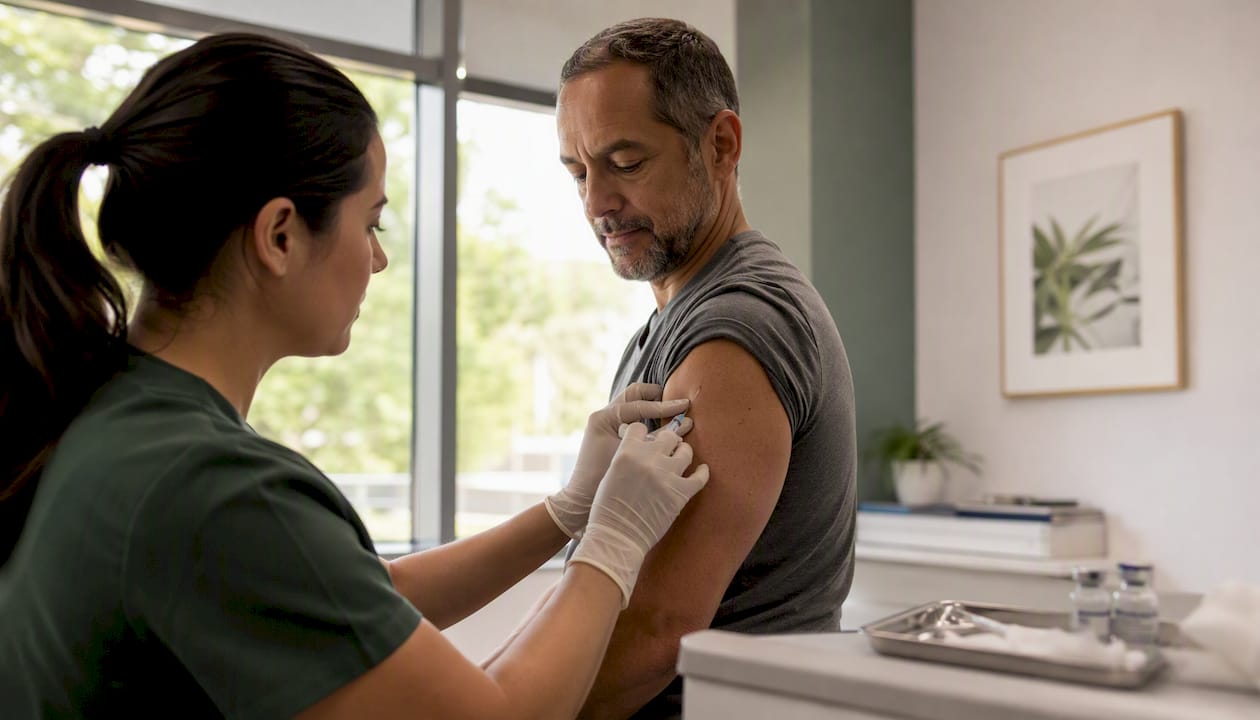
If you are 50 or older and have never received a pneumococcal conjugate vaccine (PCV), current CDC guidance recommends getting one now. The three options are PCV21 (CAPVAXIVE), PCV20 (Prevnar 20), or PCV15 (VAXNEUVANCE). PCV21 and PCV20 each complete the series in a single dose. If your provider uses PCV15, you will need a follow-up dose of PPSV23 (Pneumovax 23) at least one year later.
Here is a quick summary of where things stand:
- PCV21 (CAPVAXIVE): Single dose; covers 21 serotypes; newest option as of 2024.
- PCV20 (Prevnar 20): Single dose; covers 20 serotypes; no PPSV23 needed after.
- PCV15 (VAXNEUVANCE): One dose, then PPSV23 at least 1 year later.
- PPSV23 (Pneumovax 23): Polysaccharide vaccine; used as a follow-up to PCV15 or in certain high-risk adults.
Pro Tip: Bring your immunization record to every vaccine appointment. Without it, your provider must treat your history as unknown, which can change the recommended product and timing.
Key Takeaways
Adults 50 and older who have never received a pneumococcal conjugate vaccine should get one now, with PCV21 or PCV20 completing the series in a single dose and PCV15 requiring a follow-up PPSV23 at least one year later.
| Point | Details |
|---|---|
| Age-based recommendation | All adults 50+ who are PCV-naïve should receive a single dose of PCV21, PCV20, or PCV15 now. |
| PCV15 requires follow-up | If PCV15 is used, a PPSV23 dose is needed at least 1 year later (8 weeks for high-risk groups). |
| Prior vaccine history changes the plan | Bring your immunization record; prior PCV13, PPSV23, or mixed histories each require a different next step. |
| Shared decision-making for some adults 65+ | Adults who completed PCV13 + PPSV23 should discuss PCV20 or PCV21 with their provider; a 5-year interval applies. |
| Garden State Medical Group | Primary care, cardiopulmonary care, and a Lung Health Program support vaccination and follow-up in North Bergen and Secaucus, NJ. |
Table of Contents
- What pneumococcal vaccines are and how they work
- Which adults should get a pneumococcal vaccine now
- Recommended vaccine sequences and timing
- What side effects to expect after a pneumococcal shot
- How well pneumococcal vaccines protect you
- Where and how to get vaccinated in the U.S.
- How Garden State Medical Group supports your vaccination and lung health
- Why pneumococcal vaccination still matters for adults
- Vaccination appointments at Garden State Medical Group
- Sources
- FAQ
What pneumococcal vaccines are and how they work
Pneumococcal vaccines protect against Streptococcus pneumoniae, the bacterium responsible for pneumonia, meningitis, and bloodstream infections. Two distinct vaccine classes exist, and understanding the difference helps explain why sequence and timing rules matter.
Conjugate vaccines (PCVs) attach pneumococcal polysaccharides to a carrier protein. That protein triggers a stronger, longer-lasting immune response and creates immune memory, meaning your body can mount a faster defense on re-exposure. PCV15, PCV20, and PCV21 are all conjugate vaccines currently available for adults in the United States. PCV13 (Prevnar 13) and PCV7 are older conjugate vaccines you may have received in the past; they are no longer the standard for adults but are relevant to sequencing decisions.
Polysaccharide vaccines (PPSV23) stimulate a different immune pathway. They do not generate the same immune memory as PCVs, which is why PPSV23 is used as a complement to PCV15 rather than a standalone option for most adults.
The number in each vaccine’s name tells you how many pneumococcal serotypes it covers. That number is called the vaccine’s valency. Higher valency means broader coverage. PCV21 covers eight serotypes not included in PCV13, which is the main reason ACIP added it as an option for adults in 2024.
Which adults should get a pneumococcal vaccine now
The clearest recommendation applies to age. ACIP expanded its guidance to recommend a single dose of a PCV for all adults 50 and older who are PCV-naïve or whose vaccination history is unknown. This change was designed to simplify clinical decision-making and reach more people who carry a higher risk of severe pneumococcal disease.
Adults between 19 and 49 are recommended to get vaccinated if they have certain medical conditions or risk factors, including:
- Immunocompromising conditions (HIV, cancer, organ transplant, long-term steroid use)
- Asplenia (absent or non-functioning spleen)
- Cochlear implants or cerebrospinal fluid (CSF) leaks
- Chronic heart disease, lung disease, liver disease, or kidney disease
- Diabetes mellitus
- Cigarette smoking
- Residence in a long-term care facility or nursing home
Adults 65 and older who previously completed a full series with PCV13 and PPSV23 fall into a different category. For them, ACIP recommends shared clinical decision-making about whether to receive an additional dose of PCV20 or PCV21, weighing individual risk factors and the expanded serotype coverage of newer vaccines.
Pro Tip: If you are unsure whether you have ever received a pneumococcal vaccine, check your state’s immunization registry or ask your primary care provider to review your records before your appointment. Treating unknown history correctly prevents unnecessary doses and missed coverage.
Pneumococcal vaccination fits naturally into the routine adult screenings your provider already tracks by age, so it is worth reviewing your full preventive care schedule at the same visit.
Recommended vaccine sequences and timing
The right vaccine and timing depend almost entirely on what you have already received. The table below maps the most common prior-vaccination scenarios to the current recommended next step, based on ACIP/MMWR guidance.
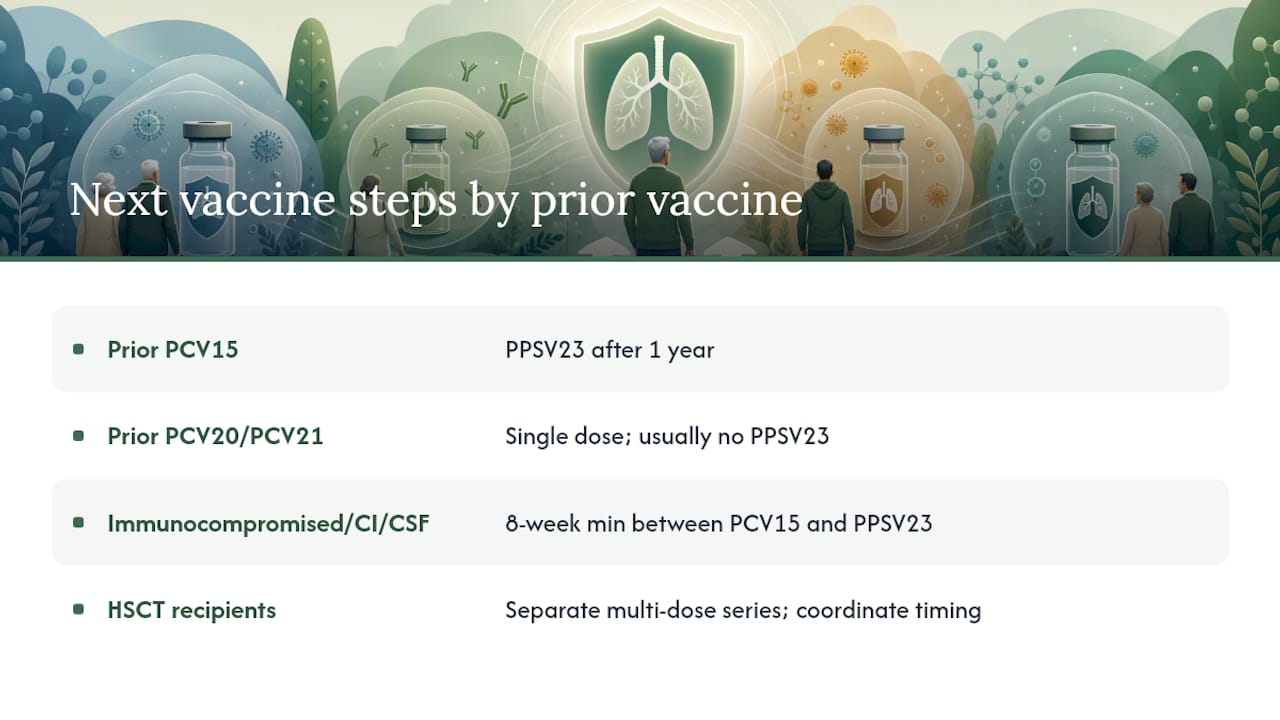
A few points deserve attention. Adults who are immunocompromised, have a cochlear implant, or have a CSF leak qualify for the shorter 8-week minimum interval between PCV15 and PPSV23, rather than the standard one year. Hematopoietic stem cell transplant (HSCT) recipients follow a separate multi-dose schedule beginning several months after transplant and should coordinate timing with their transplant team.
Higher-valent conjugate vaccines like PCV20 and PCV21 were developed specifically to reduce the need for multi-dose series in most adults. A single dose of either one covers more serotypes than PCV13 and eliminates the need for a follow-up PPSV23 in the majority of patients.
Pro Tip: If your provider does not stock the specific vaccine you need, ask them to order it or provide a referral rather than substituting a different product or delaying the series.
What side effects to expect after a pneumococcal shot
Side effects from pneumococcal vaccines are common and generally mild. Most resolve within one to three days.
Common local reactions:
- Pain, redness, or swelling at the injection site
- Tenderness or firmness in the arm
Common systemic reactions:
- Fatigue
- Headache
- Low-grade fever
- Muscle aches
Serious reactions are rare. Severe allergic reactions (anaphylaxis) can occur with any vaccine, which is why providers ask patients to remain briefly after the injection. Signs of a serious reaction include difficulty breathing, swelling of the face or throat, rapid heartbeat, or dizziness. If you experience any of these, seek emergency care immediately.
Post-licensure safety is monitored through the Vaccine Adverse Event Reporting System (VAERS), a national program run jointly by the CDC and FDA. If you or your provider suspects a vaccine-related adverse event, a report can be submitted at vaers.hhs.gov.
Pro Tip: Apply a cool, damp cloth to the injection site and move your arm gently after the shot. Both steps can reduce soreness without affecting the immune response.
How well pneumococcal vaccines protect you
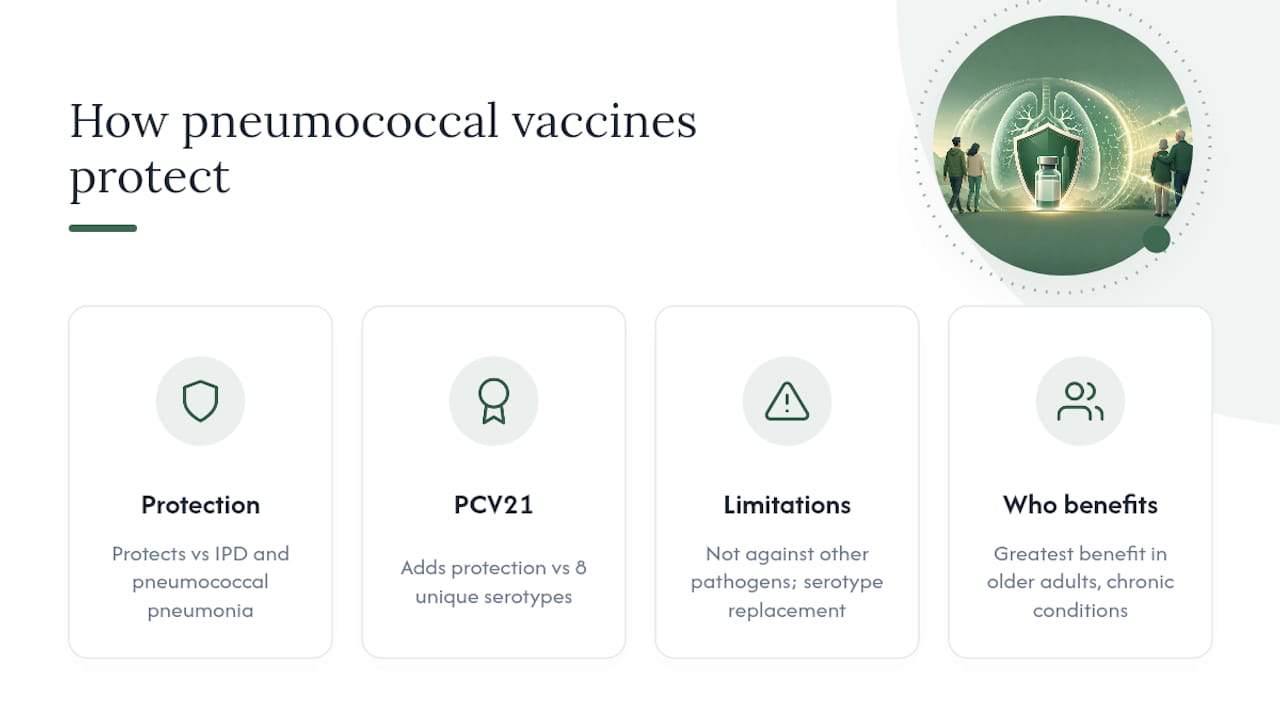
Pneumococcal vaccines protect against two main categories of illness: invasive pneumococcal disease (IPD), which includes bacteremia and meningitis, and pneumococcal pneumonia. PCVs have a strong track record of reducing IPD in adults, and real-world data from childhood immunization programs show that widespread PCV use also reduces adult disease through herd protection.
Adding PCV21 as an option is expected to prevent additional disease caused by the eight serotypes unique to that vaccine, according to ACIP’s 2024 MMWR report. Ongoing surveillance will track whether those gains materialize at the population level.
A few limitations are worth knowing. Pneumococcal vaccines do not prevent pneumonia caused by other bacteria, viruses, or fungi. Serotype replacement, where non-vaccine serotypes become more prevalent over time, is a real phenomenon that public health agencies monitor closely. Still, the vaccines substantially reduce the risk of the most severe pneumococcal outcomes, particularly in older adults and people with chronic conditions.
The ACIP recommendations that drive these decisions are published in MMWR and updated as new evidence emerges, so the guidance you see today reflects the best available data.
Where and how to get vaccinated in the U.S.
Most adults get their pneumococcal vaccine through a primary care office or a retail pharmacy. Both are convenient, but your primary care provider has one clear advantage: centralized records. CDC guidance specifically recommends keeping vaccination records in the patient’s medical home so that future providers can make accurate sequencing decisions.
Before your appointment, here is what to do:
- Call ahead to confirm the specific vaccine product is in stock (not all offices carry all three PCV options).
- Bring your immunization record, a photo ID, and your insurance card.
- Ask your provider to document the vaccine in your state’s immunization registry.
- Check whether your insurance or Medicare plan covers the vaccine at no cost; most do under preventive care benefits.
If your primary care office does not stock the product you need, ask for a referral or an order rather than going to a different site and leaving your records fragmented. Keeping your series in one place matters more than convenience.
Pneumococcal vaccination is one part of a broader preventive care plan that your provider can help you build based on your age, health history, and risk factors.
How Garden State Medical Group supports your vaccination and lung health
Garden State Medical Group, serving patients in North Bergen and Secaucus, New Jersey, offers the full range of services that make pneumococcal vaccination straightforward and well-coordinated.
Relevant services include:
- Primary care: Vaccination delivery, immunization record review, and eligibility assessment for all adult pneumococcal vaccines.
- Cardiopulmonary care: Specialized support for patients with chronic heart or lung conditions, who are often among the highest-priority groups for pneumococcal vaccination.
- Lung Health Program: Pulmonary function testing and ongoing lung health monitoring, which complement vaccination for patients managing respiratory conditions.
- On-site diagnostics and radiology: Integrated diagnostic testing so that patients with complex histories can be evaluated and vaccinated in one location.
- Chronic care management: Coordinated care for patients with diabetes, heart disease, and other conditions that place them in the recommended vaccination group.
- Telemedicine: Virtual consultations to review your vaccination history and determine which product you need before you come in.
To get vaccinated at Garden State Medical Group, call the office or book online to schedule a primary care appointment. Bring your immunization record and insurance card. The practice accepts Medicare and most major insurance plans. If the specific vaccine you need is not currently in stock, the team will order it or coordinate a referral so your series stays on track and your records stay centralized.
Why pneumococcal vaccination still matters for adults
Pneumococcal disease does not get the same public attention as influenza or COVID-19, but it remains a serious cause of hospitalization and death in older adults and people with chronic conditions. The 2024 ACIP updates, which expanded the age-based recommendation to include all adults 50 and older and added PCV21 as an option, reflect a genuine effort to close protection gaps that existed under older guidance.
What often gets overlooked is how much prior vaccine history shapes the right decision today. An adult who received PCV13 a decade ago is in a different position than someone who has never been vaccinated at all, and the sequencing rules exist for a reason. Skipping a follow-up PPSV23 after PCV15, or waiting too long between doses, leaves real gaps in coverage.
The most practical step you can take is to find your immunization record and bring it to your next appointment. If you cannot find it, your provider can check your state’s registry. From there, the decision about which vaccine to get is straightforward.
Vaccination appointments at Garden State Medical Group
Garden State Medical Group makes it easy to get your pneumococcal vaccine and keep your records in one place, with primary care services designed for exactly this kind of preventive visit.
Patients with chronic lung or heart conditions can also connect with the cardiopulmonary care team, who understand the elevated risk these conditions carry and can coordinate vaccination alongside ongoing disease management. Medicare and most major insurance plans are accepted. To schedule your appointment in North Bergen or Secaucus, call the office directly or book online at gardenstatemedicalgroup.com. Bring your immunization record, and the team will handle the rest.
Sources
- Recommended Vaccines for Adults | Pneumococcal
This article is general information, not a substitute for advice from a qualified doctor. Consult a qualified healthcare professional about your own circumstances before acting on anything here.
FAQ
Should all adults get a pneumonia vaccine?
Not all, but most. All adults 50 and older who have never received a PCV should get one now, and adults 19–49 with certain medical conditions (such as immunocompromising conditions, asplenia, chronic heart or lung disease, or diabetes) are also recommended to get vaccinated.
How long does a pneumonia shot last?
Current guidance does not specify a routine booster interval for most adults after completing the recommended series. Adults 65 and older who previously received PCV13 and PPSV23 may discuss an additional dose of PCV20 or PCV21 with their provider, with a minimum interval of 5 years after the most recent pneumococcal vaccine.
What are the downsides of getting a pneumonia shot?
The most common side effects are injection site pain, fatigue, headache, and low-grade fever, typically resolving within one to three days. Serious reactions such as anaphylaxis are rare and monitored through VAERS.
Do seniors need a pneumonia shot booster?
Seniors who completed the older PCV13 plus PPSV23 series are not automatically due for a booster, but ACIP recommends a shared clinical decision-making conversation with their provider about whether a dose of PCV20 or PCV21 is appropriate given the expanded serotype coverage of newer vaccines.
Recommended
- Our Guide to Pneumonia: Signs, Symptoms, and Treatment | Garden State Medical Group | Garden State Medical Group
- Watch Out for These 5 Warning Signs of Pneumonia | Garden State Medical Group | Garden State Medical Group
- COVID-19 Tips: 4 Ways to Improve & Protect Your Lung Health | Garden State Medical Group | Garden State Medical Group
- The Essential Things You Need to Know about Lung Diseases | Garden State Medical Group | Garden State Medical Group