
Prediabetes Diet Plan: What to Eat and a Sample Week
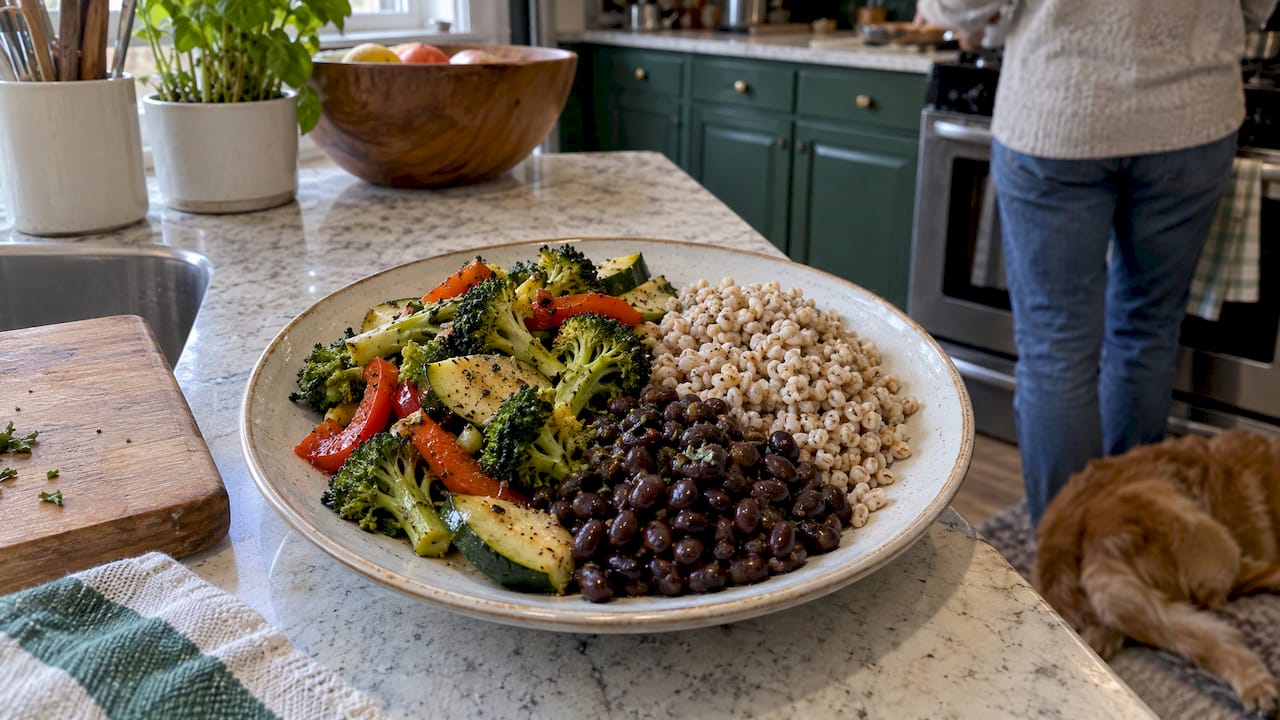
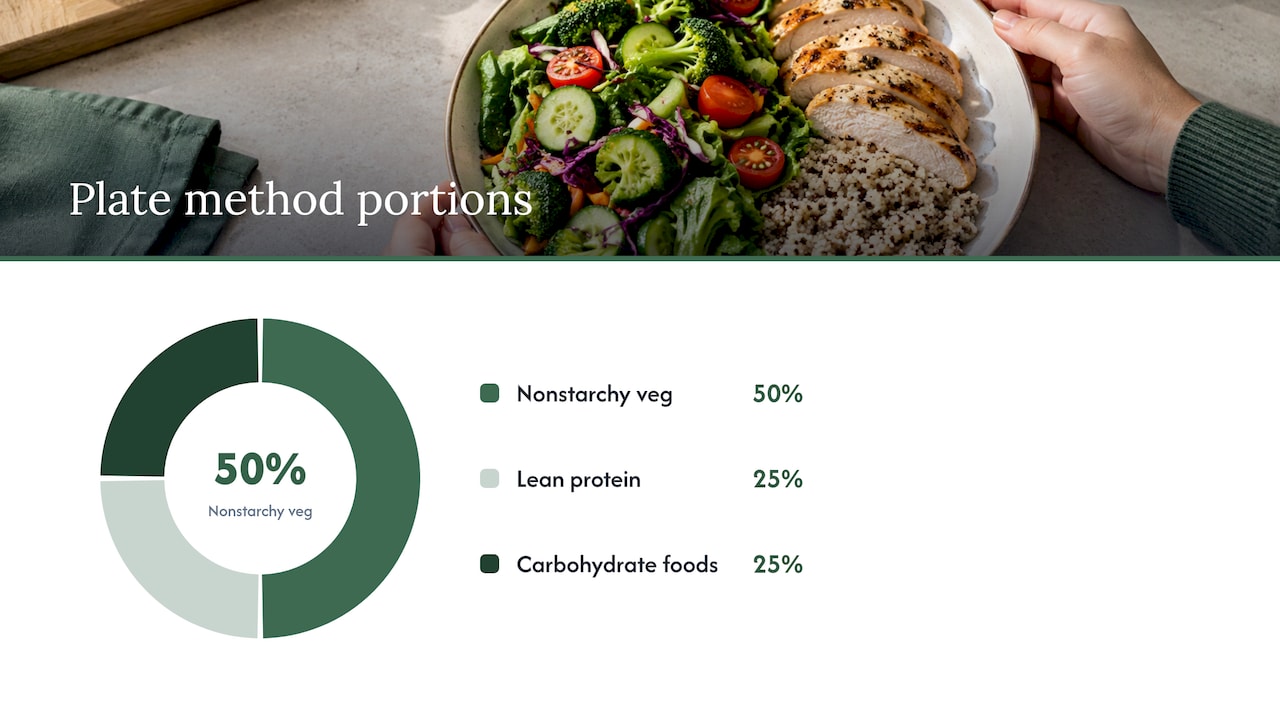
A prediabetes diet plan is built on a simple pattern: half your plate nonstarchy vegetables, a quarter lean protein, a quarter whole-grain or other carbohydrate foods, and water as your drink. The pattern is the same for most people, but the details are not. Your A1C, your medicines, your culture and your schedule all change what the plan should look like. If you live in North Bergen or Secaucus, our primary care team can check your numbers and help you turn the general pattern into a plan you will actually follow.
This guide covers the foods to eat more often, the foods to ease off, how to build a plate, what a day of eating can look like, and what the research says about foods that lower A1C.
TL;DR
- Prediabetes means an A1C of 5.7% to 6.4%. Food, movement and modest weight loss can move that number, and a plan that fits you works better than a generic one.
- Fill half your plate with nonstarchy vegetables, a quarter with lean protein and a quarter with whole grains or other carbohydrate foods. Drink water or unsweetened drinks.
- Fiber is the most useful number to track: the American Diabetes Association (ADA) recommends at least 14 grams per 1,000 calories.
- Sugary drinks, juice, refined grains and highly processed foods are the first things to cut back.
- Your plan should be individualized. We can test your blood sugar, review your history and connect you with our Diabetes Prevention and Education Program.
Table of Contents
- What prediabetes means for your eating
- Foods to eat more often
- Foods and drinks to ease off
- Build a plate with the plate method
- Foods that lower A1C: what the evidence says
- A sample day of eating
- A simple week to start with
- Why a personal plan beats a generic one
- Our perspective
- Get a plan built around your blood work
- FAQ
- Sources
What prediabetes means for your eating
Prediabetes means your blood sugar is higher than normal but not yet in the diabetes range. According to the ADA’s 2025 standards summary, it is diagnosed with an A1C of 5.7% to 6.4%, a fasting plasma glucose of 100 to 125 mg/dL, or a 2-hour glucose tolerance test result of 140 to 199 mg/dL. A1C is a blood test that shows your average blood sugar over roughly the past three months, so it reflects your habits, not one meal.
The same summary recommends testing every year to see whether prediabetes is progressing toward type 2 diabetes. That is why a plan matters now. Food is one of the three levers the ADA names, along with physical activity and, when needed, weight loss. For people who need to lose weight, the ADA’s consensus report sets goals of at least 150 minutes a week of moderate activity and a 7% to 10% loss of starting body weight.
You do not need a punishing diet. The ADA’s guidance says there is no ideal split of carbohydrate, protein and fat that works for everyone. It should be based on what you eat now, what you like and your health goals. That is good news: your plan can include the foods you grew up with.
Foods to eat more often
The CDC’s prevention handout, On Your Way to Preventing Type 2 Diabetes, lists foods to choose more often. Here they are, with everyday examples:
- Nonstarchy vegetables: peppers, mushrooms, asparagus, broccoli, spinach, green beans, cauliflower.
- Fruit: whole fruit such as apples, berries and oranges rather than juice.
- Lean protein: fish, chicken, turkey, tofu, eggs and yogurt. The U.S. Department of Veterans Affairs patient guide also includes lentils, beans and seafood.
- Whole grains: quinoa, brown rice, steel-cut oatmeal.
- Healthy fats: olive oil and avocado. The VA guide adds nuts.
- Drinks: water or unsweetened beverages.
The ADA’s 2025 Standards of Care describe the same overall pattern: nonstarchy vegetables, whole fruits, legumes, lean proteins, whole grains, nuts and seeds, and low-fat dairy or nondairy alternatives. Notice that no single food is magic. The benefit comes from the pattern repeated across weeks.
Foods and drinks to ease off
The CDC handout lists what to choose less often: processed foods such as packaged snacks, packaged meat, chips, granola bars, sweets and fast food; trans fat; sugary drinks such as fruit juice, sports drinks and soda; and alcohol. The ADA’s 2025 standards also call for minimizing red meat, sweets, refined grains and ultraprocessed foods.
If you change only one thing first, make it liquid sugar. The VA guide says sugar-sweetened drinks, including juice, soda, sports drinks and energy drinks, raise glucose and contribute to weight gain. The CDC’s meal planning page adds that fruit juice raises blood sugar faster than whole fruit. Swapping a daily soda or glass of juice for water or unsweetened iced tea is a change most people can make this week.
Ease off does not mean never again. A slice of birthday cake or a family dinner is part of life. The goal is that most of what you eat most days follows the pattern above.
Build a plate with the plate method
The plate method is the easiest way to plan a meal without counting anything. The CDC’s version uses a 9-inch dinner plate:
- Fill half with nonstarchy vegetables.
- Fill one quarter with lean protein.
- Fill one quarter with carbohydrate foods, such as brown rice, beans, whole-grain bread or a starchy vegetable.
- Drink water or unsweetened iced tea.
The CDC’s meal planning page also explains that eating carbohydrates together with protein, fat or fiber slows how fast blood sugar rises. This is why an apple with peanut butter is a steadier snack than an apple alone, and why toast with eggs works better than toast by itself.
Where it goes wrong: the plate method assumes a 9-inch plate. Many home dinner plates are 11 or 12 inches, so portions drift upward. If your plates are large, use a smaller one or fill only the inner portion. Restaurant meals and takeout are the other trouble spot, because the starch often takes up half the plate. Ask for extra vegetables in place of fries or rice, or split a portion and take half home. For ideas on structuring repeatable meals, these plate-based meal templates show how to divide a plate into shares.
Foods that lower A1C: what the evidence says
Many people search for specific foods that lower A1C. The honest, useful answer is that fiber-rich, minimally processed foods are what the guidance points to, and that the effect comes from the whole pattern.
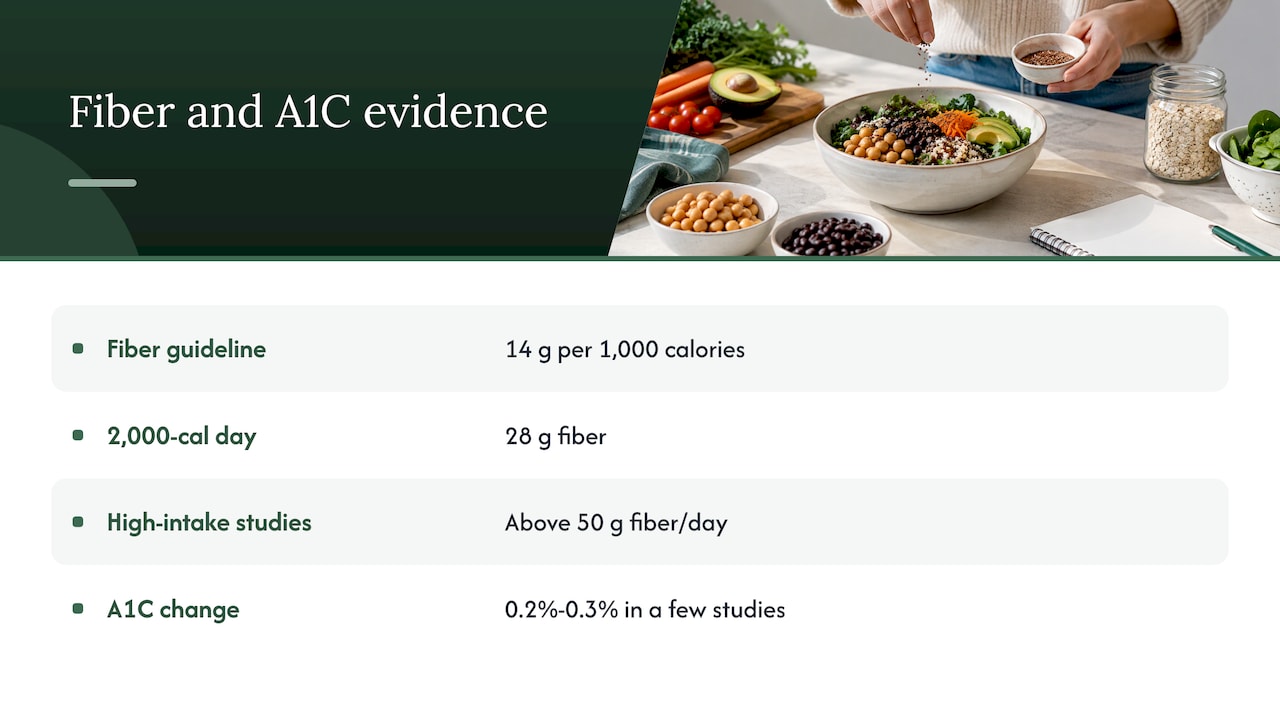
Fiber. The ADA consensus report recommends at least 14 grams of fiber per 1,000 calories for people with diabetes and those at risk. On a 2,000-calorie day, that is 28 grams. The same report notes that a few studies found modest A1C reductions of 0.2% to 0.3% with fiber intakes above 50 grams a day. That is a high intake, so treat it as a sign that fiber matters rather than a target to chase.
The report also advises getting fiber from naturally high-fiber foods rather than from supplements, because whole foods bring other nutrients and plant compounds with them. Good sources include oats, beans, lentils, barley, vegetables, berries and apples.
Less refined carbohydrate. The ADA’s professional nutrition guidance says that reducing overall carbohydrate intake has the most evidence for improving blood sugar in diabetes. For most people with prediabetes, that begins with swapping refined grains and sweets for whole grains, beans and vegetables, not with cutting out all carbohydrates.
Several patterns work. The same ADA page lists a range of evidence-based eating patterns, including Mediterranean-style, vegetarian or vegan, low-fat and lower-carbohydrate approaches. What they share is an emphasis on nonstarchy vegetables, quality carbohydrates, minimal added sugar and refined grains, and whole or minimally processed foods. You can choose the pattern that suits your tastes and culture.
How much your A1C moves depends on where you start, your weight, your activity and your medicines. A blood test at your next visit is the only way to see your own result.
A sample day of eating
This sample day follows the plate method and the fiber guidance. It is adapted from a public health handout published by Alberta Health Services, which suggests three meals a day spaced four to six hours apart so carbohydrates are spread across the day.
| Meal | Example |
|---|---|
| Breakfast | Oatmeal with ground flaxseed, berries and milk |
| Lunch | Whole-grain chicken sandwich with avocado, lettuce and cucumber, plus an apple and milk |
| Snack | Plain yogurt, popcorn, or whole-grain toast with nut butter |
| Dinner | Baked salmon, brown rice and green beans, with extra vegetables to fill half the plate |
A few ways to make this fit your life in Hudson County:
- Swap in familiar foods. Black beans and brown rice, a vegetable-heavy stir-fry, lentil soup, grilled fish with a big salad and chickpea dishes all fit the same plate structure.
- Keep breakfast simple. Eggs with sauteed spinach and a slice of whole-grain toast works as well as oatmeal.
- Plan one flexible meal. Pick one meal a week where you eat out, and decide ahead how you will build the plate.
Portions matter, and so do your medicines. If you take insulin or a medicine that can lower blood sugar too far, tell your provider before you change how much you eat. Your plan and your medication should be reviewed together.
A simple week to start with
Nobody changes everything at once. Here is a gentle order that many people find workable:
- Week 1: Replace sugary drinks with water or unsweetened tea. Add one vegetable to lunch and dinner.
- Week 2: Use the plate method at dinner. Choose whole-grain versions of bread, rice or pasta.
- Week 3: Add beans, lentils or oats to your day for fiber. Swap packaged snacks for fruit, yogurt or nuts.
- Week 4: Add a 10-minute walk after your largest meal, building toward 150 minutes a week of moderate activity, the ADA’s recommended goal.
Write down what you eat for a few days before you start. A short food log shows where the sugar and refined carbohydrate actually come from, which is often not where people expect.
Why a personal plan beats a generic one
The ADA’s 2025 Standards of Care state that there is no one-size-fits-all eating pattern and recommend individualized medical nutrition therapy delivered by a registered dietitian for people with prediabetes. The ADA’s professional guidance also says healthy eating includes personal and cultural preferences, access to healthy food and the enjoyment of eating, and that people need practical day-to-day tools rather than strict rules.
An online meal plan cannot know that you work nights, cook for a family of five, take a blood pressure medicine or have kidney or heart conditions. It also cannot track whether your A1C is going down. A plan built around your lab results, your medical history and your routine can.
The ADA consensus report also recommends that people with prediabetes be referred to an intensive behavioral lifestyle program modeled on the Diabetes Prevention Program. If you have Medicare, check whether you qualify for the Medicare Diabetes Prevention Program. Medicare lists it as a Part B preventive service with 16 weekly sessions over six months, at no cost if you qualify. Eligibility includes a recent A1C between 5.7% and 6.4%, or an equivalent glucose result, and a body mass index of 25 or more (23 or more if you are Asian), with no prior diabetes diagnosis. Ask us whether your recent results meet those requirements.
Our perspective
Most people who come to us with prediabetes have already read a dozen meal plans. What they are missing is not information. It is a plan connected to their own numbers.
We approach prediabetes the way we approach all care: with a multidisciplinary, preventive and educational focus. Your primary care provider reviews your history and your blood work. Our on-site diagnostic testing, including blood tests, means you do not need to travel far to find out where you stand. Our Diabetes Prevention and Education Program is built around the idea that people succeed when they understand why a change helps, not only what to change.
We also know that food is cultural and personal. North Bergen and Secaucus are home to many communities, and a good plan should include the dishes you love. Our goal is to help you make steady, realistic changes and to follow your progress over time.
Garden State Medical Group
Get a plan built around your blood work
If you want to know where your A1C stands, or you already know you have prediabetes and want a plan, our Primary Care team in North Bergen and Secaucus can start with a visit and blood tests. Our Diabetes Prevention and Education Program brings education and prevention together in one place, and we offer telemedicine visits if getting to the office is hard. We accept Medicare and Medicaid, among other insurance plans, so check with our office about your coverage.
To learn more about the habits that go along with a good diet, read our diabetes prevention checklist and our article on truths about prediabetes. If you are already managing type 2 diabetes, see our practical diet guide. You can also book an appointment from our home page.
FAQ
Can prediabetes go back to normal?
For many people, yes. Eating more nonstarchy vegetables, fiber and whole foods, getting regular activity and losing 7% to 10% of body weight when needed are the goals the ADA names. Your own results can only be confirmed with a repeat blood test, so ask your provider to recheck your A1C.
How long does it take to lower A1C?
A1C reflects roughly the past three months, so changes show up gradually. Most providers recheck it after a few months, and the ADA recommends testing at least once a year to watch for progression. Your provider can set the timing that fits your situation.
Is a low-carb diet the best prediabetes diet plan?
The ADA says there is no single best split of carbohydrate, protein and fat for everyone. Reducing carbohydrate has strong evidence for improving blood sugar in diabetes, and several patterns, including Mediterranean-style, work. The best plan is one built from quality foods that you can keep following.
Do I need to avoid fruit?
No. The CDC’s handout lists fruit among the foods to choose more often. Whole fruit comes with fiber, and the CDC notes that juice raises blood sugar faster than whole fruit, so choose the whole piece.
Sources
- Diabetes Meal Planning, CDC
- On Your Way to Preventing Type 2 Diabetes, CDC
- Managing Prediabetes, U.S. Department of Veterans Affairs
- ADA Standards of Care 2025, Facilitating Positive Health Behaviors
- Nutrition Therapy for Adults With Diabetes or Prediabetes, ADA Consensus Report 2019
- Diabetes Nutrition & Wellness, American Diabetes Association
- ADA Standards of Medical Care in Diabetes 2025 summary
- Healthy Eating with Prediabetes, Alberta Health Services
- Medicare Diabetes Prevention Program, Medicare.gov