
1 in 8 Women: Thyroid Symptoms to Spot, Including Menstrual Signs

If you’re feeling persistently tired, colder than everyone around you, and noticing your periods or weight shifting without explanation, your thyroid is a reasonable place to start looking. This symptom pattern, most often tied to an underactive thyroid, tends to build slowly over months and gets mistaken for menopause, stress, or “just getting older.” If it’s lasted more than a few weeks, ask your provider for a TSH and free T4 blood test.
TL;DR:
- Women with persistent fatigue, cold intolerance, and unexplained weight changes should consider thyroid testing, especially if symptoms last more than a few weeks.
- Both underactive and overactive thyroid conditions can present with overlapping but opposite symptoms, requiring careful pattern recognition to guide diagnosis.
- Blood tests, primarily TSH and free T4, are essential for diagnosis, but borderline results may require repeat testing and assessment of antibodies.
- Vital lifestyle measures include consistent medication timing, avoiding supplement interference, and maintaining regular sleep and activity levels.
- Recognizing thyroid symptoms at different life stages, such as pregnancy or menopause, is crucial for timely detection and treatment.
Table of Contents
- Thyroid Symptoms in Women: A Quick Checklist
- Early Warning Signs by Body System
- Hypothyroidism vs. Hyperthyroidism: Opposite Patterns
- What Causes Thyroid Disease in Women
- Diagnosing Thyroid Problems: What the Blood Tests Show
- Red Flags That Need Immediate Care
- Treatment and Day-to-Day Management
- Thyroid Health During Pregnancy and Fertility
- Thyroid Nodules and Thyroid Cancer: What Women Should Watch For
- How Thyroid Problems Affect Mood, Memory, and Focus in Women
- What Happens If Thyroid Disease Goes Untreated
- Thyroid Symptoms Across Life Stages: Adolescence, Pregnancy, and Menopause
- Garden State Medical Group’s Perspective on Evaluating Thyroid Symptoms
- Getting Your Thyroid Checked at Garden State Medical Group
- Sources
- FAQ
Thyroid Symptoms in Women: A Quick Checklist
Thyroid disease affects women far more often than men, and the Office on Women’s Health estimates roughly 1 in 8 women will develop a thyroid problem at some point. The two main patterns run in opposite directions, so it helps to see them side by side before diagnosing yourself from a single symptom.
Signs that point toward an underactive thyroid (hypothyroidism):
- Persistent fatigue that doesn’t improve with sleep
- Feeling cold when others are comfortable
- Unexplained weight gain
- Constipation
- Dry skin and thinning hair
- Heavier or irregular periods
- A hoarse voice or puffy face
Signs that point toward an overactive thyroid (hyperthyroidism):
- Rapid or irregular heartbeat
- Unexplained weight loss despite normal or increased appetite
- Heat intolerance and excessive sweating
- Tremor or shakiness in the hands
- Anxiety or irritability
- Lighter or less frequent periods
Common hypothyroidism symptoms according to Mayo Clinic overlap heavily with normal aging and menopause, which is exactly why so many women go undiagnosed for years.
Early Warning Signs by Body System
Thyroid hormone touches nearly every organ system, so symptoms rarely show up in just one place. Looking at where you’re noticing changes can help you describe your symptoms more precisely at your next appointment.
Energy and cognition. Fatigue that doesn’t respond to rest, slowed thinking, and a fog that makes routine tasks feel harder are classic early hypothyroid complaints. Hyperthyroidism produces a different kind of tired: wired, jittery, and unable to settle even when exhausted.
Metabolism and weight. Unexplained weight gain, even with no change in eating or activity, is one of the most common hypothyroid signs. The reverse pattern, losing weight while eating normally or more, points toward an overactive thyroid.
Skin, hair, and nails. Hypothyroidism tends to produce dry skin, brittle nails, and diffuse hair thinning. Hyperthyroidism can cause warm, moist skin and a different pattern of hair loss tied to the accelerated metabolic state.
Digestion. Constipation shows up frequently with an underactive thyroid; loose stools or more frequent bowel movements suggest the opposite.
Mood and cognitive changes. Depression, slowed processing, and low motivation cluster with hypothyroidism, while anxiety, irritability, and a racing mind cluster with hyperthyroidism.
Reproductive health. Heavier, longer, or irregular periods often signal hypothyroidism, and thyroid dysfunction is a known factor in ovulation problems. This is one reason thyroid testing is a routine part of many fertility workups. New mothers should also watch for postpartum thyroiditis, which typically appears one to four months after delivery.
- Track your symptoms and menstrual cycle for a few weeks before your appointment.
- Note whether symptoms feel like slowing down or speeding up.
- Mention any recent pregnancy, family history of thyroid disease, or other autoimmune conditions.
Pro Tip: Keep a simple two-week log of your energy levels, sleep, and period dates on your phone. Handing that timeline to your provider does more for a fast diagnosis than trying to describe “just feeling off” from memory.
Hypothyroidism vs. Hyperthyroidism: Opposite Patterns
Hypothyroidism slows your body down; hyperthyroidism speeds it up. That single distinction explains most of the symptom differences and why matching your own pattern matters before you assume “thyroid problem” means one specific thing.
- Heart rate: slow or normal in hypothyroidism versus rapid, irregular palpitations in hyperthyroidism (palpitations with chest pain or fainting need urgent evaluation)
- Weight: gain with hypothyroidism versus loss with hyperthyroidism, often despite a bigger appetite
- Periods and fertility: heavier, irregular cycles and ovulation trouble with hypothyroidism versus lighter or skipped periods with hyperthyroidism
- Bone health: hyperthyroidism raises osteoporosis risk, especially in postmenopausal women, since excess thyroid hormone accelerates bone turnover
- Physical signs: a visible or palpable goiter can appear with either condition, while bulging or gritty eyes point more specifically toward Graves’ disease, an autoimmune cause of hyperthyroidism
What Causes Thyroid Disease in Women
The leading cause of hypothyroidism in women is Hashimoto’s disease, an autoimmune condition where the immune system gradually attacks the thyroid gland. Autoimmune conditions in general run in families and cluster together, so having one (like type 1 diabetes or celiac disease) raises your odds of another.
Other risk factors include:
- Prior thyroid surgery, radioactive iodine treatment, or radiation to the neck
- Pregnancy and the postpartum period
- A family history of thyroid disease
- Age, particularly the years around and after menopause
Women with any of these factors who develop new fatigue, weight changes, or mood shifts have a lower threshold for asking about thyroid testing than someone with no risk factors at all.
Diagnosing Thyroid Problems: What the Blood Tests Show
TSH (thyroid stimulating hormone) is the standard first test your clinician will order, and it’s genuinely the right place to start. The NIDDK identifies TSH as the primary screening test for thyroid disease; a high TSH usually points to an underactive thyroid, while a low TSH suggests an overactive one.
- TSH screens for the problem and is usually ordered first
- Free T4 measures actual circulating thyroid hormone and helps confirm the TSH result
- TPO and TSI antibodies get added when Hashimoto’s or Graves’ disease is suspected
- Follow-up testing typically happens 6 to 8 weeks after starting or adjusting medication, then less frequently once levels stabilize
Bring your symptom timeline, a list of current medications and supplements, and your menstrual history to the appointment. Ask directly: “What’s my TSH number, and does it explain my symptoms, or should we check free T4 and antibodies too?”
Pro Tip: A single TSH result in isolation can mislead. Borderline numbers are read differently depending on your symptoms, age, and whether you’re pregnant, so don’t be surprised if your provider orders a repeat test before making any changes.
Red Flags That Need Immediate Care
Most thyroid symptoms develop gradually and aren’t emergencies. A few signs are different and need same-day or emergency attention:
- High fever combined with a racing heart and confusion (possible thyroid storm)
- Fainting, chest pain, or trouble breathing
- A dangerously slow heart rate with dizziness or weakness
- Sudden, severe agitation or delirium
Call 911 or go to an emergency room if any of these appear, rather than waiting for a routine appointment.
Treatment and Day-to-Day Management
Hypothyroidism is treated with levothyroxine, a daily synthetic thyroid hormone. Your provider starts at a dose based on your weight and TSH level, then rechecks labs and adjusts every 6 to 8 weeks until you’re stable, followed by annual monitoring.
Hyperthyroidism management depends on the cause and severity: options include antithyroid medications, radioactive iodine, or, less commonly, surgery. Your provider will choose based on your age, whether you’re planning a pregnancy, and how severe your symptoms are.
Practical steps that make a real difference day to day:
- Take levothyroxine at the same time each day, on an empty stomach
- Separate levothyroxine from calcium and iron supplements by at least four hours; they interfere with absorption
- Prioritize consistent sleep, since both an underactive and overactive thyroid disrupt normal rest
- Keep moving with regular activity, adjusted to your energy level
Pro Tip: If your labs come back “normal” but you still feel exhausted or foggy, don’t assume the thyroid is fully cleared. Ask whether antibody testing or a repeat panel in a few months makes sense, since early Hashimoto’s can hide behind a borderline-normal TSH.
Thyroid Health During Pregnancy and Fertility
Untreated thyroid disease is linked to fertility difficulty, miscarriage, and pregnancy complications, which is why thyroid function is checked early when women struggle to conceive. Thyroid hormone needs typically rise during pregnancy, and many women require a higher levothyroxine dose along with more frequent lab monitoring to protect both their health and the baby’s development.
- Preconception thyroid testing is worth requesting if you have any risk factors or a family history
- Dose adjustments often happen as early as the first trimester
- Postpartum thyroiditis affects some women, usually starting one to four months after delivery, often with an early hyperthyroid phase followed by hypothyroidism before it resolves
Thyroid Nodules and Thyroid Cancer: What Women Should Watch For
Thyroid nodules are common, and most are benign, but women develop them more often than men and should know what warrants a closer look. A lump or swelling you can feel or see at the base of your neck is the most typical first sign, sometimes noticed while applying makeup or fastening a necklace rather than through any symptom at all.
Pay attention to a nodule that grows quickly, feels hard or fixed in place, or comes with new hoarseness, difficulty swallowing, or a persistent cough unrelated to a cold. Swollen lymph nodes in the neck alongside a nodule is another combination worth flagging to your provider promptly.
Most nodules, even ones large enough to feel, turn out to be non-cancerous cysts or benign growths. Still, because thyroid cancer is diagnosed in women roughly three times more often than in men, any new or changing lump deserves an ultrasound and, often, a fine-needle biopsy rather than a wait-and-see approach. The reassuring part: thyroid cancer, when caught early, tends to respond well to treatment, and routine neck self-checks alongside your annual physical are a simple way to catch nodules before they grow.
How Thyroid Problems Affect Mood, Memory, and Focus in Women
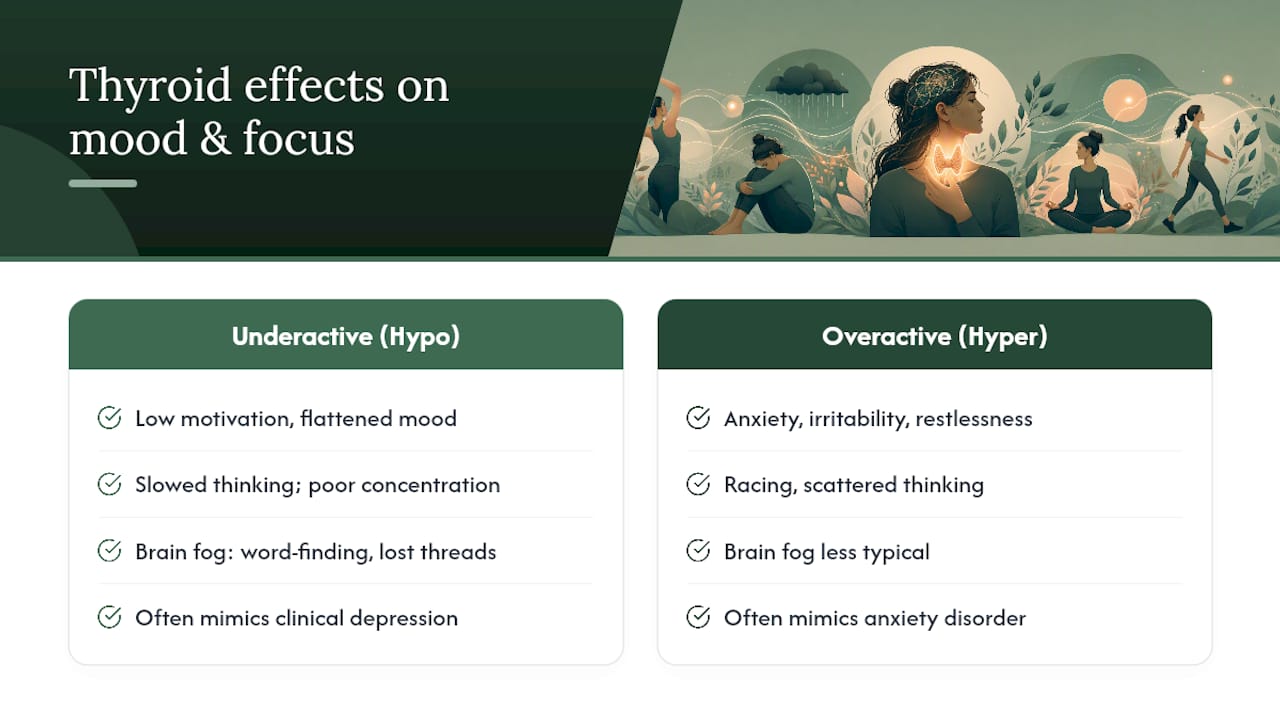
Thyroid hormone directly influences brain chemistry, so mental and cognitive symptoms are often the first thing women notice, sometimes before any physical sign shows up. An underactive thyroid frequently produces symptoms that mimic clinical depression: low motivation, flattened mood, slowed thinking, and difficulty concentrating that can feel indistinguishable from a mental health condition on its own.
An overactive thyroid produces the opposite mental profile: anxiety, irritability, restlessness, and a racing, scattered kind of thinking that can resemble a generalized anxiety disorder. Because both patterns overlap so closely with common mental health diagnoses, women are sometimes treated for depression or anxiety for months before anyone checks a TSH level.
Brain fog deserves its own mention. Many women describe it as forgetting words mid-sentence, losing track of conversations, or feeling like their thinking is moving through static. This is a well-documented hypothyroid symptom, not a sign of early cognitive decline, and it typically improves once thyroid hormone levels normalize with treatment. If you’re being treated for anxiety or depression and something still feels off, particularly if physical symptoms like cold intolerance or period changes are also present, raising thyroid testing with your provider is a reasonable and often overlooked step.
What Happens If Thyroid Disease Goes Untreated
Left untreated, hypothyroidism and hyperthyroidism both carry real long-term risks, not just uncomfortable daily symptoms. Untreated hypothyroidism can progress to significantly elevated cholesterol, raising cardiovascular risk over time, and in rare, severe cases can lead to myxedema, a life-threatening slowdown of the body’s systems that requires emergency treatment.
Untreated hyperthyroidism carries its own long list of complications. The excess thyroid hormone accelerates bone turnover, which raises osteoporosis and fracture risk, a concern that compounds for women already facing bone density loss after menopause. Left unchecked, hyperthyroidism can also trigger heart rhythm problems, including atrial fibrillation, and in severe cases progress to thyroid storm.
Both conditions, if untreated, take a toll on fertility and pregnancy outcomes, and both are linked to persistent mood and cognitive symptoms that don’t resolve on their own. The reassuring news is that both conditions are highly manageable once properly diagnosed. This is why early testing matters so much: the complications of untreated thyroid disease are largely preventable with a simple blood test and consistent follow-up, not a reason to avoid the conversation with your doctor.
Thyroid Symptoms Across Life Stages: Adolescence, Pregnancy, and Menopause
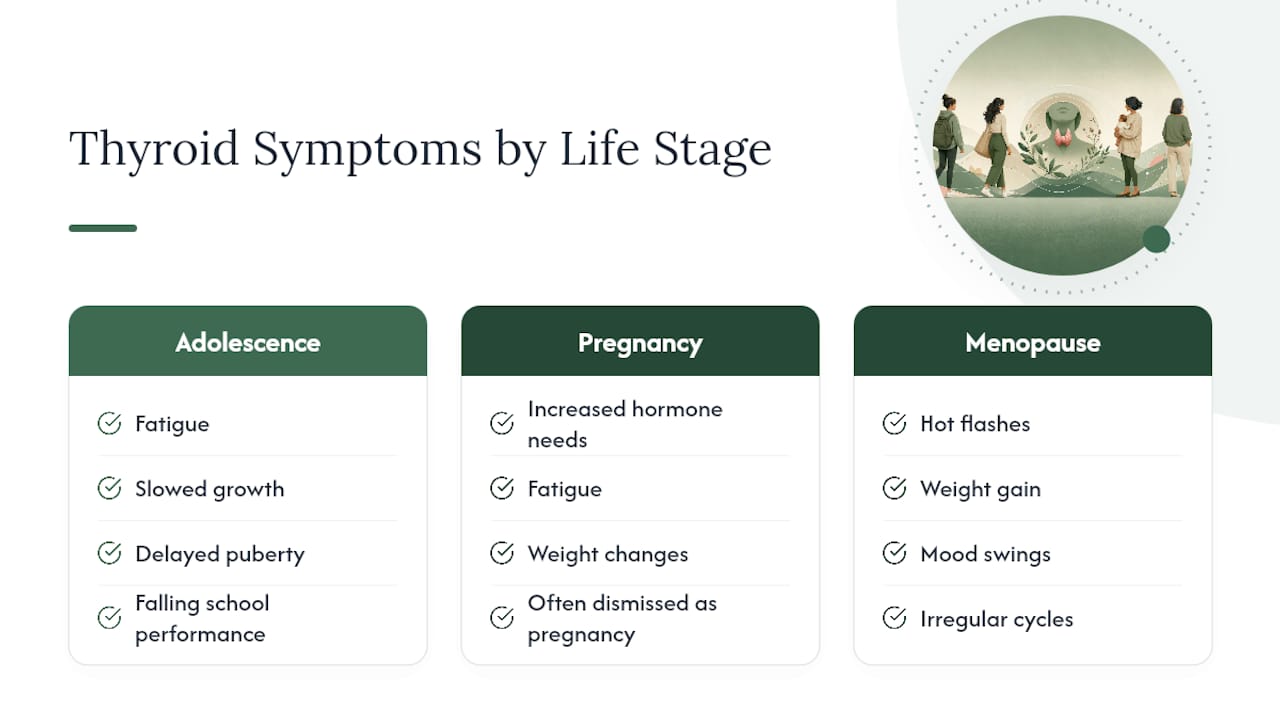
Thyroid symptoms don’t look the same at every life stage, and recognizing that shifts the conversation you have with your provider. In adolescence, hypothyroidism can show up as unexplained fatigue, slowed growth, delayed puberty, or a drop in school performance that gets mistaken for typical teenage moodiness or a sleep schedule issue.
During pregnancy, thyroid hormone needs increase, and symptoms like fatigue and weight change get easily dismissed as normal pregnancy effects rather than a thyroid issue. This is precisely why proactive testing matters more here than at almost any other life stage, given the fertility and pregnancy complications tied to untreated thyroid disease.
Menopause presents the trickiest overlap of all. Hot flashes, weight gain, mood swings, and irregular cycles are hallmark menopause symptoms, and they are also hallmark thyroid symptoms, which means the two conditions are routinely confused with each other. Postmenopausal women also face compounding bone health risk if hyperthyroidism is present alongside natural bone density decline, making the connection between thyroid disease and bone health especially relevant at this stage. If you’re navigating perimenopause or menopause and your symptoms feel more intense or different than what your friends describe, a thyroid panel is a reasonable, low-effort way to rule in or out a separate, treatable cause.
Garden State Medical Group’s Perspective on Evaluating Thyroid Symptoms
We see thyroid symptoms most often dismissed as stress or aging, which is exactly why we start with a full primary-care evaluation and on-site blood testing rather than guessing. When results point to something more complex, we coordinate follow-up through our chronic care management program and refer to endocrinology when needed. If your symptoms have lingered, book an evaluation and bring your timeline with you.
— Garden State Medical Group
Getting Your Thyroid Checked at Garden State Medical Group
Baseline thyroid testing can often be started at a regular primary care visit, sometimes on the same day symptoms come up.
Garden State Medical Group offers primary care evaluation for the fatigue, weight changes, and mood shifts that often point back to the thyroid, along with on-site blood tests to check TSH and free T4 without a separate lab visit. If your history or exam findings suggest something more, our radiology and diagnostic testing services and chronic care management program support ongoing monitoring, dose adjustments, and coordinated follow-up in one place. Women managing bone health alongside a thyroid condition may also find low-impact movement worth exploring, and resources like gentle yoga for bone health can complement medical care as an adjunct, not a replacement for it.
Schedule a primary care appointment and bring a written list of your symptoms and their timeline. That single step is often what turns months of vague fatigue into a clear diagnosis and a treatment plan that actually works.
This article is general information, not a substitute for advice from a qualified doctor. Consult a qualified healthcare professional about your own circumstances before acting on anything here.
Sources
- Womenshealth
- Hypothyroidism (Mayo Clinic)
- Hypothyroidism (NIDDK)
- Thyroid disorders and pregnancy (Children’s Hospital of Philadelphia / CHOP)
- Do you have an overactive thyroid? (Harvard Health / Women’s Health)
FAQ
What are early warning signs of thyroid problems in women?
Persistent fatigue, feeling cold when others aren’t, unexplained weight gain, dry skin, and heavier or irregular periods are the most commonly reported early hypothyroid signs, while unexplained weight loss, rapid heartbeat, and heat intolerance point toward an overactive thyroid.
Why do I still feel tired even though my thyroid levels are normal?
A single normal TSH doesn’t always rule out a thyroid issue, since borderline results, early autoimmune disease, or another cause of fatigue can be present; ask your provider whether repeat testing or a free T4 and antibody panel makes sense.
How can I cope with hypothyroidism symptoms day to day?
Take levothyroxine at the same time daily on an empty stomach, separate it from calcium or iron supplements by several hours, prioritize consistent sleep, and stay active within your energy level while your dose is adjusted.
What causes hypothyroidism in women?
Hashimoto’s disease, an autoimmune condition, is the leading cause, with pregnancy, prior thyroid treatment, family history, and age around menopause also raising risk.
Can Garden State Medical Group test my thyroid levels?
Yes, Garden State Medical Group offers on-site blood testing, including TSH and free T4, as part of a primary care evaluation for thyroid symptoms.