
What Is Personalized Medicine? A Patient's Guide

TL;DR:
- Personalized medicine tailors health care based on an individual’s genetics, environment, and lifestyle. It offers earlier diagnosis, targeted therapies, and reduced drug side effects. Patients can participate actively by sharing full health histories and asking about genetic testing options.
Personalized medicine is defined as the practice of tailoring disease prevention, diagnosis, and treatment to an individual’s unique genetics, environment, and lifestyle rather than applying a single standard approach to all patients. Also called precision medicine, this model moves away from the traditional one-size-fits-all framework by using your specific biological data to guide care decisions. The Human Genome Project laid the scientific foundation for this shift, revealing that about 0.1% of human DNA varies between individuals. That small fraction drives enormous differences in how patients respond to medications, develop diseases, and recover from illness.
What is personalized medicine and how does it differ from standard care?
Personalized medicine is defined by the National Institutes of Health as targeting the right drug at the right dose for the right person. Standard care uses population-level averages to guide treatment. Personalized medicine replaces that average with your actual genetic profile, health history, and daily habits.
The terms “personalized medicine” and “precision medicine” are often used interchangeably, but they are not identical. Precision medicine focuses primarily on molecular and genetic data. Personalized medicine is broader. It includes your preferences, your social context, and your full life story alongside your biology. As one framework from Communications Medicine notes, a patient’s lifestyle and social context are equally important as their biology for truly effective care.
This distinction matters for you as a patient or caregiver. A treatment plan built on genomic data alone can miss critical factors. A plan that also accounts for your diet, stress levels, living environment, and family situation is far more likely to succeed.
How does personalized medicine work?
The science behind personalized medicine rests on three pillars: genomics, proteomics, and bioinformatics. Genomics studies your DNA. Proteomics examines the proteins your genes produce. Bioinformatics uses computing to analyze and interpret the resulting data. Together, these fields allow clinicians to build a detailed molecular picture of your health.

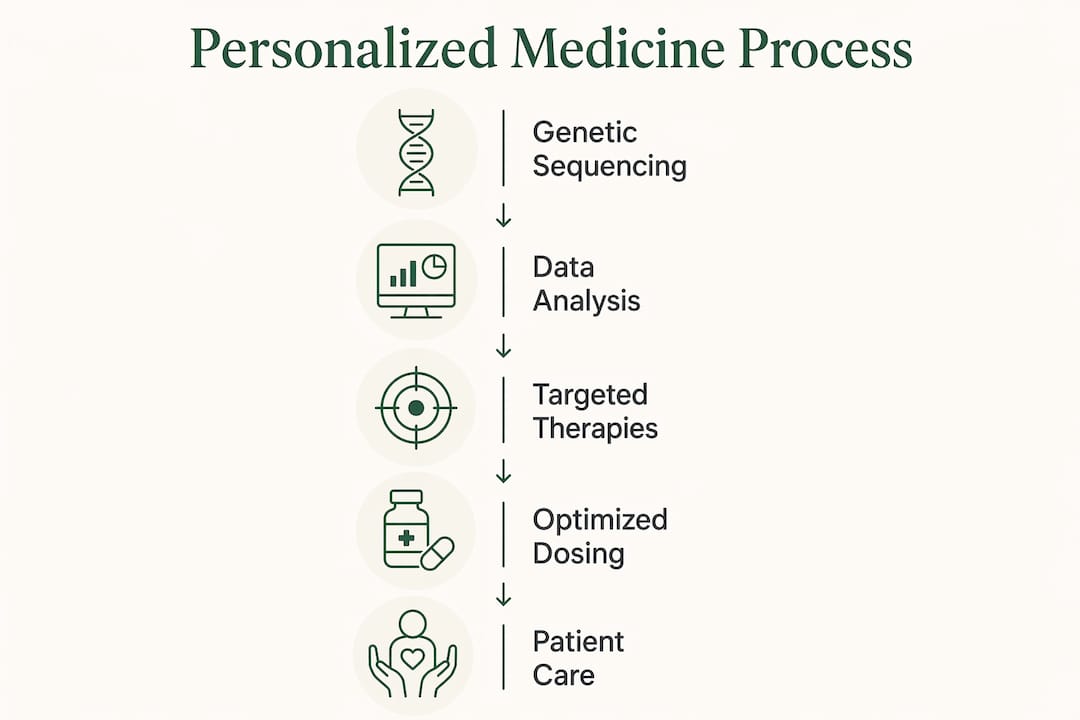
In practice, the process starts with genetic sequencing. A lab analyzes a sample of your DNA to identify variants that affect disease risk or drug metabolism. Next-generation sequencing technology has made this faster and more affordable than it was a decade ago. Clinicians then layer in your clinical records, environmental exposures, and lifestyle data to complete the picture.
Pro Tip: Ask your doctor whether next-generation sequencing or pharmacogenomic testing is appropriate for your situation before agreeing to a standard medication protocol. This single conversation can prevent months of trial-and-error dosing.
Personalized medicine is also an ongoing collaborative process, not a one-time DNA test. Your treatment plan will be revisited as your health changes, as new data becomes available, and as your lifestyle evolves. This iterative nature is one of its greatest strengths.
The key steps in a personalized medicine workup typically include:
- Genetic sequencing and molecular profiling to identify relevant variants
- Review of clinical history, including prior diagnoses and medication responses
- Assessment of environmental factors such as occupational exposures or geographic risks
- Integration of lifestyle data including diet, physical activity, and sleep patterns
- Collaborative review by a multidisciplinary care team
What are the benefits and clinical applications of personalized medicine?
Personalized medicine delivers its clearest benefits in three areas: earlier and more accurate diagnosis, targeted therapies with fewer side effects, and better long-term outcomes. Each of these advantages flows directly from using individual data rather than population averages.
Earlier and more accurate diagnosis
Genetic profiling can identify disease risk years before symptoms appear. A patient with a known BRCA1 variant, for example, can begin cancer screening far earlier than standard guidelines recommend. This early detection window is one of the most powerful benefits of personalized approaches, because treatment at an early stage is almost always more effective.
Targeted therapies in oncology, HIV, and rare diseases
Personalized medicine has shown the most clinical success in oncology, HIV management, and the treatment of rare diseases. In cancer care, targeted therapies attack specific molecular markers on tumor cells rather than damaging all rapidly dividing cells the way traditional chemotherapy does. Patients experience fewer severe side effects and, in many cases, better survival rates. In HIV care, genetic testing guides the selection of antiretroviral regimens that match a patient’s viral strain and metabolic profile.
Reduced adverse drug reactions and optimized dosing
Adverse drug reactions are a significant cause of hospital admissions in the United States. Pharmacogenomics, the study of how genes affect drug response, allows clinicians to predict which medications a patient will metabolize well and which could cause harm. This reduces the guesswork in prescribing and leads to faster, safer results.
Pro Tip: If you or a family member takes multiple medications for a chronic condition, ask your provider about pharmacogenomic testing. A single panel can reveal how your body processes dozens of common drugs.
The numbered steps below summarize how personalized medicine improves patient outcomes in clinical practice:
- Genetic profiling identifies disease risk before symptoms develop.
- Molecular data guides the selection of targeted therapies.
- Pharmacogenomic testing reduces adverse drug reactions.
- Ongoing monitoring allows treatment plans to be adjusted as conditions change.
- Multidisciplinary teams coordinate care across specialties for whole-person management.
Personalized approaches also extend to pregnancy care. Platforms that apply personalized pregnancy care principles show how individual health data can guide decisions for expectant mothers, reducing risk and improving maternal outcomes.
What challenges and limitations does personalized medicine face?
Personalized medicine is not without real obstacles. Understanding these limitations helps you set realistic expectations and ask better questions of your care team.
The core challenges include:
- Data complexity. Integrating genomic, lifestyle, and environmental data into a usable clinical picture is technically demanding. Electronic health records vary widely in quality, and data integration challenges remain a significant barrier for many healthcare systems.
- Privacy and ethical concerns. Genetic data is uniquely sensitive. The WHO has identified genetic discrimination and data protection as priority concerns that policy-makers must address before personalized medicine can reach its full potential.
- Healthcare system readiness. Not every clinic or hospital has the infrastructure, trained staff, or technology to deliver personalized care at scale. Access remains unequal across geographic and economic lines.
- Probabilistic outcomes. Personalized medicine increases the probability of effective treatment by eliminating unlikely options, but it does not guarantee success. Genomic insights improve the odds; they do not remove uncertainty entirely.
- Patient literacy. Many patients and caregivers find genetic reports difficult to interpret. Without clear communication from providers, this information can cause confusion or unnecessary anxiety.
Recognizing these barriers does not diminish the value of personalized medicine. It simply means that the field is still maturing, and that your active participation in the process matters more than ever.
How can patients and caregivers engage with personalized medicine?
Your role in personalized medicine is active, not passive. The quality of the data your care team works with depends heavily on what you share and how consistently you engage with your health plan.
Practical steps to get the most from a personalized approach include:
- Share your full health history. Bring records of past diagnoses, medications, allergies, and family health history to every appointment. Gaps in this information limit what your provider can do.
- Ask about genetic testing. Not every condition warrants genetic testing, but for chronic diseases, cancer risk, or unexplained medication failures, it is worth raising the question directly with your doctor.
- Report lifestyle changes promptly. A significant change in diet, activity level, or stress can affect how your body responds to treatment. Your care team needs this information to keep your plan current.
- Understand that plans will evolve. Personalized medicine is an iterative, long-term process. Expect your treatment plan to be reviewed and adjusted over time, not fixed after a single visit.
- Ask about data privacy. Before consenting to genetic testing, ask your provider how your data will be stored, who can access it, and what protections are in place.
Pro Tip: Keep a personal health log that tracks your symptoms, energy levels, sleep, and diet between appointments. This kind of longitudinal data is exactly what personalized medicine needs to work well.
Gardenstatemedicalgroup supports this kind of engaged, ongoing care through its personalized health programs, which are designed to integrate individual health data into a coordinated treatment plan. Patients managing chronic conditions, in particular, benefit from this structured approach to ongoing monitoring and adjustment.
For caregivers, the same principles apply. When you accompany a family member to appointments, bring their full medication list, note any recent changes in their condition, and ask the care team how their treatment plan accounts for their specific genetic and lifestyle profile.
Key Takeaways
Personalized medicine is most effective when genetic data, lifestyle factors, and environmental context are combined in an ongoing, collaborative care relationship.
| Point | Details |
|---|---|
| Core definition | Personalized medicine tailors prevention, diagnosis, and treatment to your unique genetics, environment, and lifestyle. |
| Strongest clinical results | Oncology, HIV management, and rare diseases show the clearest benefits from personalized approaches. |
| Active patient role | Sharing complete health history and lifestyle data directly improves the quality of your personalized care plan. |
| Realistic expectations | Personalized medicine improves treatment odds but does not guarantee outcomes; it is probabilistic, not absolute. |
| Ongoing process | Treatment plans are revisited and adjusted over time as your health, data, and circumstances change. |
Why personalized medicine changes everything about how I think about patient care
I have watched the conversation around personalized medicine shift from a research concept to a genuine clinical expectation over the past decade. What strikes me most is not the technology. It is how much the model demands from both the patient and the provider.
The biggest mistake I see is treating a genetic test result as a final answer. Genomic data is a starting point, not a verdict. A patient who learns they carry a variant associated with elevated cardiovascular risk has not received a diagnosis. They have received a reason to look more carefully, adjust their habits, and work more closely with their care team. The research on genetic heart disease risk and lifestyle interaction makes this point clearly: biology is not destiny.
The second thing I want caregivers to understand is that personalized medicine requires continuity. A single specialist visit does not deliver it. A primary care relationship that spans years, tracks changes, and coordinates across specialties does. That is where the real value accumulates. Patients who show up consistently, share openly, and ask questions get better outcomes. The science supports that. So does clinical experience.
— Krunal
Personalized care at Gardenstatemedicalgroup
Gardenstatemedicalgroup brings personalized medicine principles into everyday clinical practice at its North Bergen and Secaucus, New Jersey locations. The practice integrates primary care services with specialty programs in cardiopulmonary health, radiology, diabetes management, bone health, and weight management, all designed around the individual patient’s profile.
For patients managing chronic conditions, the chronic care management program at Gardenstatemedicalgroup applies a structured, data-driven approach to ongoing treatment. Physicians coordinate across disciplines to keep care plans current and responsive to each patient’s changing needs. To schedule a consultation or learn more about available programs, contact Gardenstatemedicalgroup directly through its website.
FAQ
What is the personalized medicine definition in simple terms?
Personalized medicine is the practice of customizing healthcare decisions based on a person’s unique genetic makeup, lifestyle, and environment. It replaces the one-size-fits-all model with care designed specifically for you.
How does personalized medicine work in a clinical setting?
Clinicians use genetic sequencing, molecular profiling, and patient health data to identify the most effective treatments for an individual. The process is ongoing and involves a multidisciplinary team that reviews and adjusts the plan over time.
Is personalized medicine effective for all conditions?
Personalized medicine has shown the strongest results in oncology, HIV management, and rare diseases, but its principles apply broadly. It improves the probability of effective treatment across many conditions without guaranteeing specific outcomes.
What is the difference between personalized medicine and precision medicine?
Precision medicine focuses on molecular and genetic data. Personalized medicine is broader, incorporating a patient’s preferences, social context, and full health history alongside genetic information.
How can I access personalized medicine as a patient?
Start by discussing genetic testing options and your full health history with your primary care provider. Practices like Gardenstatemedicalgroup offer structured programs that apply personalized medicine principles to both preventive care and chronic condition management.