
What Is Weight Management and Why It Matters

TL;DR:
- Weight management is a long-term, medically supervised process combining diet, activity, behavioral therapy, and clinical oversight. It involves structured programs with at least 14 counseling sessions over six months and regular monitoring to ensure sustained health improvements.
Weight management is defined as the ongoing process of achieving and maintaining a healthy body weight through structured diet, physical activity, behavioral therapy, and medical intervention when needed. The National Institute of Diabetes and Digestive and Kidney Diseases (NIDDK) identifies this as a clinical process, not a casual lifestyle choice. Effective programs require at least 14 counseling sessions over 6 months and 150 to 300 minutes of weekly moderate aerobic activity. That standard separates genuine weight management from the short-term diets most people try and abandon. Understanding weight management as a medically informed, long-term commitment changes how you approach your health entirely.
What is weight management and what does it actually include?
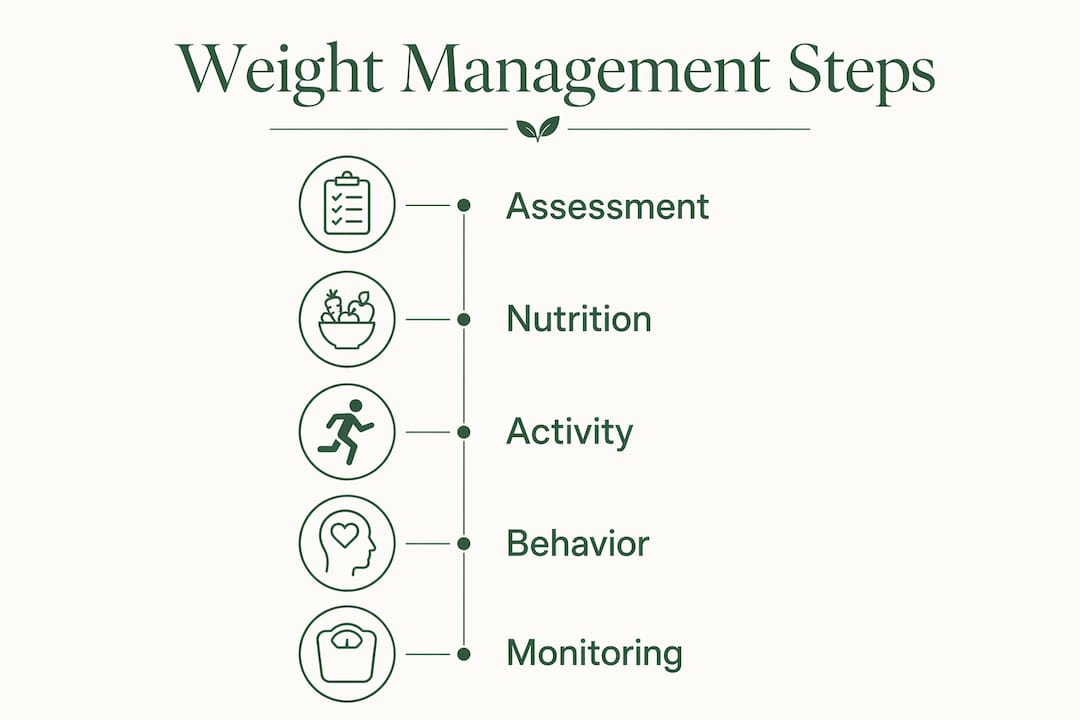
Weight management is a structured process that combines four core elements: dietary changes, physical activity, behavioral therapy, and, when appropriate, medication or surgery. Each element plays a specific role. Diet controls calorie intake and nutrient balance. Physical activity burns calories and preserves muscle. Behavioral therapy addresses the habits and thought patterns that drive eating behavior. Medical interventions support patients when lifestyle changes alone are not enough.

Effective programs do not treat these elements as optional. Clinical guidelines require programs to include counseling frequency, medical supervision, and personalized plans to prevent patients from dropping out early. Educating patients about program duration increases adherence and long-term success. That is why the definition of weight management programs always includes a structured timeline, not just a list of food rules.
A medically supervised weight management program also begins with a full health assessment. Your physician reviews your health history, lab work, and metabolic data before recommending a plan. This is what separates medical weight loss programs from commercial diet plans, which offer generic advice without knowing your individual health profile.
Key components of an effective weight management program:
- Calorie-controlled nutrition plan tailored to your metabolic rate and health conditions
- Physical activity targets of 150 to 300 minutes of moderate aerobic exercise per week, as recommended by the NIDDK
- Behavioral and psychological therapy, including cognitive behavioral therapy (CBT) and problem-solving techniques
- Medical supervision with regular check-ins, lab monitoring, and BMI assessment
- Structured counseling sessions meeting the minimum 14-session standard over 6 months
Pro Tip: Ask any program you consider how many counseling sessions it includes and over what timeframe. If the answer is fewer than 14 sessions in 6 months, it does not meet evidence-based clinical standards.
Why is weight management more than just dieting or exercise?
Weight management addresses biological, psychological, and behavioral forces that dieting alone cannot fix. Most people underestimate how much their body fights back after weight loss. Metabolism slows and hormonal changes create biological pressure to regain weight. This is not a willpower problem. It is a physiological response that requires a structured maintenance plan to counter.
The psychological side is equally significant. Behavioral psychology techniques like cognitive behavioral therapy and problem-solving are now integral to treating obesity alongside diet and exercise. These approaches address root causes of overeating rather than relying on restriction alone. Without this layer, most patients regain weight within one to two years.
Here is why the rebound effect catches so many people off guard:
- Metabolic adaptation occurs as your body lowers its resting calorie burn after weight loss, making it easier to regain.
- Hormonal shifts increase hunger signals, particularly from ghrelin, the hormone that tells your brain you are hungry.
- Behavioral triggers resurface when stress, boredom, or social situations are not addressed through therapy.
- Inconsistent monitoring allows small setbacks to compound before they are caught and corrected.
- Unrealistic expectations lead to abandonment when progress slows, which is a normal part of the process.
“Setbacks in weight management are normal and not failures. Quick recovery is the key to long-term success.” — NIDDK
Regular monitoring of weight and food intake helps catch setbacks early. Daily food logs and weekly weigh-ins are recommended practices in effective programs. Tracking creates a feedback loop that keeps you accountable and gives your care team the data they need to adjust your plan.
Who benefits most from medically supervised weight management programs?
Medically supervised programs are designed for patients who face health risks tied to their weight, not just those who want to lose a few pounds. Clinical criteria typically include a BMI of 35 or higher, or a lower BMI combined with obesity-related conditions like type 2 diabetes, hypertension, or sleep apnea. Personalized oversight using health history, lab work, and metabolic assessments makes these programs effective for complex cases.
The difference between a medical program and a commercial diet plan is significant. Medical programs use diagnostic data to build your plan. Commercial plans offer the same advice to everyone. Patients in structured clinical programs achieve better and more sustainable weight loss than those following generic plans. That gap widens over time because medical programs adapt as your health changes.
| Feature | Medical weight management program | Generic commercial diet plan |
|---|---|---|
| Health assessment | Full lab work, BMI, comorbidity review | None or minimal self-reported data |
| Plan personalization | Tailored to individual health profile | One-size-fits-all approach |
| Medical supervision | Physician-led with regular monitoring | No clinical oversight |
| Behavioral support | CBT and counseling integrated | Rarely included |
| Medication or surgery | Available when clinically indicated | Not applicable |
Weight management programs can also be weight-neutral, meaning the primary goal is metabolic health improvement rather than a specific number on the scale. For patients managing chronic conditions like hypertension or diabetes, reducing disease risk matters more than hitting a target weight. This approach reflects how modern medicine views weight control strategies: as tools for health, not just appearance.
What practical strategies support long-term weight management success?
Long-term success in weight management depends on consistency, not perfection. Setting realistic, measurable goals is the starting point. A target of losing 5 to 10 percent of body weight over 6 months is clinically meaningful and achievable. Aiming for dramatic results in weeks sets you up for the rebound effect described earlier.
Frequent tracking of weight and food intake is the strongest predictor of long-term weight management success. Daily food logs and weekly weigh-ins are recommended practices in effective programs. Tracking does not need to be complicated. A simple notebook or a basic app works as well as any advanced tool, as long as you use it consistently.
Practical strategies that support sustainable results:
- Set specific weekly activity goals. The NIDDK recommends at least 300 minutes per week of moderate activity after weight loss to prevent regain.
- Make gradual dietary changes. Removing one high-calorie habit at a time is more sustainable than overhauling your entire diet at once.
- Build a supportive environment. Keep healthy foods visible and accessible. Remove high-calorie snacks from easy reach.
- Seek professional guidance early. Connecting with a healthcare provider before you plateau prevents small setbacks from becoming long-term failures.
- Treat setbacks as data, not defeats. Identify what triggered a setback and adjust your plan accordingly.
Pro Tip: Schedule a weekly 10-minute review of your food log and activity data. Reviewing your own patterns is more effective than any single diet rule because it shows you exactly where your week went off track.
Weight management is a health process, not a number on a scale
Most people approach weight management as a cosmetic goal. That framing creates problems from the start. When the scale stops moving, motivation collapses. When a social event disrupts the diet, the whole plan feels ruined. I have seen this pattern repeat across patients who came in frustrated after years of cycling through commercial plans.
The shift that actually works is treating weight management as health optimization. Your body weight is one indicator among many. Blood pressure, blood glucose, energy levels, sleep quality, and mobility all reflect how well your weight control strategies are working. Focusing on those markers keeps you engaged even when the scale is slow.
The other misconception worth addressing directly is the idea that a good program should feel hard. Sustainable weight management feels steady, not punishing. When patients describe their program as something they “can live with,” they are describing exactly the right approach. Programs built on deprivation fail because deprivation is not a long-term state. Programs built on gradual, supported habit change succeed because they work with your life, not against it.
Clinical guidance matters here. Trying to manage weight without professional support is like trying to manage a chronic condition without a physician. You might make progress, but you are missing the feedback, the adjustments, and the safety net that make the difference between short-term results and lasting change.
Gardenstatemedicalgroup’s approach to personalized weight management
Gardenstatemedicalgroup offers medically supervised weight management programs at its North Bergen and Secaucus, New Jersey locations, designed for patients who want real, lasting results with clinical support behind them.
The practice takes a multidisciplinary approach, combining primary care oversight with personalized program design that accounts for your health history, lab results, and specific conditions. Whether you are managing obesity-related risks or working toward a healthier weight for the first time, the team builds a plan around your individual profile. You can also explore the full range of health programs available, including chronic care management and condition-specific support. Scheduling a consultation is the first step toward a plan that fits your health, not a generic template.
FAQ
What is weight management in simple terms?
Weight management is the process of reaching and keeping a healthy body weight through consistent changes to diet, physical activity, and behavior. It often includes medical supervision, especially for patients with obesity-related health conditions.
What is a weight management program?
A weight management program is a structured plan that combines nutrition guidance, physical activity targets, behavioral counseling, and medical oversight. Evidence-based programs include at least 14 counseling sessions over 6 months, as recommended by the NIDDK.
Why is weight management important for your health?
Weight management reduces the risk of serious conditions including type 2 diabetes, hypertension, and heart disease. Maintaining a healthy weight also improves energy, sleep quality, and overall metabolic function.
How is a medical weight management program different from a commercial diet?
Medical programs use lab work, health history, and physician oversight to build a personalized plan. Commercial diets offer generic advice without clinical assessment, which is why patients in structured medical programs achieve more sustainable results.
How do you manage weight long-term without regaining it?
Long-term success requires at least 300 minutes of moderate physical activity per week, consistent food and weight tracking, and ongoing professional support. Setbacks are normal; the key is identifying triggers and adjusting your plan quickly.
Key Takeaways
Effective weight management is a medically supervised, long-term process that combines diet, physical activity, behavioral therapy, and clinical oversight to achieve and sustain meaningful health improvements.
| Point | Details |
|---|---|
| Clinical standard for programs | Evidence-based programs require at least 14 counseling sessions over 6 months to meet NIDDK guidelines. |
| Activity target for maintenance | At least 300 minutes of moderate aerobic activity per week prevents weight regain after loss. |
| Metabolism fights back | Metabolic slowdown after weight loss is biological, not a willpower failure, and requires a structured maintenance plan. |
| Medical programs outperform commercial diets | Physician-supervised programs use diagnostic data to personalize plans, producing more sustainable results. |
| Tracking predicts success | Daily food logs and weekly weigh-ins are the strongest predictors of long-term weight management outcomes. |