
Examples of radiology services for North Bergen families

TL;DR:
- Choosing the appropriate radiology test depends on your specific health concern, balancing factors like radiation exposure, procedure time, and diagnostic accuracy. Common services include X-rays, MRIs, CT scans, ultrasounds, and mammography, each suited for different tissues and conditions. Working closely with your healthcare provider enhances test selection, leading to better diagnosis, preventive care, and minimally invasive treatments.
Choosing the right radiology test can feel overwhelming, especially when your doctor mentions several options and you are not sure which one fits your situation. Examples of radiology services range from quick X-rays to detailed MRI scans, and each one serves a specific purpose in diagnosing or monitoring your health. Whether you are managing a chronic condition, recovering from an injury, or simply staying ahead of potential health issues through preventive screenings, understanding your options makes a real difference. This guide walks you through the most common radiology services, what they involve, and how to decide which one makes sense for you and your family.
Table of Contents
- Key criteria for selecting radiology services for diagnosis and prevention
- Common radiology services and their uses
- Detailed look at notable radiology services: X-ray, MRI, ultrasound, and specialized scans
- Comparing radiology services: a table summary and practical considerations
- Choosing the right radiology service: tailored recommendations for North Bergen and Secaucus residents
- Why personalized radiology choices boost preventive care and reduce invasive procedures
- Find expert radiology services near you in North Bergen and Secaucus
- Frequently asked questions
Key Takeaways
| Point | Details |
|---|---|
| Safety and suitability | Selecting radiology services involves balancing radiation exposure, procedure time, and diagnostic need to ensure safe and effective care. |
| Common examples | X-rays, CT scans, MRIs, ultrasounds, and mammography are common radiology services for diagnosing and monitoring various health conditions. |
| Preparation matters | Proper preparation like fasting for ultrasounds or early arrival for MRI enhances image quality and patient comfort. |
| Personalized choices | Evaluating symptoms and preventive care goals with your healthcare provider helps choose the most appropriate imaging test. |
| Minimally invasive options | Interventional radiology offers less invasive treatments, reducing risk and recovery time compared to traditional surgery. |
Key criteria for selecting radiology services for diagnosis and prevention
Before you can choose the right imaging test, it helps to know what factors actually matter in that decision. Not every radiology service fits every situation, and asking the right questions upfront saves you time, reduces stress, and leads to better results.
Radiation exposure is a reasonable concern for many families, especially those scheduling preventive screenings or imaging for children. The good news is that X-rays use minimal radiation and are considered safe for repeated preventive monitoring. Other services like MRI and ultrasound involve no radiation at all, which makes them excellent choices when repeat imaging is expected.
Procedure time matters more than most people realize. A quick X-ray diagnostics appointment might take under 10 minutes, while an MRI can last up to 90 minutes. If you have a busy schedule or a child who finds it difficult to stay still, knowing the time commitment in advance helps you prepare and plan.
Diagnostic specificity is another key factor. Some services are better suited for bones and lungs, while others specialize in soft tissue, blood flow, or breast health. Matching the test to your specific concern is what makes the imaging clinically useful. Experienced radiologists play a significant role here because their interpretation of imaging results directly affects diagnostic accuracy.
Accessibility and preparation requirements also shape your experience. Some tests require fasting, removing metal objects, or avoiding certain medications beforehand. Knowing these details ahead of time reduces the chance of rescheduling and ensures the images come out clearly.
Pro Tip: When your doctor orders imaging, ask specifically why that test was chosen over alternatives. Understanding the reasoning helps you prepare better and feel more confident going into the appointment.
Now that you understand the main criteria, let’s explore common radiology services used for diagnosing and monitoring health conditions.
Common radiology services and their uses
The radiology services list most patients encounter includes X-ray, CT scan, MRI, ultrasound, and mammography. Each one uses a different technology and serves distinct diagnostic purposes. Here is a clear breakdown of what each service involves and when it is typically used.
X-ray is the most commonly ordered imaging study. It takes between 5 and 10 minutes, uses minimal radiation, and is ideal for diagnosing bone fractures, lung conditions like pneumonia, and dental issues. X-ray imaging is often the first step when a patient comes in with chest pain, a suspected broken bone, or breathing problems.
CT scan (computed tomography) creates detailed cross-sectional images of the body using X-rays from multiple angles. Appointments typically run 10 to 30 minutes. CT scans are especially effective for detecting tumors, internal injuries, and complex conditions involving organs, blood vessels, and bones. They provide far more detail than a standard X-ray.
MRI (magnetic resonance imaging) uses magnetic fields and radio waves rather than radiation to produce detailed images of soft tissues, joints, the spine, and the brain. MRI imaging sessions can run anywhere from 15 to 90 minutes depending on the area being scanned. It is the preferred choice for neurological evaluations and sports injuries.
Ultrasound uses sound waves to create real-time images of organs and blood flow. Ultrasound imaging is completely radiation-free and takes 15 to 45 minutes. It is widely used in pregnancy monitoring, abdominal assessments, and vascular studies.
Mammography uses low-dose X-rays specifically designed to examine breast tissue. The procedure takes 15 to 30 minutes and is the primary screening tool for early breast cancer detection in women.
Let’s take a closer look at select radiology services and their special features to better understand their roles.
Detailed look at notable radiology services: X-ray, MRI, ultrasound, and specialized scans
Understanding how each test works in practice helps you walk into your appointment prepared and calm. Here are the details that matter most for patients in North Bergen and Secaucus.
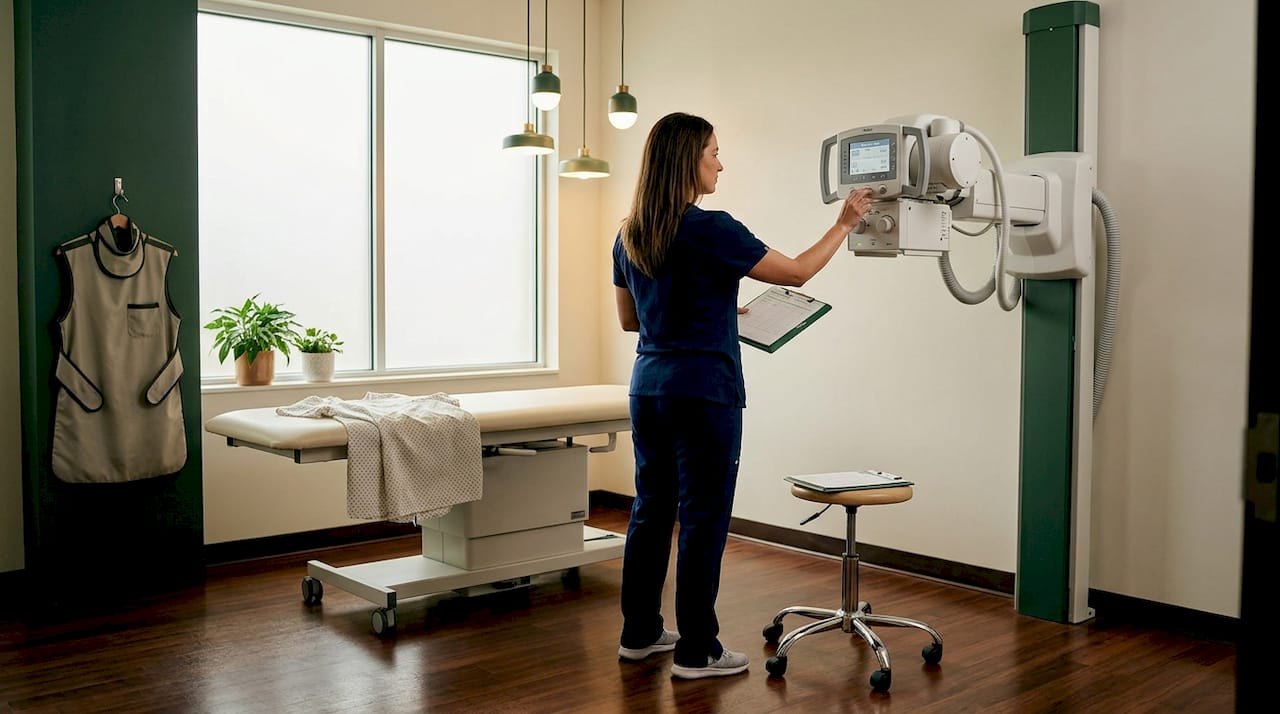
X-rays require very little on your part. You may be asked to hold your breath briefly during the exposure. Lateral views, meaning images taken from the side, are particularly valuable because they can reveal additional fractures or detect conditions like pneumothorax (a collapsed lung) that a front-facing image might miss. This is why your technologist may reposition you during the exam.
MRI preparation deserves extra attention. You will need to remove all metal objects, and you must disclose any implants such as pacemakers or joint replacements before the scan begins. MRI patients near North Bergen should plan to arrive early for screening paperwork. For those who feel anxious in enclosed spaces, open MRI units significantly ease that discomfort and allow many patients who might otherwise avoid the test to complete it successfully. MRI diagnostics teams are trained to walk you through the process and make the experience as comfortable as possible.
Ultrasound preparation is straightforward but important. Ultrasound patients should fast for 6 to 8 hours before an abdominal exam and wear loose, comfortable clothing. Fasting reduces gas in the intestines, which can interfere with the sound waves and create unclear images. Skipping this step is one of the most common reasons patients need to reschedule.
For abdominal ultrasound exams in particular, fasting and hydration together produce the clearest images and reduce the chance of a follow-up appointment.
Mammography uses gentle compression to spread breast tissue flat, which allows the X-ray to capture the sharpest possible image at the lowest effective radiation dose. Many women find this brief compression uncomfortable but tolerable. Scheduling your mammogram the week after your menstrual period, when breast tissue is less tender, can make the experience noticeably easier.
Next, let’s compare these services side-by-side to understand their best uses and limitations.
Comparing radiology services: a table summary and practical considerations
The table below gives you a clear side-by-side look at the most common types of radiology procedures, so you can quickly identify what fits your situation.
| Service | Procedure time | Radiation | Common uses | Preparation needed | Diagnostic detail |
|---|---|---|---|---|---|
| X-ray | 5-10 min | Minimal | Fractures, chest, teeth | None usually | Moderate |
| CT scan | 10-30 min | Moderate | Tumors, injuries, organs | May require contrast dye | High |
| MRI | 15-90 min | None | Soft tissue, brain, spine | Remove metal, disclose implants | Very high |
| Ultrasound | 15-45 min | None | Pregnancy, abdomen, vascular | Fast 6-8 hours (abdominal) | Moderate |
| Mammography | 15-30 min | Very low | Breast cancer screening | Avoid deodorant day of exam | High for breast tissue |
| DEXA scan | 10-20 min | Very low | Bone density, osteoporosis | No calcium supplements 24 hrs prior | High for bone density |
Key takeaways from this comparison:
CT and MRI both offer excellent diagnostic detail, but CT involves radiation while MRI does not. MRI also takes longer and requires more preparation. For bone injuries and chest conditions, X-rays remain the fastest and least invasive first option. Ultrasound is the safest choice for pregnancy and abdominal exams but can be limited by body type or intestinal gas. One category worth noting specifically is interventional radiology, a branch of clinical radiology services where radiologists use imaging guidance to perform minimally invasive procedures inside the body. CT-guided biopsies reduce the need for open surgery by up to 80%, allowing outpatient tumor and infection management that previously required hospital stays.
Pro Tip: Before any contrast-enhanced CT scan, let your provider know about any kidney issues or shellfish allergies. Contrast dye is processed by the kidneys, and your team needs this information to keep you safe. You can also read about radiology diagnostic trends to understand how imaging technology continues to improve patient safety and accuracy.
With these comparisons in mind, let’s explore how to decide which radiology services best fit your individual or family health needs.
Choosing the right radiology service: tailored recommendations for North Bergen and Secaucus residents
Different health situations call for different imaging approaches. Here is a practical guide based on the most common concerns we see in families and individuals throughout North Bergen and Secaucus.
- For bone injuries or lung complaints, start with an X-ray. It is fast, low-risk, and provides enough information to guide next steps. Most emergency and urgent care evaluations begin here.
- For soft tissue injuries, spine problems, or neurological symptoms, MRI is the better choice. It captures muscle, ligament, disk, and brain tissue in ways that X-rays and CT scans cannot match.
- For pregnancy monitoring and abdominal evaluations, ultrasound is the clear recommendation. It involves no radiation and provides real-time imaging of organs and blood flow.
- For breast cancer screening, mammography should be scheduled regularly according to your doctor’s recommendations, typically starting at age 40 for average-risk women.
- For osteoporosis screening, a bone density test (DEXA scan) is the standard tool. DEXA scans significantly reduce fracture risk through early detection, especially for postmenopausal women. Adults over 65 should ask their provider about scheduling one.
- For coordinating all imaging with your overall care, work with your primary care services provider. Primary care doctors track your full health history and are well-positioned to recommend the right test at the right time.
Finally, we’ll share our unique perspective on radiology services and how a proactive approach benefits your health.
Why personalized radiology choices boost preventive care and reduce invasive procedures
Here is something that does not come up often enough in conversations about imaging: most patients do not realize they have the right to ask questions and even request specific tests in dialogue with their doctor. Understanding the benefits of radiology services and knowing the strengths and limits of each option puts you in a much stronger position to advocate for your own health.
Preventive imaging, specifically mammography, DEXA scans, and lung cancer screening CT scans for smokers, can catch serious conditions years before symptoms appear. That early detection window is often the difference between manageable treatment and complex, expensive intervention. The data supports this clearly: interventional radiology techniques reduce open surgeries by 70 to 80%, improving recovery time and reducing hospital stays significantly.
Effective communication between you, your radiologist, and your primary care team is what makes imaging genuinely useful. A scan without context is just a picture. When your doctor understands your full health history and your radiologist receives clear clinical notes, the interpretation is sharper and the recommendations that follow are more relevant. The health management programs at Garden State Medical Group are built around exactly this kind of coordinated care.
Radiology is not just about reacting to symptoms. Used thoughtfully, it is one of the most powerful tools in proactive health management.
Find expert radiology services near you in North Bergen and Secaucus
If you are ready to schedule imaging or simply want to understand what your options are, Garden State Medical Group makes it easy to access the right care without the confusion.
Garden State Medical Group offers a full range of radiology and diagnostic testing services, including X-ray, MRI, ultrasound, mammography, and bone density testing, all coordinated through experienced providers who know your health history. With convenient locations in both North Bergen and Secaucus, scheduling is straightforward and follow-up care is close by. The primary care services team works alongside radiology to make sure your imaging results are interpreted within the full picture of your health, not in isolation. Reach out today to schedule an appointment and take a confident next step in managing your health.
Frequently asked questions
What are the most common radiology services used for diagnosis?
Common radiology services include X-rays, CT scans, MRIs, ultrasounds, and mammography, each designed for specific purposes such as detecting fractures, identifying tumors, and monitoring pregnancies. The right choice depends on what your doctor needs to see and where in the body.
Is radiation exposure from X-rays safe for preventive care?
Yes. X-rays use low radiation doses that are considered safe for repeated preventive monitoring, roughly equivalent to about 10 days of natural background radiation exposure. Proper shielding further reduces any minimal risk.
What preparation is needed for an ultrasound exam?
For abdominal ultrasounds, patients should fast for 6 to 8 hours and wear loose clothing to minimize gas interference and improve image clarity. Pelvic ultrasounds may actually require a full bladder, so always confirm preparation instructions with your provider ahead of time.
How do interventional radiology procedures benefit patients?
Interventional radiology uses image-guided techniques like CT-guided biopsies to reduce the need for open surgery by 70 to 80%, allowing conditions such as tumors and infections to be treated on an outpatient basis with faster recovery times.
Who should consider a DEXA bone density scan?
Adults over 65 and postmenopausal women are the primary candidates, as DEXA scans detect osteoporosis early enough to allow lifestyle and treatment changes that can significantly reduce fracture risk. Your primary care provider can confirm whether your age, family history, or medication use warrants earlier screening.