Health education guide for North Bergen and Secaucus adults
TL;DR:
- Health education for adults in North Bergen and Secaucus is a structured, ongoing process that promotes informed health decisions and behavior change. It employs personalized counseling, group programs, and self-management education to enhance knowledge, attitudes, and health outcomes. Local resources like support groups and coalitions facilitate community-based participation, supporting lifelong health management.
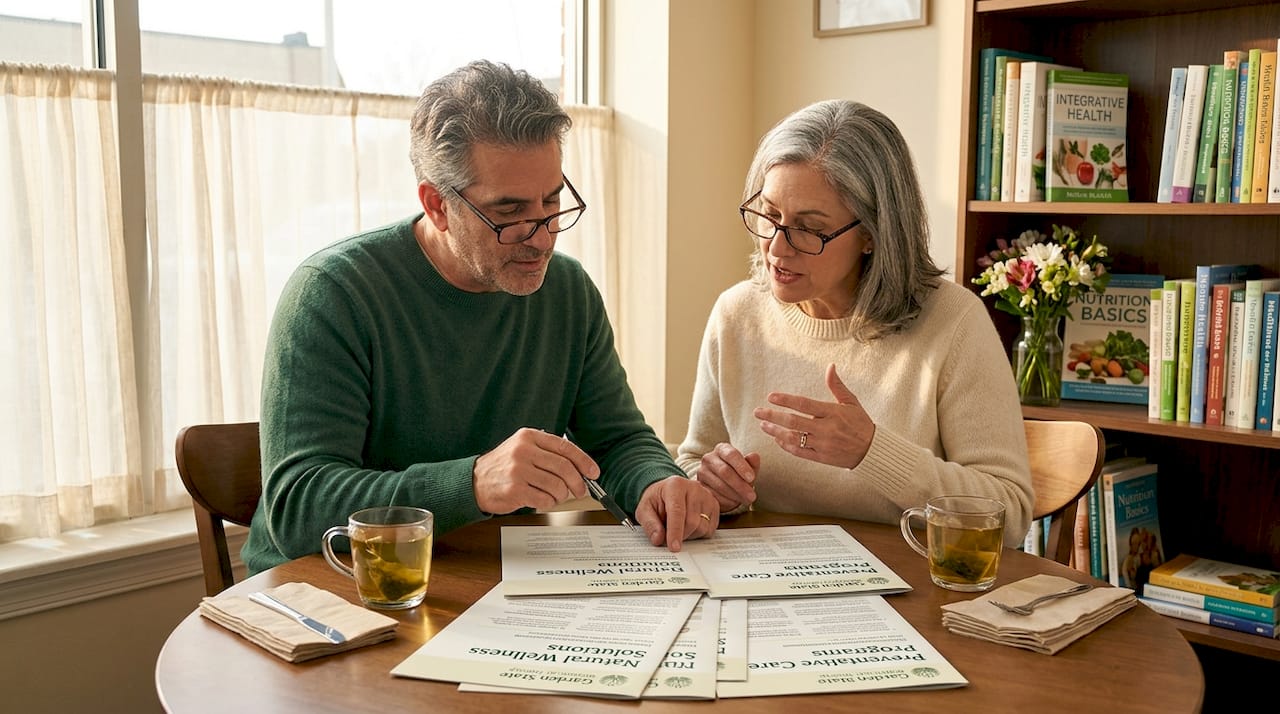
Health education is not a pamphlet on a waiting room table. For adults in North Bergen and Secaucus managing conditions like diabetes, heart disease, or high blood pressure, it is a structured, evidence-based process that changes how you think, act, and feel about your own health. This guide walks you through what health education actually means, how it is delivered, and where you can find relevant programs right in your neighborhood, so you can start making more confident, informed decisions about your care today.
Table of Contents
- Defining health education: beyond information
- Methods and approaches: Individual, group, and self-management programs
- Therapeutic Patient Education: Person-centered impact
- Local resources: Health education programs in North Bergen and Secaucus
- Why practical, community health education matters more than ever
- Take the next step: Connect with local health education and care
- Frequently asked questions
Key Takeaways
| Point | Details |
|---|---|
| Health education empowers action | Practical health education helps you manage chronic conditions and prevent illness. |
| Multiple delivery methods | Personalized, group, and peer-led approaches each serve distinct needs in local communities. |
| Evidence-based improvements | Programs like TPE deliver measurable health benefits, especially for diabetes and heart disease. |
| Local resources matter | Finding nearby programs and support groups in North Bergen and Secaucus makes education more accessible. |
| Community-driven results | Success comes from blending personal relevance, family support, and local connections. |
Defining health education: beyond information
Now that we’ve set the stage, let’s clarify what health education actually covers for local adults.
Many people picture health education as a one-time lesson or a printed brochure. The reality is far more active and ongoing. Health education for adults means gaining the knowledge and skills to take charge of your own health decisions, every day, not just at a doctor’s appointment. It is about shifting from passive patient to informed participant.
According to established public health standards, health education is any combination of learning experiences designed to help individuals and communities improve their health through increased knowledge, influencing attitudes, and facilitating behavior change. For anyone managing a chronic condition, that distinction between knowledge and behavior change is critical. Knowing that sugar spikes your blood glucose is one thing. Consistently choosing different foods based on that knowledge is another. Health education bridges that gap.
The World Health Organization frames it similarly, defining health education as intentionally created learning opportunities involving communication designed to improve health literacy. Health literacy, meaning your ability to find, understand, and use health information, is the foundation everything else builds on. Without it, following a treatment plan, managing medications, or recognizing warning signs becomes much harder.
When health education works well, it achieves three connected goals:
- Higher knowledge: You understand your condition, its risks, and your treatment options.
- Better attitudes: You feel capable and motivated to take action, rather than overwhelmed or resigned.
- Healthier behaviors: You make consistent changes that reduce your risk and improve your quality of life.
For residents of North Bergen and Secaucus, where rates of chronic conditions like diabetes and cardiovascular disease follow national patterns, these goals directly translate into fewer hospitalizations, better daily function, and longer lives. Learning more about chronic disease management is a practical first step toward understanding what that process looks like.
“Health education is not about telling people what to do. It’s about giving them the tools, the confidence, and the context to make their own best decisions.”
Methods and approaches: Individual, group, and self-management programs
Understanding health education’s purpose, let’s look at how it’s delivered and which methods suit different needs.
Not every person learns the same way. A retiree managing hypertension has different needs than a working parent newly diagnosed with pre-diabetes. That is why health education uses multiple delivery formats, each with specific strengths.
There are three main approaches used across healthcare settings:
-
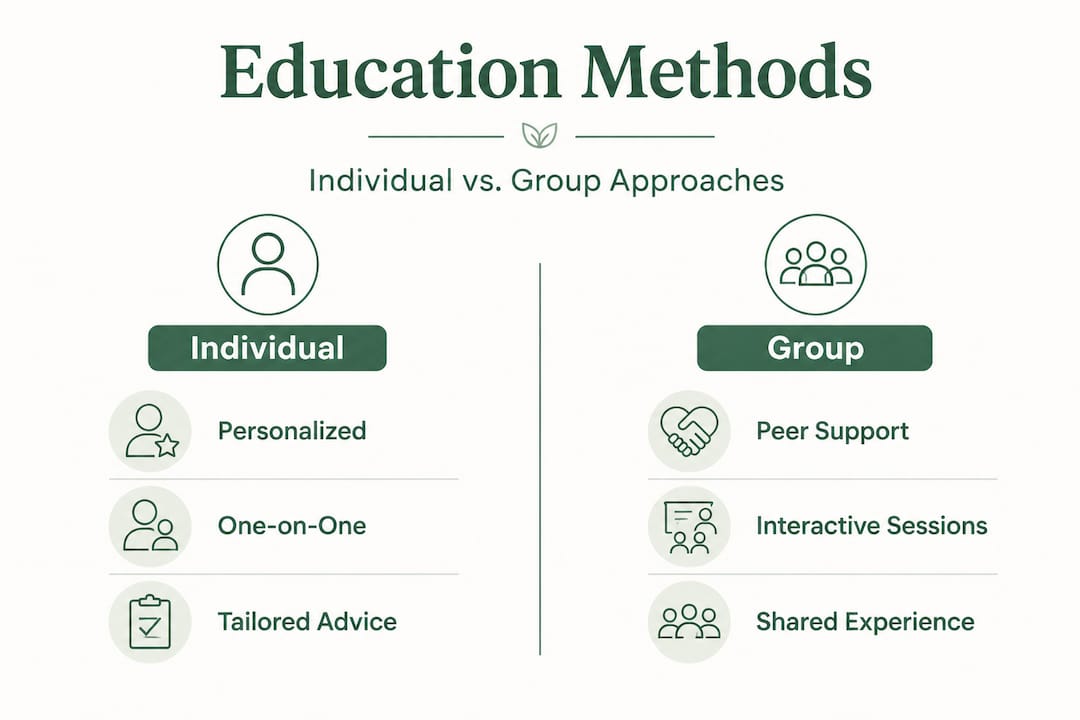
Individual counseling: One-on-one sessions with a provider, nurse educator, or health coach. These are highly personalized and let the educator tailor advice to your specific condition, lifestyle, medications, and goals. This format works well for sensitive topics or complex cases.
-
Group programs: Workshops, discussion groups, role-playing exercises, and demonstrations conducted in small or large groups. These create a sense of shared experience and social accountability. Seeing others manage similar challenges can be powerfully motivating.
-
Self-management education: Structured programs, often peer-led, that teach you to handle your condition day to day. Research shows that self-management education via peer-led group visits lasting 6 to 8 weekly sessions of two hours each is effective for adults with chronic conditions.
Here is a quick comparison of these three approaches:
| Method | Best for | Key strength | Limitation |
|---|---|---|---|
| Individual counseling | Complex or sensitive cases | Highly personalized | Less peer support |
| Group workshops | Motivation and accountability | Community connection | Less individual focus |
| Self-management programs | Chronic condition daily care | Practical skill-building | Requires commitment |
The research strongly supports combining methods rather than relying on just one. Group self-management education is more effective than lecture-only formats for building self-efficacy (your belief in your ability to manage your own health), produces small but meaningful short-term improvements in blood sugar control for people with diabetes, and is cost-effective when peer-led. These are not trivial results. For someone whose A1C has been creeping up for years, even a modest improvement in self-management confidence can change the trajectory.
Pro Tip: If you are deciding where to start, ask your primary care provider whether your condition qualifies you for a structured self-management program. Many of these are covered by insurance, including Medicare. You can also find additional chronic disease management tips that align with these formats.
If you want to know how to apply this in your medical care, reviewing primary care tips for chronic conditions can help you understand how your doctor’s appointments fit into the bigger education picture.
Therapeutic Patient Education: Person-centered impact
With broad delivery methods explained, let’s focus on a powerful, evidence-based approach now emerging locally.
Therapeutic Patient Education, or TPE, takes health education a step further. It is not a one-time event but a continuous, personalized process that uses your own strengths, daily routines, and support systems to improve how you manage your condition. Think of it as health education built specifically around you, not around a standard curriculum.
TPE works best when it involves family or peer support, because managing a chronic condition does not happen in isolation. When a spouse understands why dietary changes matter, or when a friend can check in on exercise habits, outcomes improve measurably.
The clinical evidence behind TPE is strong. Research shows that for adults with chronic diseases, TPE is a person-centered, ongoing process that improves knowledge, self-management skills, and self-efficacy, while also reducing HbA1c (a key long-term blood sugar marker) and fasting glucose. These are the exact measures your doctor tracks to assess diabetes control.
Here is a summary of the outcomes reported across TPE studies:
| Outcome measured | Direction of change |
|---|---|
| Health knowledge | Significant improvement |
| Self-management skills | Significant improvement |
| Self-efficacy | Significant improvement |
| HbA1c (blood sugar control) | Reduced |
| Fasting glucose | Reduced |
What makes these results meaningful is that they reflect changes in real behavior, not just test scores. Adults who go through TPE are not just more informed. They are doing more, adjusting more, and relying less on reactive emergency care.
Key characteristics of effective TPE programs include:
- Personalization: Goals and content are based on the individual’s life, not a general script.
- Ongoing support: Sessions continue over time, not just at diagnosis.
- Practical focus: Skills like meal planning, medication tracking, and symptom recognition are central.
- Family involvement: Caregivers and family members are included where appropriate.
If you want to understand how this type of personalized education fits into a broader care plan, the chronic care management guide provides useful context for residents working with local providers.
Local resources: Health education programs in North Bergen and Secaucus
Now let’s make it personal by exploring where you can participate in health education in your neighborhood.
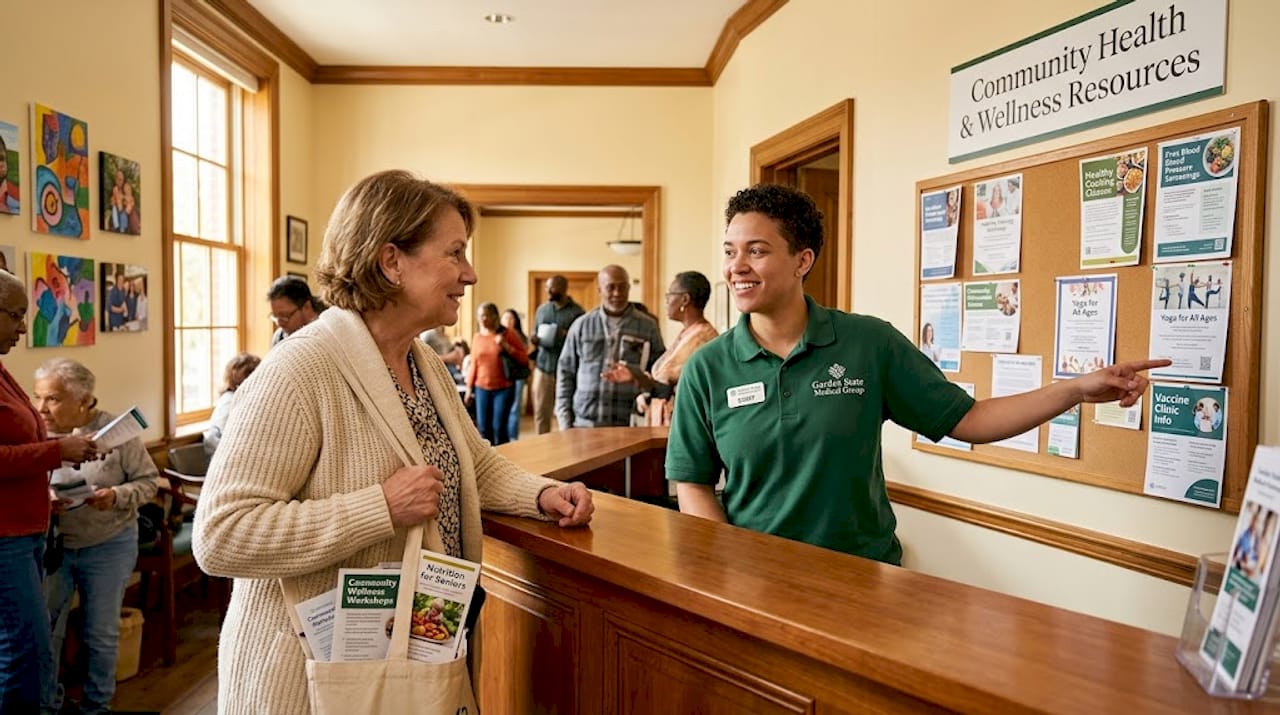
Knowing that health education works is helpful. Knowing where to access it near your home is what makes it actionable. North Bergen and Secaucus residents have more options available locally than many people realize.
The Bergen County Chronic Disease Coalition is one of the most important regional resources. This coalition brings together health professionals, community organizations, and local government to coordinate programs focused on chronic diseases including diabetes, heart disease, and cancer. It provides networking opportunities and connects residents with ongoing education initiatives throughout the county.
Beyond the coalition, here are specific local resources worth knowing:
-
North Bergen senior exercise classes: These programs support physical health for older adults and are often paired with basic health education components. Medical transport options are available for seniors who have difficulty getting to appointments or classes.
-
PMCH Secaucus mental health training: Located in Secaucus, this resource offers mental health education and skill-building, which is especially relevant because mental and physical health are deeply connected in chronic condition management.
-
Northwest Bergen heart and diabetes support groups: Peer-led groups where people share experiences, strategies, and emotional support while managing cardiovascular conditions and diabetes.
These resources matter because access is one of the biggest barriers to health education for working adults and seniors. When programs are nearby, available in familiar settings, and connected to transportation, participation goes up significantly.
Pro Tip: Call your county health department directly or visit the Bergen County Department of Health Services website to ask about upcoming workshops, new program enrollment, and eligibility requirements. Many programs are free or low-cost. You can also explore a local health programs guide and learn how to access preventive health services in your area.
Why practical, community health education matters more than ever
Here is an honest perspective based on reviewing how health education plays out in communities like North Bergen and Secaucus.
Most adults assume health education is something that happens to you, not something you actively do. You sit in a class, someone talks, you go home. That model rarely works for long-term behavior change, especially for adults who are busy, stressed, or managing multiple health conditions at once.
The programs that actually move the needle share a common thread: they are interactive, practical, and built around real life. A workshop where you practice reading a nutrition label, or a group session where you discuss how to talk to your doctor about medication side effects, stays with you. A pamphlet does not.
Adults learn differently than children. They respond to information that is immediately relevant, that respects their existing experience, and that gives them agency over their own decisions. Generic content about “eating healthy” without accounting for cultural food traditions, work schedules, or budget constraints tends to fall flat. Health education that is community-driven, that involves peers who understand your reality, is far more effective.
We also believe that the combination of one-on-one and group education is not just additive. It is multiplicative. When you receive personalized guidance from a provider and then reinforce that learning in a group setting with peers, your confidence and skill grow faster than with either approach alone.
Community resources like local coalitions and support groups bridge a gap that individual medical care cannot fully address. Your doctor appointment might be 20 minutes long. A peer group or education workshop gives you two hours of focused skill-building. Both matter. Both belong in your care routine.
You can find additional perspective on how family health programs support the kind of connected, community-based approach that makes health education stick over time.
Take the next step: Connect with local health education and care
To make your learning actionable, connect with local health teams that can support your journey.
Reading about health education is the first step. Putting it into practice with the right support system is where real change happens. At Garden State Medical Group, we offer programs and services designed specifically for North Bergen and Secaucus residents who are ready to take a more active role in their health.
Whether you are looking to prevent a chronic condition or better manage one you already have, our team can connect you with the right resources. Explore our primary care services to establish a foundation for your health, or learn about our diabetes prevention and education program designed to support both prevention and active management. For those already navigating a chronic illness, our chronic care management program provides structured, ongoing support. Contact us today to schedule an appointment and find out which program fits your needs.
Frequently asked questions
What is the main goal of health education?
The main goal is to empower individuals and communities to make better health decisions, manage chronic conditions, and prevent disease by building knowledge, improving attitudes, and supporting lasting behavior change. As research confirms, this process goes well beyond simple information sharing.
How can adults in North Bergen and Secaucus access local health education programs?
Adults can connect with the Bergen County Chronic Disease Coalition, senior exercise programs in North Bergen, mental health training in Secaucus, and peer support groups for heart disease and diabetes available throughout the region.
Does group education work for managing chronic diseases?
Peer-led group education is more effective than lecture-only formats for building self-efficacy and produces short-term improvements in blood sugar control. Combining it with individual care tends to produce the strongest outcomes.
What are the key benefits of Therapeutic Patient Education?
TPE is a personalized, ongoing approach that has been shown to improve knowledge, skills, and self-efficacy while reducing important clinical markers like HbA1c and fasting glucose in adults with chronic conditions.
How long do typical health education group programs last?
Most structured self-management programs for chronic conditions run for 6 to 8 weekly sessions, with each session lasting approximately two hours, making them manageable alongside work and family schedules.