
Screenings Every Adult Needs: 2026 Age Guide

TL;DR:
- Preventive health screenings detect diseases early before symptoms appear, improving treatment chances. Adhering to recommended tests based on age and risk factors helps prevent serious conditions like hypertension, cancer, and diabetes. Regular wellness visits ensure screenings stay updated and personalized, saving lives through early detection.
Preventive health screenings are defined as medical tests that detect disease before symptoms appear, giving you the best chance at early treatment and full recovery. The U.S. Preventive Services Task Force (USPSTF) sets the national standard for which screenings every adult needs, covering cardiovascular, cancer, metabolic, and mental health conditions. Skipping these tests is not a neutral choice. Many of the most serious conditions, including hypertension, colorectal cancer, and type 2 diabetes, cause no noticeable symptoms until they reach an advanced stage. Knowing which tests apply to your age group is the first step toward staying ahead of them.
1. Which screenings should adults in their 20s and 30s get?
Your 20s and 30s are the right time to establish health baselines, not wait for problems to appear. The USPSTF recommends blood pressure checked every two years if your reading is normal, and annually if it is elevated. Hypertension affects 1 in 3 U.S. adults, and most of them do not know it yet. Catching it early means lifestyle changes alone can often bring it under control.
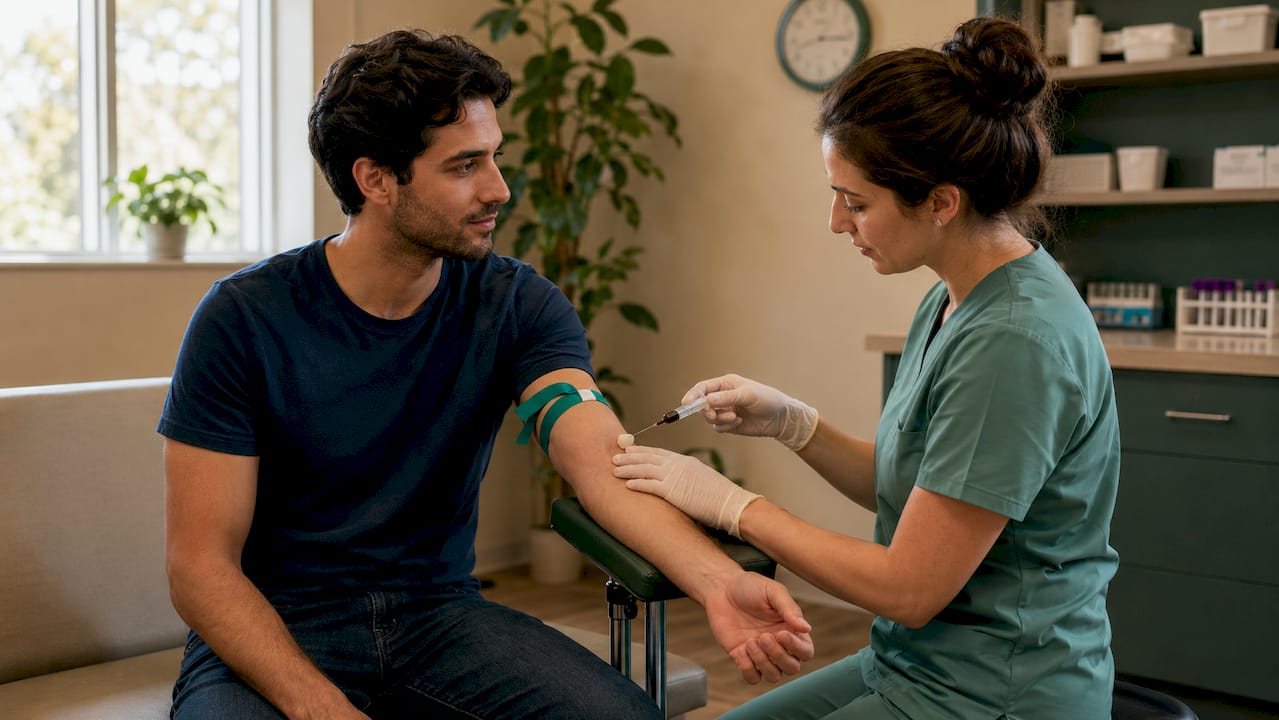
Mental health screenings are another priority in this age group. Depression and anxiety screenings are recommended annually beginning in young adulthood because prevalence is high and both conditions respond well to early treatment. A primary care visit is the right place to complete this screening, not a separate specialist appointment.
HIV and STI screenings also belong in this decade. The USPSTF recommends HIV screening for all adults aged 15–65, and more frequent STI testing for anyone at higher risk. Cholesterol checks, hepatitis C screening for those born between 1945 and 1965 or at risk, and immunization updates round out the core list for this age group.
- Blood pressure: every 2 years if normal, annually if elevated
- Cholesterol: baseline check by age 35, earlier with risk factors
- HIV: at least once between ages 15–65
- Depression and anxiety: annually
- STI screenings: based on risk level and sexual history
- Hepatitis C: once for all adults, more often if at risk
- Immunizations: Tdap, flu annually, HPV series if not completed
Pro Tip: Ask your doctor to run a fasting lipid panel at your first adult physical. It gives you a cholesterol baseline that makes future results far more meaningful.
2. Essential health screenings for adults aged 40 to 49
The 40s mark a shift in screening priorities. Metabolic and cancer risks increase, and several new tests enter the picture. Diabetes screening is now recommended starting at age 35 for adults who are overweight or obese, meaning many people in their early 40s are already eligible. Prediabetes affects millions of Americans without any symptoms, and catching it early gives you a real window to reverse it through diet and exercise.
Cardiovascular risk assessment becomes more formal in this decade. Your doctor will use tools like the Pooled Cohort Equations to calculate your 10-year risk of a heart attack or stroke, then decide whether cholesterol medication is appropriate. Blood pressure monitoring continues on the same schedule as your 30s.
Breast cancer screening is one of the most discussed topics in this age group. Women aged 40–74 benefit from biennial mammograms, with the 5-year survival rate exceeding 99% when breast cancer is caught early. Some women with dense breast tissue or a family history of BRCA mutations may need annual screening or MRI in addition to mammography.
- Diabetes screening: starting at 35 if overweight, every 3 years if normal
- Blood pressure: every 1–2 years based on your last reading
- Cholesterol and cardiovascular risk: formal 10-year risk calculation
- Mammography: biennial for women aged 40–74
- Depression screening: annually
- Cervical cancer: Pap smear every 3 years or Pap plus HPV test every 5 years
Pro Tip: If a parent or sibling was diagnosed with colorectal cancer before age 60, ask your doctor about starting colonoscopy screening 10 years before their diagnosis age, not at 45.
3. Key screenings recommended for adults aged 50 to 64
This decade carries the highest concentration of new screening recommendations. Colorectal cancer screening now starts at age 45 with a colonoscopy every 10 years or annual fecal immunochemical testing (FIT). Colorectal cancer screening reduces mortality by 50–60%, yet 41% of eligible adults remain unscreened. That gap represents a significant and preventable loss of life.
Lung cancer screening
Adults aged 50–80 with a significant smoking history qualify for annual low-dose CT lung cancer screening. Only 18.7% of eligible adults were screened in 2024. Universal compliance with this recommendation could prevent over 62,000 deaths in five years. Before your first scan, your insurer requires a shared decision-making counseling session with your provider. That session is not a formality. It covers the real benefits, the risk of false positives, and what follow-up looks like.
Prostate cancer screening
PSA testing for prostate cancer is not a simple yes or no decision. Shared decision-making is the standard approach, meaning you and your doctor discuss your personal risk, family history, and the real possibility of overdiagnosis before ordering the test. A high PSA level triggers further investigation rather than an automatic diagnosis, which reduces unnecessary treatment.
Bone density and osteoporosis
Women should discuss bone density screening with their provider in their early 50s, especially if they have risk factors like low body weight, smoking history, or a family history of fractures. A DXA scan is the standard tool and takes less than 15 minutes.
| Screening | Who needs it | Frequency |
|---|---|---|
| Colonoscopy | All adults starting at 45 | Every 10 years |
| Annual FIT test | All adults starting at 45 | Annually |
| Low-dose CT lung scan | Smokers aged 50–80 | Annually |
| Mammography | Women aged 40–74 | Every 2 years |
| PSA test | Men aged 50–69 | Shared decision with provider |
| DXA bone density scan | Women with risk factors | Every 2 years or as directed |
4. Preventive screenings for adults aged 65 and older
Adults 65 and older face a broader set of screening needs, and the stakes are higher. Cognitive screening becomes a standard part of the annual wellness visit. Early detection of memory changes or mild cognitive impairment allows for medication review, safety planning, and family preparation before a crisis occurs.
- Cognitive screening: annually at wellness visits
- Vision and hearing tests: annually or as symptoms arise
- Bone density (DXA): every 2 years for women, as directed for men
- Abdominal aortic aneurysm (AAA) ultrasound: once for men aged 65–75 who have ever smoked
- Continued cancer screenings: mammography, colorectal, and lung as applicable
- Vaccinations: annual flu shot, shingles (Shingrix series), pneumococcal vaccine
The abdominal aortic aneurysm ultrasound is one of the most underutilized screenings in this age group. It is a one-time, painless ultrasound recommended for men aged 65–75 who have ever smoked. An undetected AAA can rupture without warning, making this single test genuinely lifesaving.
Vaccination updates are a form of preventive care that adults often overlook after childhood. The Shingrix shingles vaccine is recommended for all adults 50 and older, and the pneumococcal vaccine protects against pneumonia, meningitis, and bloodstream infections. Your annual wellness visit is the right time to confirm you are current on all recommended vaccines.
Pro Tip: Ask your provider to review all your current medications at your 65-plus wellness visit. Polypharmacy, meaning taking five or more medications, increases fall risk and cognitive side effects significantly.
Key takeaways
Preventive screenings are the most reliable tool adults have for catching serious conditions before they become life-threatening, and the right tests depend entirely on your age, risk factors, and family history.
| Point | Details |
|---|---|
| Start screenings early | Blood pressure and mental health checks begin in your 20s, not your 50s. |
| Colorectal cancer screening at 45 | Colonoscopy or annual FIT testing cuts colorectal cancer mortality by 50–60%. |
| Lung CT for eligible smokers | Only 18.7% of eligible adults were screened in 2024; annual low-dose CT is lifesaving. |
| Family history changes your timeline | A relative diagnosed before 60 may mean you need screenings a decade earlier. |
| Annual wellness visits drive adherence | These visits update your personalized screening plan and are covered without copay under the ACA. |
Why I think most adults are missing the point on preventive screenings
I have seen a consistent pattern over years of working in preventive health: people treat screenings as something you do when you feel off. That is exactly backward. The entire value of a preventive screening is that it finds disease before you feel anything. By the time symptoms appear, you are often dealing with a condition that is harder and more expensive to treat.
The second mistake I see is treating the annual wellness visit as optional. Wellness visits are the mechanism that updates your entire screening plan. Your risk profile changes every year based on weight, blood pressure trends, family history updates, and new guidelines. Skipping that visit means your screening schedule is running on outdated information.
Family history is the most underused tool in preventive care. Most patients mention it once and never revisit it. But if a sibling is diagnosed with colon cancer at 52, your screening timeline changes immediately. Family history is an override to standard timelines, and your provider needs updated information to apply it correctly.
One practical point that saves patients real money: make sure your preventive visit is coded as an annual wellness visit under the ACA. Screenings ordered under that code are covered without a copay for in-network providers. The same screening ordered under a different code can generate a bill. Ask your front desk staff before you leave.
— Krunal
How Gardenstatemedicalgroup supports your preventive health
Gardenstatemedicalgroup offers primary care services in North Bergen and Secaucus, New Jersey, built around exactly this kind of preventive care. Annual wellness visits, cardiovascular risk assessments, diabetes screening, and cancer screening coordination are all part of what the practice provides. The team works across primary care, cardiopulmonary care, and radiology to make sure your screenings are ordered, tracked, and followed up in one place.
Gardenstatemedicalgroup also helps patients navigate insurance coverage so that preventive screenings are billed correctly and covered without unexpected costs. If you are overdue for a wellness visit or want to build a screening plan based on your age and risk factors, scheduling with Gardenstatemedicalgroup is the right next step. The practice accepts most major insurance plans and offers convenient appointment scheduling online.
FAQ
What screenings does every adult need regardless of age?
Blood pressure measurement, mental health screening for depression, and HIV testing are recommended for all adults by the USPSTF. These apply regardless of age, gender, or family history.
When should colorectal cancer screening start?
Colorectal cancer screening starts at age 45 for average-risk adults, using either a colonoscopy every 10 years or an annual FIT test. Adults with a family history of colorectal cancer may need to start earlier.
Are preventive screenings covered by insurance?
USPSTF-recommended screenings are covered without a copay under the Affordable Care Act when billed as an annual wellness visit for in-network providers. Confirm the billing code with your provider’s office before your appointment.
How does family history affect my screening schedule?
Family history can move your screening start date earlier than standard guidelines suggest. A first-degree relative diagnosed with colorectal cancer before age 60 typically means you should begin screening 10 years before their diagnosis age.
What is the most underused cancer screening for adults over 50?
Annual low-dose CT lung cancer screening for eligible smokers aged 50–80 is the most underused, with only 18.7% of eligible adults screened in 2024. It requires a brief shared decision-making session with your provider before the first scan.