
What Is Health Monitoring and Why It Matters
TL;DR:
- Health monitoring involves continuous or periodic observation of physiological signals to detect conditions early and support health management. It ranges from consumer wearables to clinical-grade devices, with professional guidance essential for accurate interpretation and effective care. Proactive monitoring enhances early detection, reduces hospital visits, and empowers individuals to participate actively in their health decisions.
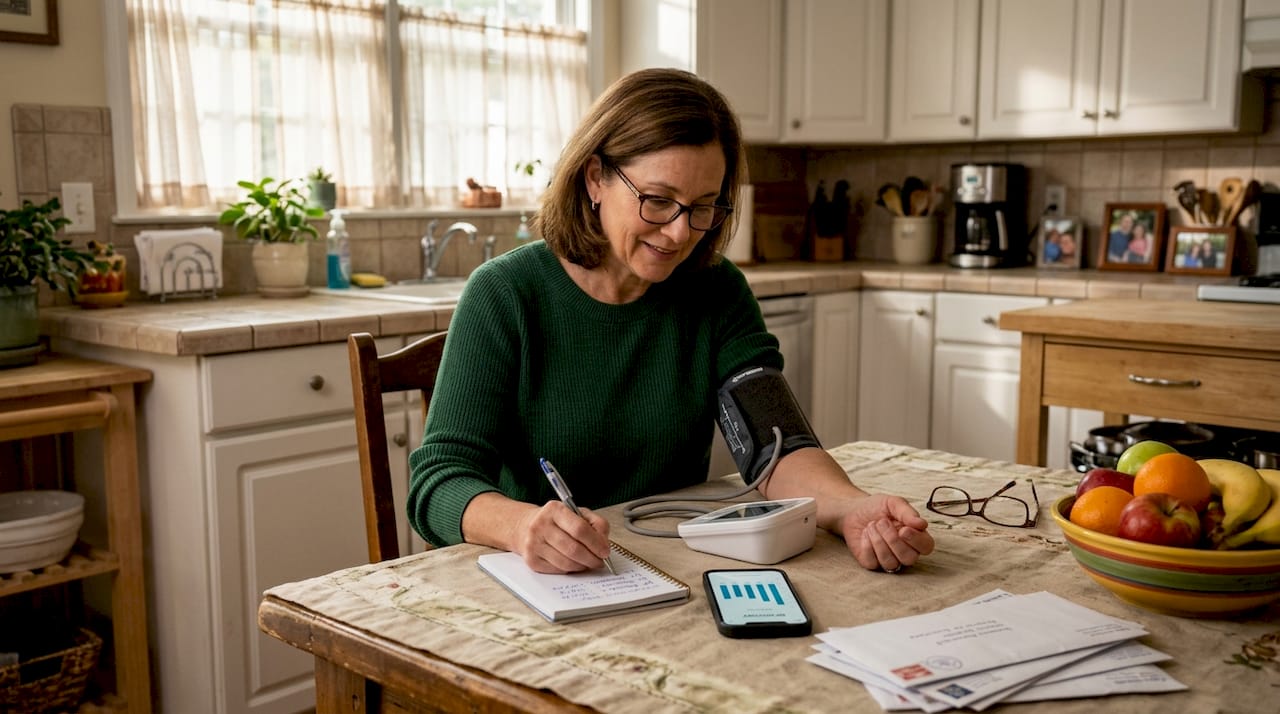
Most people think health monitoring means checking your step count or glancing at a fitness app. What is health monitoring, really? It is the continuous or periodic observation of your body’s physiological signals to catch problems early, manage chronic conditions, and make smarter decisions about your health. It covers far more than calories burned or miles walked. From clinical-grade cardiac monitors worn after a suspected heart event to blood pressure cuffs used at home, health monitoring spans an enormous range of tools, technologies, and settings. This guide breaks all of it down clearly.
Table of Contents
- Key takeaways
- What health monitoring actually means
- Health monitoring systems and technologies
- The real benefits of health monitoring
- How to use your health monitoring data well
- Comparing health monitoring options
- My take on health monitoring technology
- How Gardenstatemedicalgroup supports your health monitoring journey
- FAQ
Key takeaways
| Point | Details |
|---|---|
| More than fitness tracking | Health monitoring includes clinical devices, wearables, and apps tracking serious physiological parameters. |
| Early detection saves lives | Continuous observation helps identify abnormalities before they become medical emergencies. |
| Data is not a diagnosis | Monitoring tools provide statistical insights, not medical verdicts. Always consult a professional. |
| Right tool for the right job | Clinical monitors offer greater accuracy; consumer wearables provide convenience and daily trend data. |
| Professional guidance matters | Coordinating your monitoring data with a healthcare provider leads to better, safer health decisions. |
What health monitoring actually means
Health monitoring is the continuous or periodic observation of physiological parameters designed to detect abnormalities early and support timely intervention. That definition sounds clinical, but the practical reality touches everyday life. When your doctor checks your blood pressure at an appointment, that is periodic monitoring. When a hospital patient wears a cardiac sensor around the clock, that is continuous monitoring. Both serve the same fundamental purpose: catching deviations from normal before they cause serious harm.
The parameters commonly tracked through health monitoring include:
- Heart rate and heart rhythm, which can reveal arrhythmias, atrial fibrillation, and other cardiac irregularities
- Blood pressure, a critical indicator for hypertension management and stroke risk
- Blood glucose levels, tracked daily by people managing diabetes
- Oxygen saturation (SpO2), measured by pulse oximeters and many smartwatches
- Respiratory rate, body temperature, and sleep patterns, all of which signal overall physiological status
There is a meaningful distinction between clinical monitoring and consumer monitoring that most people overlook. Clinical devices, like a hospital-grade ECG machine or a Holter monitor prescribed by a cardiologist, are designed to meet strict medical accuracy standards. Consumer wearables, like fitness trackers and smartwatches, are built for convenience and general wellness trends. Neither is inherently better. They serve different purposes and should be used accordingly.
For people managing chronic conditions like hypertension, diabetes, or heart disease, the role of health monitoring shifts from optional to foundational. Regular observation of relevant metrics gives both patients and their care teams the data needed to adjust medications, catch complications early, and reduce unnecessary emergency room visits. This makes monitoring not just a technology conversation, but a health management strategy.
Health monitoring systems and technologies
Understanding how health monitoring works means looking at the specific tools and systems available today. They fall into a few broad categories, each with distinct capabilities.
-
Fitness trackers and smartwatches (such as Fitbit, Apple Watch, or Garmin devices) use photoplethysmography sensors, which detect blood volume changes through the skin using light, to estimate heart rate and SpO2. They are designed for daily wear and generate trend data over weeks or months.
-
Holter monitors are clinical cardiac devices that record heart activity continuously for 24 to 48 hours. They use five chest sensors that remain active the entire monitoring period without any user input required.
-
Event monitors use two wires and record only when the user activates them during a noticeable symptom, such as palpitations or dizziness. They can be worn for up to 30 days, making them better suited for capturing intermittent cardiac events that a Holter monitor might miss.
-
App-based health systems aggregate data from multiple sources, including wearable sensors, manual symptom logs, and lab results, to give users a more complete picture of their health. Experts note that combining clinical measures with lifestyle and mood tracking produces more effective monitoring outcomes.
-
AI-powered monitoring platforms are increasingly being used to analyze health data and flag patterns that would be hard for a person to detect manually. However, AI systems still face barriers around data integration and user trust that limit their reliability in real-world settings.
Emerging health tracking technology is also worth noting. A recent development in wearable cardiac monitoring is the breathable electronic skin system, which achieves ICU-grade accuracy with improved patient comfort and wireless operation. This type of device is moving cardiac monitoring from hospital wards into outpatient and even home settings.
Pro Tip: If your doctor prescribes an event monitor, activate it the moment you feel a symptom, not after it passes. Incorrect or delayed activation can result in missing the critical cardiac data your physician needs for an accurate diagnosis.
If you want to explore clinical diagnostic options, the Holter monitor service offered by Gardenstatemedicalgroup provides professional-grade cardiac monitoring with physician oversight.
The real benefits of health monitoring
The benefits of health monitoring go well beyond knowing your resting heart rate. The most significant benefit is early detection. Continuous observation of physiological data shifts healthcare from a reactive model, where you treat illness after it appears, to a proactive model, where you identify risk and intervene before serious damage occurs.
Consider what this means in practice:
- A person wearing a blood pressure monitor at home catches dangerously high readings during morning hours, a pattern that would never appear in a single office visit.
- A senior citizen using a fall detection wearable maintains independent living longer because risk signals are caught before a serious incident occurs.
- Someone managing Type 2 diabetes tracks glucose trends after meals and adjusts their diet in real time rather than waiting for a quarterly lab result.
Monitoring helps reduce hospital visits and supports independent living, particularly for older adults and those with chronic conditions. This is not just a quality-of-life gain. It translates directly into lower healthcare costs and fewer medical emergencies.
Health monitoring also strengthens the relationship between patients and their care providers. When you arrive at an appointment with weeks of data rather than a vague description of how you have been feeling, your physician can make faster and more accurate assessments. You become an active participant in your own care rather than a passive recipient of it.
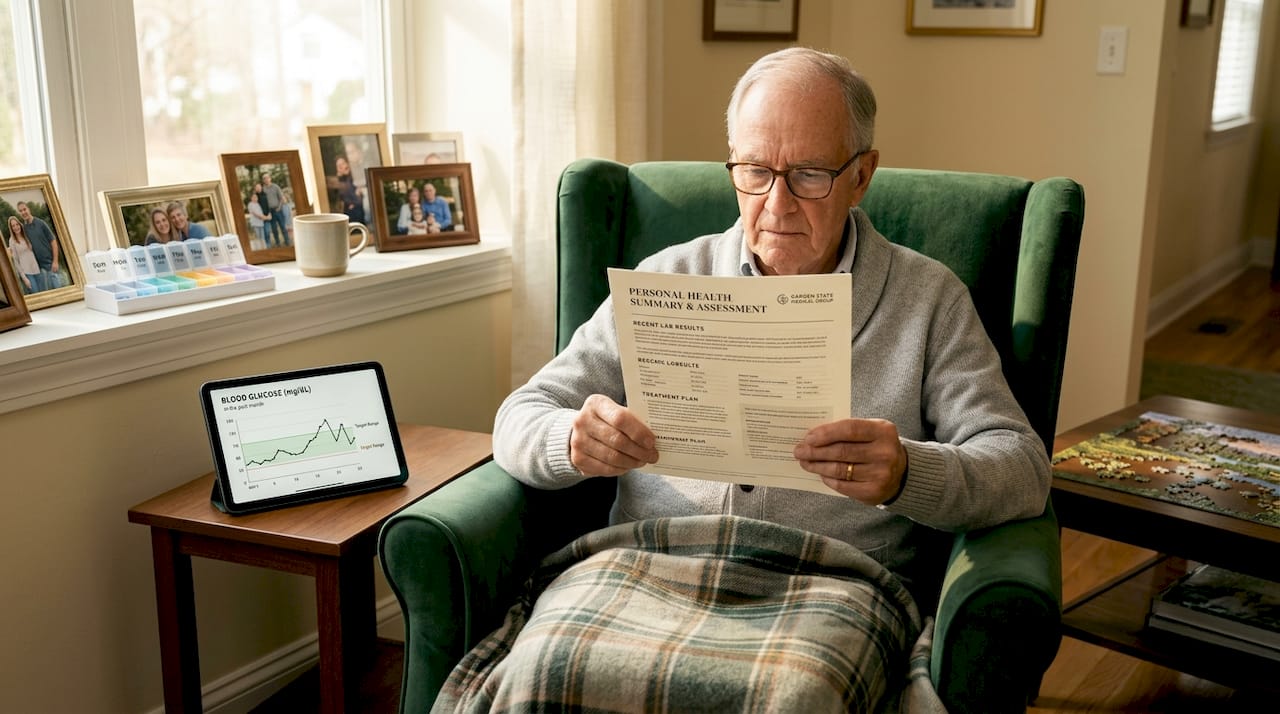
One barrier worth acknowledging is accuracy. Consumer devices vary widely in how reliably they measure clinical parameters. A smartwatch’s SpO2 reading is useful for general awareness but is not a substitute for a hospital-grade pulse oximeter. Knowing the difference between directional data and precise measurement helps you use monitoring results appropriately.
How to use your health monitoring data well
Owning a health monitoring device is not the same as benefiting from it. How you interpret and act on the data matters just as much as collecting it. The first principle to hold onto is that monitoring data provides statistical insights, not clinical diagnoses. A wearable showing an elevated heart rate during rest is a signal worth noting and discussing with a doctor. It is not a diagnosis of a cardiac condition.
Pro Tip: Keep a simple symptom log alongside your device data. Note what you were doing, how you felt, and any unusual readings. This context makes your data far more useful to a healthcare provider during a consultation.
Knowing when to contact your physician based on monitoring results is a skill worth developing. Isolated readings that seem unusual often have benign explanations like dehydration or stress. Persistent patterns over several days, or readings that accompany symptoms like chest pain, shortness of breath, or dizziness, warrant prompt medical attention.
Selecting the right monitoring tool also requires some thought. For general wellness and fitness trends, a consumer-grade wearable from a reputable brand is a reasonable starting point. For managing a specific condition like atrial fibrillation, hypertension, or diabetes, you should ask your doctor which device meets clinical standards and integrates with your care plan. Gardenstatemedicalgroup’s chronic care management program is designed specifically to coordinate monitoring data with ongoing medical oversight for patients managing long-term conditions.
Accurate device usage is non-negotiable. A blood pressure cuff worn on a moving arm, or a glucose meter used with an improperly cleaned finger, produces data that can mislead rather than inform. Follow device instructions carefully and calibrate or replace equipment as recommended.
Comparing health monitoring options
Different monitoring tools serve different needs. This table gives you a direct comparison across the three main categories.
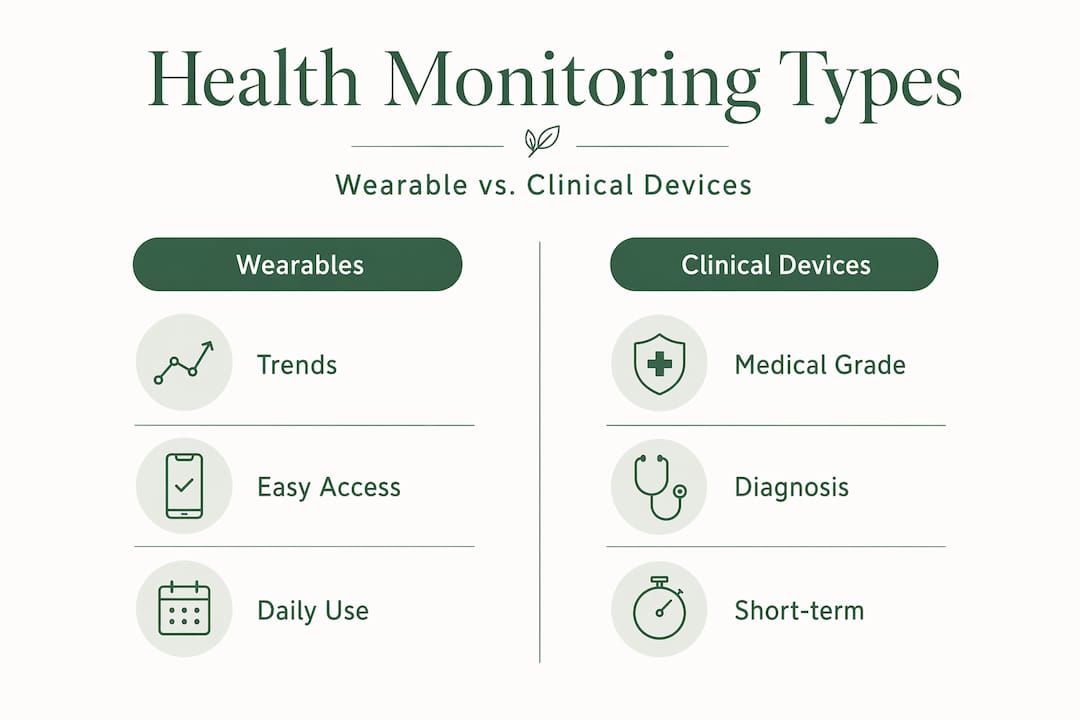
| Category | Best for | Data types | Medical accuracy | Duration |
|---|---|---|---|---|
| Consumer wearables | Daily wellness trends | Heart rate, steps, SpO2, sleep | Moderate | Continuous, ongoing |
| Clinical devices (Holter, event monitors) | Diagnosing specific conditions | ECG, cardiac rhythm, event data | High | 24 hours to 30 days |
| App-based monitoring systems | Aggregating multi-source data | Symptoms, vitals, lifestyle inputs | Varies by inputs | Ongoing, user-defined |
Consumer wearables win on convenience and long-term engagement. You wear them daily without thinking much about it. Clinical devices win on accuracy and diagnostic value but require physician involvement and are typically worn for a defined period. App-based systems are only as good as the data you feed into them, so accuracy depends heavily on the quality of connected devices and the consistency of your input. You can also explore a range of medical monitoring devices to understand what clinical tools look like outside of a hospital setting.
My take on health monitoring technology
I have spent a lot of time thinking about how people interact with health monitoring tools, and the pattern I keep seeing is this: people trust their devices too much or not enough. There is rarely a middle ground.
When someone sees an irregular reading on a consumer wearable, they either dismiss it entirely or spiral into unnecessary anxiety. What I have found actually helps is treating monitoring data the way you would treat a weather forecast. It gives you useful, directional information. It does not tell you exactly what is going to happen. You still need to make a judgment call and, in health terms, consult someone with clinical training.
What I think gets overlooked in most discussions about health monitoring is the importance of evaluating device claims critically. Every new wearable promises medical-grade accuracy. Very few deliver it consistently across all skin tones, body types, and activity levels. Before you rely on a device for anything beyond general awareness, look at whether it has been validated in peer-reviewed studies or approved by a regulatory body like the FDA.
My honest experience is that health monitoring works best when it is paired with professional care, not positioned as a replacement for it. Data collected consistently over time becomes genuinely powerful when a knowledgeable clinician interprets it within the context of your full medical history. That combination, your data plus their expertise, is where monitoring delivers its real value.
— Krunal
How Gardenstatemedicalgroup supports your health monitoring journey
If you are ready to move from data collection to actual health improvement, Gardenstatemedicalgroup offers the clinical support that makes monitoring meaningful.
The practice’s primary care services provide the ongoing relationship needed to contextualize your monitoring data over time. For patients with cardiac or pulmonary concerns, the cardiopulmonary care team offers specialized diagnostics and monitoring programs that go well beyond what a wearable can provide. Gardenstatemedicalgroup also runs structured programs for chronic condition management, including diabetes and hypertension, where monitoring data is integrated directly into coordinated care. Locations in North Bergen and Secaucus, New Jersey make professional support accessible. Schedule an appointment and bring your monitoring data with you.
FAQ
What is health monitoring in simple terms?
Health monitoring is the regular observation of your body’s key measurements, such as heart rate, blood pressure, and blood glucose, to detect changes early and support better health decisions.
What are the main types of health monitoring?
The main types include consumer wearables for daily wellness trends, clinical devices like Holter monitors for diagnosing specific conditions, and app-based systems that aggregate data from multiple sources.
How does health monitoring work?
Devices use sensors such as ECG electrodes or photoplethysmography to collect physiological data, which is then analyzed to identify patterns, trends, or abnormalities that may require attention.
Can health monitoring replace a doctor’s diagnosis?
No. Monitoring data provides statistical insights and trend information, not clinical diagnoses. Always consult a healthcare professional before drawing conclusions from your monitoring results.
What is the importance of health monitoring for chronic conditions?
For conditions like diabetes or hypertension, regular monitoring allows for real-time adjustments to treatment and lifestyle, reduces hospital visits, and helps patients maintain better long-term health outcomes.
Recommended
- Learn the Importance of Having a Regular Health Checkup | Garden State Medical Group | Garden State Medical Group
- What Is Health Screening? A Guide to Early Detection
- Blog | Garden State Medical Group
- Why Should People Continue Tracking Their Medical History? | Garden State Medical Group | Garden State Medical Group