
Why Schedule Annual Checkups: Your Adult Health Guide

TL;DR:
- Regular annual checkups help detect serious health conditions early and build a health baseline for prevention. Continuity with a primary care provider improves health outcomes through better detection, coordination, and personalized care. Most insurance plans cover these preventive visits at no out-of-pocket cost, making them vital for lifelong health.
An annual checkup is a preventive health visit with your primary care provider designed to monitor your health before problems develop. Scheduling annual checkups is the most effective way to catch serious conditions early, when treatment is simpler and outcomes are better. Up to 100,000 lives could be saved each year in the United States if everyone received recommended preventive care. Most insurance plans cover these visits at $0 out-of-pocket, making them one of the highest-value health decisions you can make.
Why schedule annual checkups: the core case for preventive care
Annual checkups shift your healthcare from reactive to proactive. Instead of waiting until something feels wrong, you and your doctor track your health over time and catch problems while they are still manageable. The formal term for this visit is the annual wellness visit or annual physical exam, and both terms refer to the same preventive appointment.

The evidence behind preventive care is clear. Regular preventive care reduces the need for expensive emergency visits and hospitalizations. Treating a condition caught early almost always costs less and causes less harm than treating one that has progressed for years without detection.
Yearly health exams also create a documented baseline for your health. Your doctor records your blood pressure, weight, cholesterol, and blood sugar over time. That record makes it far easier to spot a trend before it becomes a crisis.
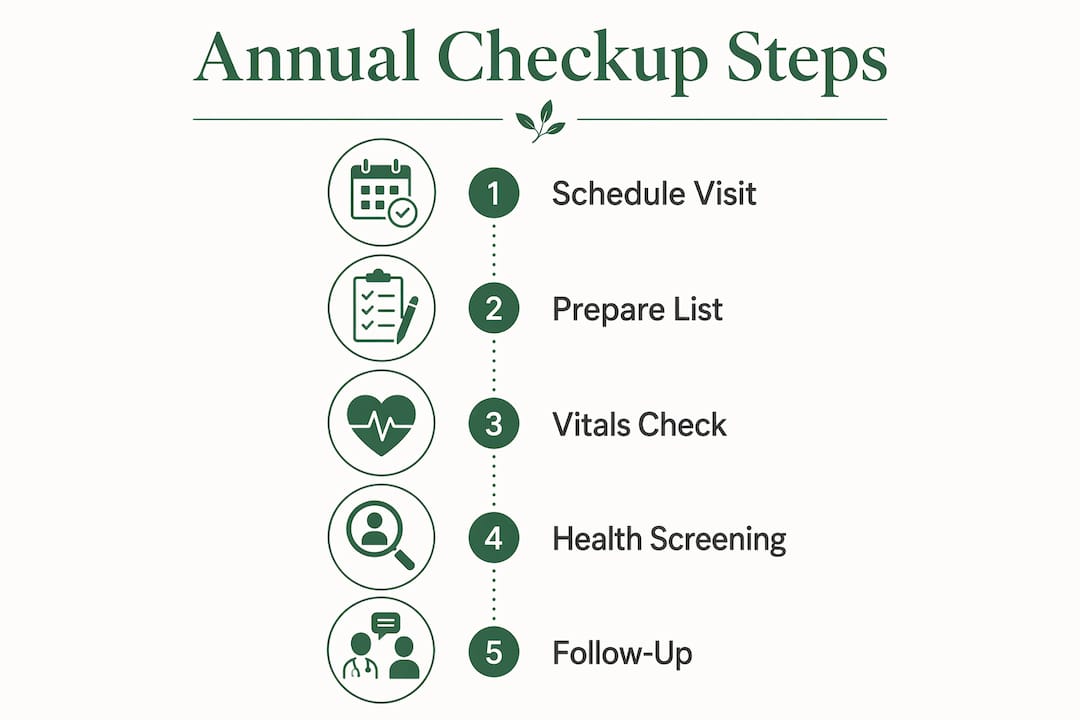
What happens during an annual checkup?
A typical annual visit lasts 30–60 minutes and covers several areas of your health in one appointment. Knowing what to expect helps you prepare and get more out of the visit.
Your doctor will typically review or assess the following during the appointment:
- Vital signs: Blood pressure, heart rate, weight, and temperature give your provider an immediate snapshot of your current health status.
- Blood work and screenings: Cholesterol panels, fasting glucose, and complete blood counts screen for conditions like diabetes, high cholesterol, and anemia before symptoms appear.
- Immunization review: Your provider checks whether you are current on vaccines such as the flu shot, Tdap, shingles, and pneumococcal vaccines based on your age.
- Mental health assessment: Depression and anxiety screenings are a standard part of the visit, not an add-on.
- Personalized risk evaluation: Your doctor reviews your family history, lifestyle habits, and life stage to tailor your care plan to your specific risks.
Pro Tip: Bring a written list of any symptoms, medications, and questions to your appointment. Patients who prepare in advance get more done in the same 30–60 minutes.
Physicians also use this visit to address reproductive health, menopause, or other life-stage concerns that patients often hesitate to raise during a sick visit. The annual checkup is the right setting for those conversations.
How do annual checkups prevent serious health problems?
The most important benefit of a yearly physical exam is early detection. Many serious conditions, including hypertension, type 2 diabetes, high cholesterol, and certain cancers, produce no noticeable symptoms in their early stages. By the time you feel something, the condition may already be advanced.
Routine screenings close that gap. A blood pressure reading takes seconds and can identify hypertension that a patient had no idea existed. A fasting glucose test can reveal prediabetes years before it progresses to full diabetes, giving you time to reverse course through diet and exercise.
Annual checkups shift healthcare from “sick care” to proactive wellness management. Catching an asymptomatic but serious condition early is the difference between a lifestyle adjustment and a hospital stay.
The numbers reinforce this point. Preventive care consistently reduces emergency visits and hospitalizations across all age groups. Each dollar spent on a preventive visit saves multiples in downstream treatment costs.
Here are four conditions that annual screenings commonly detect before symptoms appear:
- Hypertension: Often called the “silent killer,” high blood pressure rarely causes symptoms but significantly raises the risk of heart attack and stroke.
- Prediabetes and type 2 diabetes: Fasting glucose and A1C tests catch elevated blood sugar early, when dietary changes can still reverse the trajectory.
- High cholesterol: A lipid panel identifies dangerous cholesterol levels that have no outward signs but increase cardiovascular risk substantially.
- Thyroid disorders: Thyroid function tests reveal hypothyroidism or hyperthyroidism, both of which affect energy, weight, and mood without obvious early warning signs.
You can review a detailed annual health exam checklist to see which screenings apply to your age and health profile.
Why continuity with your primary care provider matters
Seeing the same primary care provider year after year produces better health outcomes than visiting different doctors for each concern. Long-term provider relationships improve detection of subtle health changes and reduce redundant testing because your doctor already knows your history.
A provider who has seen you for five years notices when your blood pressure creeps up by 10 points, even if it is still technically within normal range. That pattern recognition is only possible with continuity. A new provider seeing you for the first time has no baseline to compare against.
Continuity also improves coordination of care. When your primary care provider knows your full picture, they can refer you to specialists more precisely, share relevant records, and avoid duplicate tests. That saves you time and reduces unnecessary costs.
The annual visit fosters a partnership between you and your physician. That partnership makes it easier to discuss sensitive topics, follow through on recommendations, and stay engaged with your own health over time.
Pro Tip: Before your appointment, update your provider on any new medications, supplements, or changes in your family medical history. That information directly shapes the screenings and advice you receive.
Preparing a brief summary of your health since your last visit takes about ten minutes and makes the appointment significantly more productive. Think of it as your contribution to the partnership.
Does insurance cover annual checkups?
Cost is the most common reason adults skip yearly physicals, and it is largely a misconception. Most insurance plans cover annual wellness visits at $0 out-of-pocket when the visit is classified as preventive care.
The distinction that matters is how the visit is coded. A preventive wellness visit is free under most plans. If you raise a new or active medical problem during the same appointment, that portion may be billed separately as a separate service and could incur a copay or coinsurance charge.
| Visit type | Typical cost to patient | What it covers |
|---|---|---|
| Preventive wellness visit | $0 under most plans | Screenings, immunizations, risk assessment |
| Sick or acute care visit | Copay or coinsurance applies | New symptoms, active conditions, prescriptions |
| Specialist referral visit | Varies by plan and network | Condition-specific evaluation and treatment |
Verifying that your provider is in-network before your appointment protects you from unexpected charges. A quick call to your insurance company confirms both your coverage and the visit classification. The benefits of regular checkups far outweigh any administrative steps required to access them at no cost.
Key Takeaways
Annual checkups are the most cost-effective tool adults have for detecting serious conditions early, maintaining a health baseline, and building a care partnership that improves outcomes over a lifetime.
| Point | Details |
|---|---|
| Early detection saves lives | Screenings catch hypertension, diabetes, and high cholesterol before symptoms appear. |
| Visits are typically free | Most insurance plans cover preventive wellness visits at $0 out-of-pocket. |
| Continuity improves care | Seeing the same provider yearly allows detection of subtle health changes over time. |
| Preparation maximizes value | Bringing a symptom list and family history updates makes every appointment more productive. |
| Frequency varies by age | Adults under 40 with no risk factors may visit every 2–3 years; annual visits are standard after 40. |
What I have learned from years of watching patients skip their checkups
The patients who benefit most from annual checkups are not the ones who feel sick. They are the ones who feel fine and show up anyway. That is the counterintuitive truth I have seen play out repeatedly: the visit that feels least necessary is often the one that matters most.
I have watched patients discover elevated blood pressure at a routine visit and leave with a simple medication that prevented a stroke. I have seen prediabetes caught at a wellness exam and reversed entirely through dietary changes, with no medication ever needed. Those outcomes only happen because someone scheduled an appointment when nothing felt wrong.
The patients who struggle most are the ones who treat their health reactively. They come in when something hurts, and by then the window for easy intervention has often closed. Preventive care is not about fear. It is about giving yourself the best possible odds.
My advice is practical: schedule your annual visit the same week every year, the way you would a car service. Write down three questions before you go. Tell your doctor about anything that has changed, even if it seems minor. That level of engagement, repeated year after year, is what builds the kind of health record that actually protects you.
— Krunal
Gardenstatemedicalgroup: primary care built around your long-term health
Gardenstatemedicalgroup offers primary care services in North Bergen and Secaucus, New Jersey, designed around exactly this kind of continuity and preventive focus. The practice’s physicians build long-term relationships with patients, track health trends over time, and coordinate care across specialties when needed.
Whether you are due for your first adult physical or returning for a yearly wellness visit, Gardenstatemedicalgroup provides the screenings, personalized risk assessments, and follow-up care that make annual checkups genuinely useful. The practice also offers chronic care management programs for patients managing ongoing conditions alongside their preventive care. Scheduling is straightforward, most major insurance plans are accepted, and the team is ready to help you take a proactive approach to your health this year.
FAQ
Why should adults schedule annual checkups?
Annual checkups detect serious conditions like hypertension, diabetes, and high cholesterol before symptoms appear. Preventive care could save up to 100,000 lives per year in the United States if universally adopted.
How often should you have a checkup?
Adults aged 18–39 with no significant risk factors may need a checkup every 2–3 years. Annual visits are typically recommended starting at age 40 or earlier for anyone with chronic conditions or family history of serious illness.
What should you expect from an annual checkup?
A standard annual visit lasts 30–60 minutes and includes vital signs, blood work, immunization review, mental health screening, and a personalized risk assessment based on your age and health history.
Does insurance pay for annual checkups?
Most insurance plans cover preventive wellness visits at $0 out-of-pocket. If you discuss a new or active medical problem during the same visit, that portion may be billed separately.
How do you get the most out of a yearly physical exam?
Prepare a list of current medications, recent symptoms, and questions before your appointment. Updating your provider on any changes to your family medical history also helps them personalize your screening recommendations.